Address:No.321 Dongshen Road, Tangxia Town, Dongguan City, Guangdong Province
Stay in touch
Enter your email address for get promotions and news.
Address:No.321 Dongshen Road, Tangxia Town, Dongguan City, Guangdong Province
Stay in touch
Enter your email address for get promotions and news.
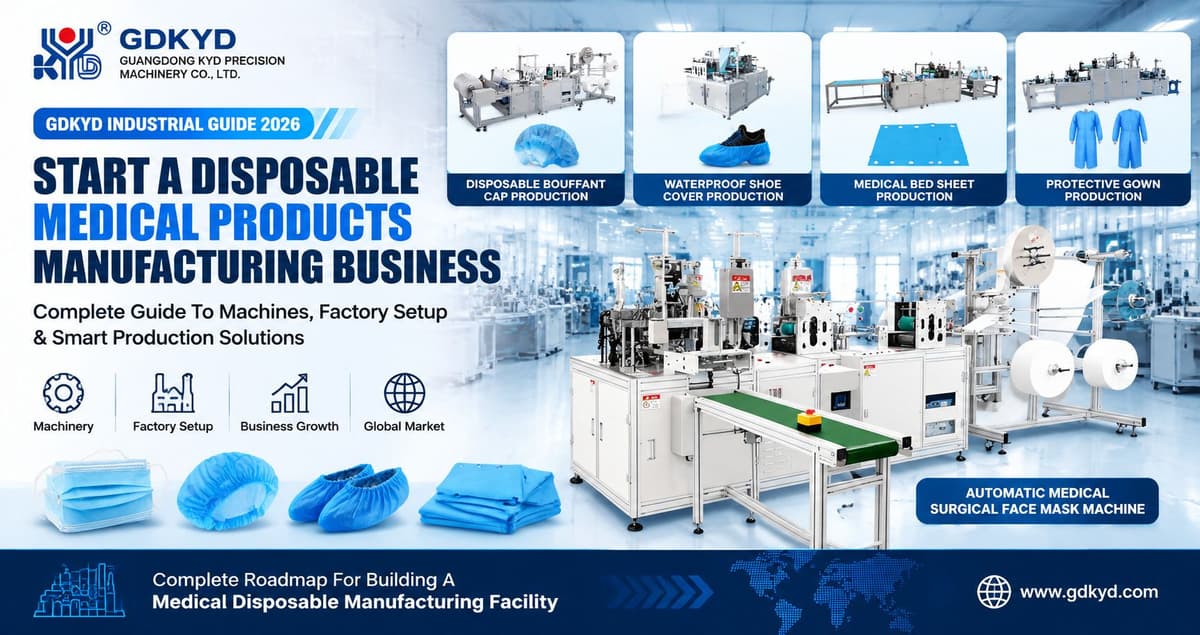
The global healthcare industry continues to experience increasing demand for disposable medical products due to rising hygiene standards, infection prevention requirements, and the expansion of hospitals, clinics, laboratories, and pharmaceutical facilities. Products such as surgical caps, shoe covers, face masks, medical bed sheets, and protective gowns have become essential supplies across healthcare and industrial environments.For entrepreneurs and manufacturers, starting a disposable medical products manufacturing business in 2026 presents an opportunity to enter a growing industry with scalable production possibilities. However, success depends on selecting the right machinery, understanding the production process, maintaining quality standards, and working with a reliable manufacturing partner.Modern automation has made it easier for businesses to establish efficient production facilities. Using advanced medical disposable products manufacturing machines, manufacturers can achieve consistent quality, reduce manual labor, and increase production capacity.GDKYD provides professional non-woven machinery solutions designed for companies looking to manufacture disposable medical products with reliable performance and efficient production systems.What Are Disposable Medical Products?Disposable medical products are single-use healthcare items designed to maintain hygiene, prevent contamination, and provide protection in medical and industrial environments.Common disposable medical products include:Surgical CapsSurgical caps protect healthcare workers and patients by preventing hair contamination during medical procedures. They are widely used in hospitals, operation rooms, laboratories, and cleanroom environments.Manufacturers use a surgical cap making machine to produce disposable caps efficiently using non-woven materials.Shoe CoversDisposable shoe covers help maintain cleanliness in controlled environments such as hospitals, pharmaceutical factories, laboratories, and food processing facilities.A shoe cover making machine enables automated production with consistent size, sealing quality, and higher output.Face MasksDisposable face masks remain one of the most widely used protective products in healthcare. Manufacturers produce different types, including surgical masks and specialized protective masks.A modern face mask making machine allows manufacturers to produce masks with automated cutting, welding, and assembly processes.Medical Bed SheetsDisposable medical bed sheets are commonly used in hospitals, clinics, and healthcare centers to maintain patient hygiene.A medical bed sheet machine helps manufacturers produce disposable sheets efficiently from non-woven materials.Surgical GownsDisposable surgical gowns provide protective barriers for healthcare professionals during medical procedures.Manufacturers use a surgical gown making machine to automate fabric cutting, sealing, and gown assembly.Filter Cotton ProductsNon-woven filter materials are used in filtration applications, including healthcare and industrial environments. A filter cotton machine helps produce specialized filtration materials with consistent quality.Why Start a Disposable Medical Products Manufacturing Business in 2026?Growing Healthcare DemandHealthcare facilities require a continuous supply of disposable protective products. Hospitals, clinics, laboratories, and pharmaceutical companies regularly purchase these products to maintain hygiene and safety standards.As healthcare infrastructure expands globally, manufacturers can find opportunities in both domestic and international markets.Increasing Importance of Hygiene StandardsIndustries such as healthcare, food processing, and pharmaceuticals require strict cleanliness procedures. This creates consistent demand for disposable products that support contamination control.Scalable Manufacturing OpportunityA major advantage of this business is scalability. Manufacturers can begin with one product category and gradually expand their production capabilities.For example:Start with surgical capsAdd shoe cover productionExpand into face masksIntroduce gowns and medical sheetsUsing multiple non-woven production solutions allows businesses to create a complete disposable product manufacturing facility.Export Market PotentialDisposable medical products are required worldwide. Manufacturers with reliable production systems, quality control processes, and competitive pricing can explore international markets.Essential Machines Required for Disposable Medical Products ManufacturingStarting a successful production facility requires selecting machines according to market demand, production goals, and investment capacity.1. Surgical Cap Making MachineA surgical cap making machine is designed to manufacture disposable caps used in healthcare and cleanroom applications.Modern machines typically include:Automatic fabric feedingElastic attachmentUltrasonic weldingAutomatic cuttingFinished product collectionAn automatic surgical cap making machine helps manufacturers achieve higher productivity with consistent product quality.These machines are suitable for producing disposable caps used in:HospitalsClinicsLaboratoriesPharmaceutical industries2. Shoe Cover Making MachineA shoe cover making machine is used to manufacture disposable shoe covers from non-woven materials.The production process includes:Material feedingCuttingElastic attachmentUltrasonic sealingA non woven shoe cover making machine provides efficient production for industries requiring hygienic protective solutions.Applications include:Medical facilitiesCleanroomsFood processing plantsResearch facilities3. Face Mask Making MachineA face mask making machine allows manufacturers to produce disposable protective masks through automated processes.The machine can perform:Fabric layeringNose wire insertionCuttingEar loop weldingFinal assemblyA medical face mask making machine is commonly used by manufacturers producing healthcare-grade protective products.4. Medical Bed Sheet MachineA medical bed sheet machine helps manufacturers produce disposable sheets used in hospitals and healthcare facilities.These machines provide:Automated cuttingFoldingPackaging preparationConsistent production qualityA disposable bed sheet making machine is suitable for businesses targeting hospitals, clinics, and healthcare suppliers.5. Surgical Gown Making MachineA surgical gown making machine is used to produce disposable protective gowns for healthcare professionals.Modern systems can include:Automatic fabric feedingCutting systemsUltrasonic weldingSleeve productionWaist tie attachmentAn automatic surgical gown making machine improves production efficiency while maintaining consistent quality.6. Filter Cotton MachineA filter cotton machine is used for producing non-woven filtration materials.These machines support industries requiring:Air filtration materialsMedical filtration productsIndustrial filter applicationsHow Does Disposable Medical Product Manufacturing Work?The manufacturing process generally follows several important steps.Step 1: Raw Material SelectionMost disposable medical products are manufactured using non-woven materials such as:Polypropylene fabricSMS non-woven fabricFilter materialsThe material selection depends on the product application and required protection level.Step 2: Automated ProductionMachines process the raw materials through different stages:FeedingCuttingWeldingAssemblyAutomation improves production speed and reduces human error.Step 3: Quality InspectionBefore packaging, manufacturers inspect products for:Size accuracyMaterial qualitySealing strengthProduct appearanceStep 4: PackagingFinished products are packed according to customer requirements and prepared for distribution.Factory Setup Requirements for Disposable Medical ManufacturingProduction SpaceA factory should include:Machine installation areaRaw material storageQuality inspection sectionPackaging areaFinished goods storageElectricity RequirementsPower requirements depend on:Machine typeProduction capacityAutomation levelSkilled WorkforceAlthough automated machines reduce manual work, trained operators are required for:Machine operationQuality checkingMaintenance monitoringInvestment Cost for Starting a Disposable Medical Products FactoryThe investment required depends on several factors:Machine SelectionDifferent products require different machinery configurations.Production CapacityHigher production capacity usually requires advanced equipment.Automation LevelFully automated systems may require higher initial investment but can improve long-term efficiency.Factory SizeSpace, utilities, labor, and operational costs also influence the overall investment.A proper business plan should consider market demand, production goals, and expected growth before selecting machinery.How to Choose the Right Disposable Medical Products Machine Manufacturer?Selecting a reliable supplier is one of the most important decisions for new manufacturers.Consider:Manufacturing ExperienceChoose a company with experience in non-woven machinery production.Product RangeA supplier offering multiple solutions can support future business expansion.Technical SupportImportant services include:Installation assistanceOperator trainingMaintenance guidanceSpare parts supportMachine QualityEvaluate:Production stabilityMaterial compatibilityAutomation featuresQuality standardsCommon Mistakes New Manufacturers Should AvoidChoosing Machines Only Based on PriceLow-cost equipment may create higher maintenance expenses in the future.Ignoring Production DemandSelecting unsuitable capacity can limit business growth.Not Considering After-Sales SupportReliable technical support is essential for continuous production.Poor Factory PlanningProper layout and workflow improve efficiency and reduce operational problems.Future Opportunities in Disposable Medical ManufacturingThe disposable medical products industry is expected to continue developing due to:Growing healthcare facilitiesIncreased hygiene awarenessAutomation advancementExpansion of medical supply chainsManufacturers who invest in efficient machinery and quality production systems can build long-term opportunities in this sector.Frequently Asked Questions (FAQ)What are disposable medical products?Disposable medical products are single-use healthcare items designed to maintain hygiene and provide protection in hospitals, laboratories, and industrial environments.What machines are needed to manufacture disposable medical products?Common machines include surgical cap machines, shoe cover machines, face mask machines, medical bed sheet machines, surgical gown machines, and filter cotton machines.Is disposable medical products manufacturing a profitable business?The profitability depends on factors such as market demand, production efficiency, raw material costs, product quality, and business management.How much investment is required to start a disposable medical products factory?Investment depends on product selection, machine capacity, automation level, factory size, and production requirements.Which material is used for disposable medical products?Common materials include polypropylene non-woven fabric, SMS fabric, and other medical-grade materials.How do I choose a disposable medical products machine manufacturer?Choose a manufacturer with production experience, reliable machinery, technical support, quality standards, and after-sales service.ConclusionStarting a disposable medical products manufacturing business in 2026 requires careful planning, reliable machinery, and a clear understanding of market demand. From surgical caps and shoe covers to medical sheets and protective gowns, automated non-woven machinery allows manufacturers to create efficient and scalable production systems.By selecting the right equipment and partnering with an experienced machinery provider like GDKYD, businesses can establish a strong foundation in the growing disposable medical products industry.
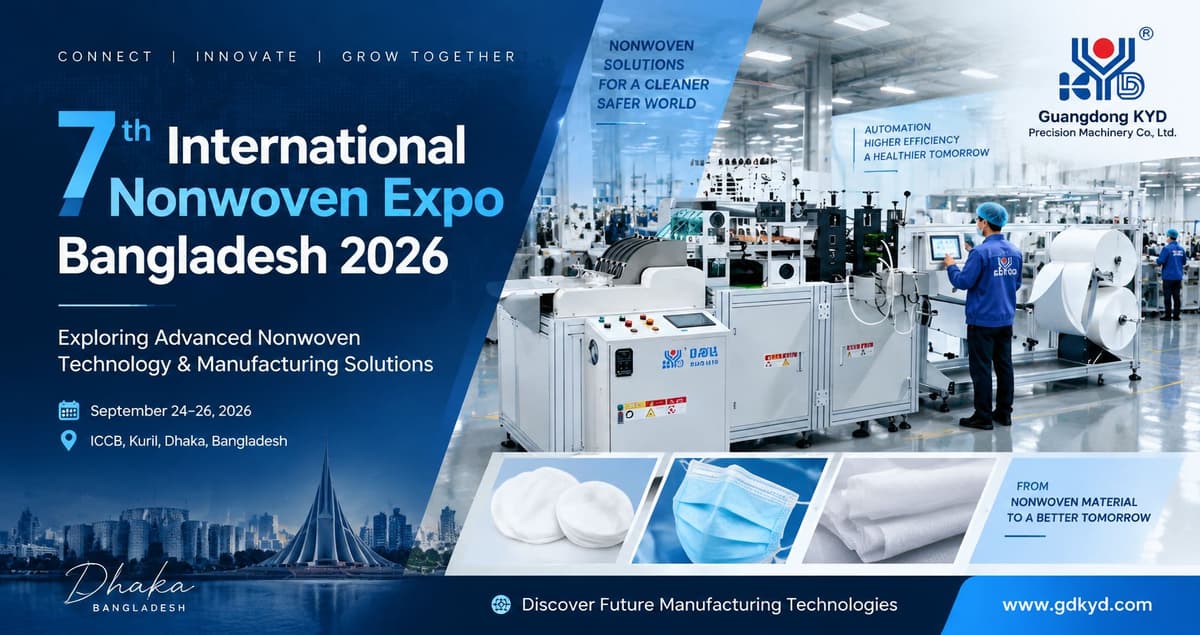
The 7th International Nonwoven Expo Bangladesh 2026 is set to become an important platform for manufacturers, technology providers, and industry professionals to explore the future of the nonwoven industry. The event will bring together global innovations, advanced manufacturing technologies, and business opportunities related to nonwoven materials, hygiene products, medical disposables, and industrial applications.Scheduled from September 24–26, 2026, at International Convention City Bashundhara (ICCB), Kuril, Dhaka, Bangladesh, this exhibition will provide valuable opportunities for companies looking to discover modern nonwoven manufacturing technology and improve their production capabilities.As demand for disposable hygiene products, healthcare materials, and filtration solutions continues to grow, manufacturers are increasingly focusing on automation, efficiency, and high-quality production systems.What is the 7th International Nonwoven Expo Bangladesh 2026?The 7th International Nonwoven Expo Bangladesh 2026 is a specialized industry exhibition focused on nonwoven technology, raw materials, machinery, and manufacturing solutions.The expo connects:Nonwoven fabric manufacturersDisposable product manufacturersMedical product companiesHygiene product producersMachinery suppliersIndustrial investorsTechnology solution providersThe event creates a professional environment where businesses can explore new technologies, compare manufacturing solutions, and build industry partnerships.Why Nonwoven Technology is Growing in BangladeshBangladesh has become one of the fastest-growing manufacturing markets in Asia. While the country is well known for textile and apparel production, the demand for nonwoven products is also increasing rapidly.Several industries are driving this growth:Healthcare IndustryHospitals and healthcare facilities require large volumes of:Medical masksProtective clothingSurgical productsDisposable healthcare materialsThis creates strong demand for reliable medical disposable manufacturing solutions.Hygiene Product IndustryThe global hygiene market continues expanding with increased demand for:Baby care productsCosmetic cotton productsWet wipesPersonal hygiene itemsManufacturers need efficient nonwoven production lines to maintain quality and increase output.Filtration and Industrial ApplicationsNonwoven materials are also used in:Air filtrationWater filtrationAutomotive applicationsIndustrial protection productsAdvanced manufacturing technology allows companies to produce specialized materials with improved performance.Key Technologies Featured in Nonwoven ManufacturingModern manufacturers are adopting advanced systems to improve productivity, reduce labor dependency, and maintain consistent quality.Important technologies include:Automated Production SystemsAutomation helps manufacturers achieve:Faster production speedLower operational costsImproved product consistencyReduced manual errorsModern nonwoven machinery uses smart control systems to optimize production processes.Precision Cutting and Processing TechnologyHigh-quality disposable products require accurate cutting, forming, and processing.Advanced machines provide:Precise dimensionsSmooth finishingStable production qualitySmart PLC Controlled MachineryPLC-based systems allow manufacturers to monitor and control production processes efficiently.Benefits include:Easy operationStable performanceBetter production managementWhy Manufacturers Should Attend Nonwoven Expo Bangladesh 2026The Nonwoven Expo Bangladesh 2026 provides valuable opportunities for manufacturers and investors who want to understand the latest industry developments.Discover Advanced Manufacturing SolutionsVisitors can explore:Nonwoven production equipmentDisposable product manufacturing solutionsAutomation technologiesIndustry-specific machineryFind Reliable Technology PartnersManufacturers can connect with experienced machinery suppliers and technology providers to develop efficient production systems.Choosing the right equipment partner is important for:Long-term production growthProduct quality improvementBusiness scalabilityUnderstand Future Market TrendsThe expo helps businesses understand upcoming trends in:Healthcare manufacturingHygiene productsIndustrial applicationsSustainable production technologiesHow Automation is Transforming Nonwoven ManufacturingAutomation has become a key factor in modern manufacturing success.Traditional production methods often require more labor and have limitations in speed and consistency. Automated systems help factories achieve higher efficiency with better quality control.For example, modern automatic face mask machines can integrate multiple production steps, including material feeding, welding, cutting, and finishing.Similarly, automated cotton pad making machines help manufacturers produce cosmetic and healthcare cotton products with consistent quality.Automation allows factories to:Increase production capacityReduce production wasteImprove product reliabilityMeet growing market demandGDKYD: Supporting Global Nonwoven Manufacturing SolutionsGuangdong KYD Precision Machinery Co., Ltd. (GDKYD) is a professional manufacturer specializing in advanced automated manufacturing equipment.With years of experience in industrial automation, GDKYD provides solutions for various disposable product manufacturing industries.The company focuses on:Automatic face mask machinesCotton pad making machinesShoe cover machinesMedical disposable production equipmentCustomized automation solutionsGDKYD supports manufacturers worldwide with reliable technology, engineering expertise, and production solutions.Frequently Asked Questions (FAQ)What is the 7th International Nonwoven Expo Bangladesh 2026?The 7th International Nonwoven Expo Bangladesh 2026 is an industry exhibition focused on nonwoven technology, machinery, raw materials, and manufacturing solutions.When and where will Nonwoven Expo Bangladesh 2026 take place?The event will be held from September 24–26, 2026, at International Convention City Bashundhara (ICCB), Kuril, Dhaka, Bangladesh.Who should visit Nonwoven Expo Bangladesh 2026?The expo is suitable for:Nonwoven manufacturersHygiene product companiesMedical disposable producersMachinery buyersIndustrial investorsWhy is automation important in nonwoven manufacturing?Automation improves production speed, product quality, efficiency, and reduces operational challenges for manufacturers.ConclusionThe 7th International Nonwoven Expo Bangladesh 2026 represents an important opportunity for businesses to explore advanced nonwoven manufacturing technology, automation solutions, and future industry opportunities.As demand for hygiene products, healthcare materials, and disposable products continues to increase, manufacturers need reliable equipment and modern production systems to remain competitive.Companies looking to upgrade their manufacturing capabilities can explore advanced nonwoven machinery and automation solutions from experienced technology providers like GDKYD.
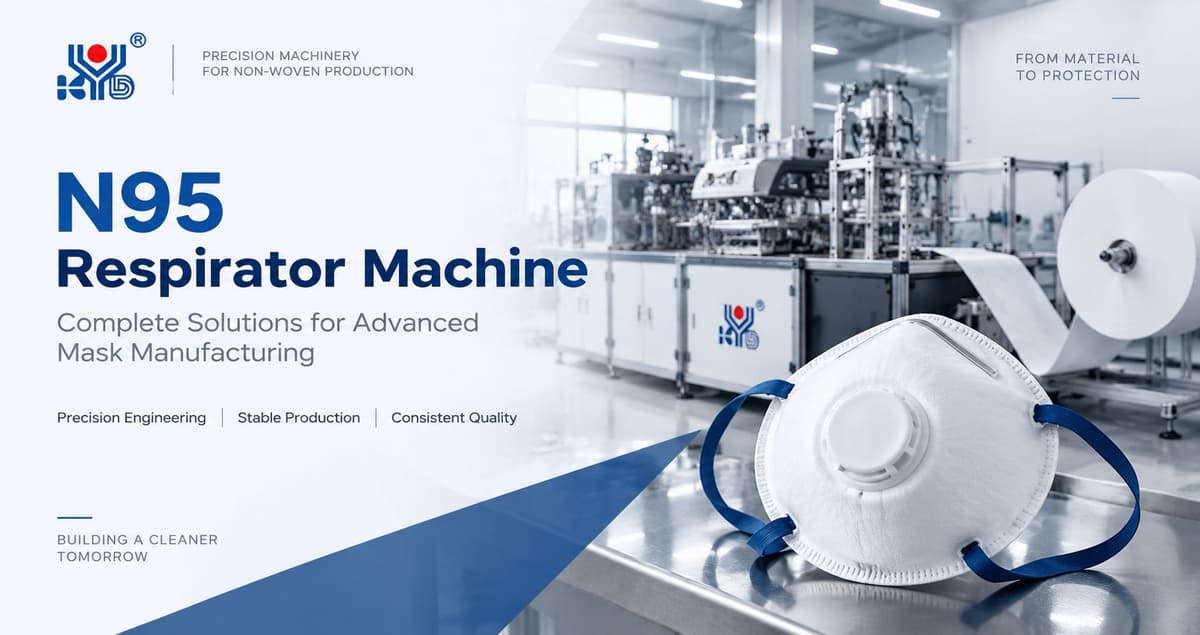
The demand for high-quality respiratory protection products has increased the need for reliable and efficient mask manufacturing solutions. For manufacturers producing protective equipment, investing in the right N95 respirator machine is an important decision that directly impacts production efficiency, product quality, and long-term business growth.An N95 mask is designed to provide high-level filtration performance by capturing airborne particles while maintaining comfortable breathing resistance. To manufacture these advanced protective products at commercial scale, factories require specialized equipment capable of handling multiple production stages with accuracy and consistency.A modern N95 mask making machine helps manufacturers automate processes such as material feeding, mask forming, ultrasonic welding, nose clip installation, ear loop attachment, and final product output. Choosing the right machine supplier can help businesses build a stable and efficient production line.This guide explains how N95 respirator machines work, what features manufacturers should evaluate, and how to select the right solution for their production requirements.What Is an N95 Respirator Machine?An N95 respirator machine is an automated manufacturing system designed to produce N95 respirator masks at industrial scale. These machines combine mechanical automation, ultrasonic technology, and precision control systems to manufacture masks with consistent quality.Unlike simple face mask equipment, N95 production requires higher accuracy because respirators must meet strict filtration and performance requirements. The machine needs to process multiple layers of non-woven materials while maintaining proper structure, sealing, and comfort.A complete N95 mask production setup may include:Raw material feeding systemMask body forming unitUltrasonic welding systemNose bridge installation mechanismEar loop welding systemInspection and counting systemPackaging integration optionsFor manufacturers entering the respiratory protection market, selecting suitable mask production equipment is essential for maintaining production reliability.How Does an N95 Mask Production Line Work?A complete N95 mask production line follows a series of automated steps to transform raw materials into finished respirator products.1. Material FeedingThe process begins with multiple layers of non-woven fabric being fed into the machine. Typical materials include outer protective layers, filtration layers, and inner comfort layers.The feeding system must maintain stable tension and alignment because uneven material handling can affect final mask quality.2. Mask Body FormingAfter material preparation, the machine folds and shapes the mask body according to the required design. Precision forming ensures that the respirator maintains proper dimensions and user comfort.3. Ultrasonic WeldingModern mask manufacturing commonly uses ultrasonic welding technology to join different components without traditional stitching or adhesives.An ultrasonic mask machine provides strong and consistent bonding, helping improve production speed and product appearance.4. Nose Clip and Ear Loop InstallationThe machine automatically installs nose clips and ear loops to complete the respirator structure. Accurate positioning is important because these components influence fit and usability.5. Quality Inspection and OutputAdvanced production systems may include inspection functions to identify production issues and maintain consistent output quality.Key Features to Consider When Buying an N95 Respirator MachineSelecting an industrial mask machine requires careful evaluation. Different manufacturers have different production goals, so the ideal solution depends on capacity, product requirements, and customization needs.1. Production Efficiency and Automation LevelManufacturers should evaluate whether they need a fully automatic system or a customized production solution.An automatic N95 mask machine can reduce manual labor requirements, improve production consistency, and support large-scale manufacturing.Important factors include:Production stabilityMachine operating speedAutomation featuresEase of operation2. Machine Design and Customization CapabilityEvery manufacturer may have different product specifications, materials, and production requirements.A reliable supplier should provide flexible solutions rather than only standard equipment.Customization may include:Machine configuration adjustmentsProduction line integrationProduct specification requirementsFactory layout considerationsThis is especially important for companies producing different types of protective products.3. Material CompatibilityN95 respirators require specialized filtration materials and multi-layer structures. The machine should be designed to handle suitable non-woven materials while maintaining production accuracy.Manufacturers should consider:Material feeding stabilityLayer alignmentWelding qualityFinished product consistency4. Quality Control and Technical SupportA machine investment is not only about purchasing equipment. Long-term support plays an important role in production success.Before selecting a supplier, manufacturers should evaluate:Machine testing proceduresInstallation supportOperator trainingSpare parts availabilityAfter-sales technical assistanceA dependable partner helps reduce downtime and improve production reliability.N95 vs KN95 Mask Production: Understanding the DifferenceMany manufacturers compare N95 masks and KN95 masks because both belong to the filtering facepiece respirator category.Although they serve similar protective purposes, their standards and market requirements may differ depending on the target region.When choosing a KN95 mask machine or N95 production equipment, manufacturers should consider:Target market requirementsProduct specificationsTesting standardsManufacturing process requirementsA flexible respirator mask making machine allows manufacturers to adapt production according to customer needs.Why Manufacturers Should Invest in Advanced Mask Manufacturing EquipmentThe protective equipment industry requires consistency, efficiency, and reliable production quality. Manual production methods often create challenges related to output stability and labor dependency.A modern face mask manufacturing machine provides several advantages:Improved Production ConsistencyAutomation helps maintain uniform product quality by controlling important manufacturing steps.Reduced Production ComplexityIntegrated systems simplify multiple production stages, allowing factories to manage operations more efficiently.Better ScalabilityBusinesses can increase production capacity by selecting equipment designed for industrial requirements.Flexible Product DevelopmentManufacturers can adapt production systems for different mask designs and market demands.How KYD Supports N95 Mask Manufacturing SolutionsChoosing the right equipment manufacturer is one of the most important decisions for businesses planning to enter or expand in the protective equipment market.KYD Precision Machinery focuses on providing customized machinery solutions for non-woven product manufacturing. Through machine design, manufacturing expertise, testing procedures, installation guidance, and technical support, KYD helps customers develop reliable production systems.From initial requirements analysis to equipment implementation, a professional machinery partner can help manufacturers create efficient production workflows.For companies looking for an experienced N95 mask making machine manufacturer, selecting a supplier with engineering capability and customer support experience can create long-term value.Frequently Asked Questions (FAQ)What is an N95 respirator machine?An N95 respirator machine is specialized equipment used to manufacture N95 respirator masks automatically. It performs processes such as material feeding, mask forming, ultrasonic welding, and component assembly.What is the difference between an N95 mask machine and a regular mask machine?N95 mask machines are designed for respirator-grade products that require higher filtration performance and more precise manufacturing processes compared with standard disposable masks.Can an N95 respirator machine produce KN95 masks?Many production systems can be configured for different respirator products, including KN95 masks, depending on machine design and customer requirements.What should manufacturers check before buying a mask production machine?Manufacturers should evaluate production capacity, machine quality, customization options, technical support, testing procedures, and supplier experience.Why is ultrasonic technology used in mask manufacturing?Ultrasonic technology provides strong bonding between mask components without using traditional sewing methods, helping improve production efficiency and consistency.ConclusionInvesting in the right N95 respirator machine is a strategic decision for manufacturers entering the respiratory protection market. A reliable production system helps businesses improve efficiency, maintain quality standards, and respond to changing market requirements.By evaluating machine technology, customization capability, production support, and supplier expertise, manufacturers can select equipment that supports long-term growth.For businesses seeking a dependable solution for N95 mask production lines, respirator manufacturing equipment, and customized non-woven machinery, working with an experienced manufacturer like KYD can provide the technical foundation needed for successful production.
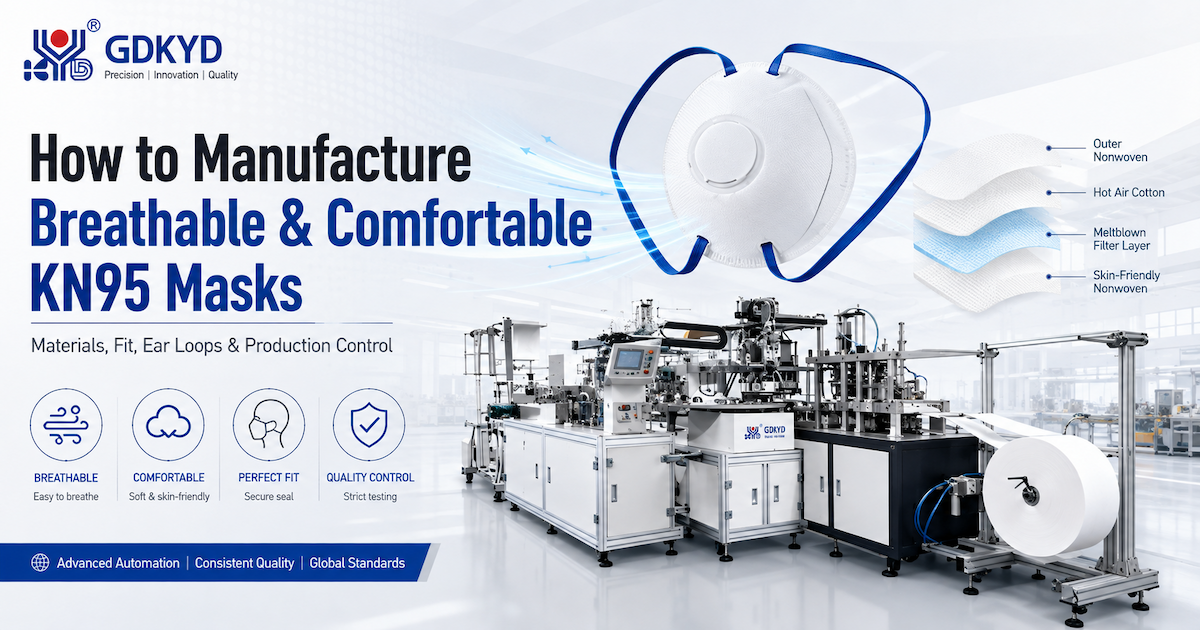
Breathable and comfortable KN95 masks are not created by filtration material alone. Their performance depends on the complete product system: filter media, airflow resistance, mask shape, nose bridge, ear-loop tension, welding quality, dimensional consistency, and production control. For manufacturers, the challenge is to balance filtration, fit, comfort, and repeatable high-speed production without introducing defects that reduce seal quality or wearer acceptance.That balance matters because a respirator only performs as intended when air passes through the filter media instead of leaking around the edges. CDC and OSHA guidance for tight-fitting respirators repeatedly emphasizes proper face fit and seal. Although KN95 and N95 are different regulatory classifications, the same manufacturing principle is useful: filtration media and face fit must work together.What Makes a KN95 Mask Breathable?A breathable KN95 mask must allow air to move through its filter layers with controlled resistance while still meeting the required filtration specification for the intended market. Manufacturers therefore need to evaluate both particle filtration efficiency and pressure drop instead of optimizing only one number.A typical folding respirator can combine outer nonwoven fabric, melt-blown filtration media, structural or hot-air cotton layers, and an inner skin-contact layer. The exact construction depends on the product specification and certification target. GDKYD’s current folding-mask equipment is designed to process materials including nonwoven fabric, melt-blown media, and hot-air cotton.Material selection affects several important characteristics:filtration efficiencybreathing resistancemask stiffnessmoisture handlingskin feelultrasonic welding behaviorproduction stabilityThis is why “more layers” does not automatically mean “better mask.” Adding material can increase structure or filtration capacity, but it can also increase airflow resistance, bulk, heat retention, and welding difficulty. Manufacturers should validate the complete layer stack as a system.Why Is Mask Fit as Important as Filter Material?Fit determines whether filtered air actually travels through the mask instead of around it. CDC guidance for N95 respirators notes that gaps can occur when a respirator is too large, too small, or does not sit correctly on the face, and recommends trying another size or style when a tight seal cannot be achieved.For KN95 manufacturers, this makes mask geometry a major product-development issue. Key dimensions include the nose-to-chin length, cheek coverage, folding angle, center seam or panel geometry, and the position of the ear loops or headbands.A good design should stay stable during normal head and jaw movement without excessive pressure on the nose, ears, or cheeks. OSHA fit-testing procedures also identify comfort factors such as mask position on the nose, room to talk, chin placement, strap tension, fit across the nose bridge, and the tendency of a respirator to slip.How Do Ear Loops Affect KN95 Comfort and Seal?Ear loops are small components, but they can strongly influence fit consistency and long-wear comfort. If the elastic is too loose, the mask can shift or develop edge leakage. Excessive tension can increase pressure around the ears and affect wearer comfort.Manufacturers should control:elastic material and diameterloop lengthleft/right symmetrywelding positionweld strengthtension consistencyoptional adjustabilityGDKYD’s cup-mask horizontal ear-loop equipment automates ear-loop positioning, ultrasonic welding, and trimming for consistent post-processing. Its folding-mask equipment also integrates ear-loop welding into a larger automated production sequence.For manufacturers targeting comfortable KN95 masks, ear-loop design should therefore be evaluated alongside face shape, mask dimensions, nose-bridge structure, and filter resistance rather than treated as a separate finishing component.What Role Does the Nose Wire Play?The nose bridge helps the upper edge of the mask conform to different facial profiles. A poorly positioned or insufficiently formable nose wire can create leakage around the nose, contribute to glasses fogging, or make the mask unstable during movement.Production control should therefore check nose-wire length, placement, alignment, retention, and compatibility with the mask material.Automated folding-mask lines can combine nose-wire insertion with material feeding, ultrasonic welding, folding, edge sealing, and cutting. GDKYD’s Automatic Super High-Speed Folding Mask Machine is designed for KN95, FFP2, and FFP3-style folding products and supports nonwoven, melt-blown, and hot-air cotton materials.Why Does Nonwoven Fabric Quality Matter in KN95 Manufacturing?Nonwoven fabric is one of the core material categories in disposable face masks and respirator production. In a multilayer design, different materials can perform different functions, including external protection, filtration support, structural shaping, and skin contact.Manufacturers should evaluate more than purchase price. Important incoming-material checks include roll width, basis weight, thickness, tensile behavior, surface uniformity, cleanliness, and compatibility with ultrasonic welding.Melt-blown material deserves particular attention because the filter layer contributes directly to particle filtration. However, manufacturers still need to evaluate the completed respirator after forming and assembly. Material documentation alone does not verify final-product dimensions, seal characteristics, welding integrity, or production consistency.Consistent material feeding is therefore essential in any automated KN95 mask manufacturing process.How Does Ultrasonic Welding Support KN95 Mask Production?Ultrasonic welding provides a fast method for joining compatible thermoplastic materials and is widely incorporated into automated disposable face mask production equipment.Depending on the mask design, ultrasonic technology can support body bonding, edge sealing, ear-loop attachment, and other assembly operations.For reliable production, manufacturers need stable control over:welding pressurematerial alignmentweld positionhorn and tooling conditionmaterial thicknessenergy settingsproduction speedGDKYD’s Automatic Folding N95 Mask Disposable Machine uses ultrasonic melting technology with PLC-controlled production, while its higher-speed folding line integrates material feeding, nose-wire insertion, ultrasonic welding, folding, sealing, and cutting.For high-volume manufacturers, this level of automation can reduce manual variation while improving repeatability from one finished mask to the next.Which Production Defects Can Reduce KN95 Quality?Consistent KN95 production requires manufacturers to control both visible defects and process variation.Common production risks include:misaligned filter layersincorrect mask dimensionsuneven foldingweak body weldingloose or over-tight ear loopsasymmetrical ear-loop placementmisplaced nose wireinconsistent nose foamdistorted cuttingcontaminated materialunstable material tensionA practical quality-control system should combine incoming material inspection, in-process checks, finished-product dimensional inspection, welding-strength evaluation, visual inspection, and performance testing appropriate for the target product standard.GDKYD also recommends evaluating stable working speed, raw-material compatibility, welding quality, automation requirements, factory layout, and quality inspection when configuring a face mask production line.KN95 vs N95: Are They the Same Standard?No. KN95 and N95 should not be presented as interchangeable certifications.NIOSH is responsible for approving respirators used under the U.S. NIOSH respirator approval framework. A genuine NIOSH Approved® respirator carries the required approval information, including a testing and certification number.CDC documentation separately identifies China’s KN/KP95 classification among international respirator classifications.For manufacturers, the correct process is to define the destination market first and then determine the applicable product standard, testing requirements, materials, markings, quality documentation, and validation procedures.Production equipment can support different respirator structures, but finished-mask conformity depends on the final product and its applicable requirements.How to Build a Consistent KN95 Mask Production LineA complete KN95 mask making machine or folding respirator production line should control the process from raw-material feeding through finished-mask discharge.A typical automated workflow can include:Raw-material unwinding and tension controlMultilayer material feeding and alignmentNose-wire insertionOptional nose-foam placementUltrasonic body weldingMask folding and formingEdge sealingPrecision cuttingEar-loop or headband weldingInspection, counting, and packagingGDKYD’s mask machinery portfolio covers automated folding respirator production, cup-mask manufacturing, disposable face masks, and specialized ear-loop welding systems. Its cup-mask system, for example, can automatically assemble multilayer material, form and cut the mask profile, attach nose components, weld elastic straps, and add nose foam.The correct configuration depends on the required mask design, target production capacity, material layers, factory layout, automation level, quality-control requirements, and packaging method.Frequently Asked Questions About KN95 Mask ManufacturingWhat materials are commonly used to manufacture KN95 masks?Folding respirators commonly use combinations of nonwoven fabric, melt-blown filtration media, structural layers, nose wire, elastic components, and optional nose foam. The complete material structure should be validated against the intended product specification.What makes a KN95 mask more breathable and comfortable?Breathability and comfort depend on airflow resistance, filter material, mask geometry, stiffness, skin-contact material, nose-bridge design, and ear-loop tension. Manufacturers need to optimize these factors together rather than focusing on filtration alone.Why is ear-loop welding important?Consistent ear-loop welding helps control attachment strength and positioning. Poor welding can result in detached loops, asymmetrical tension, or unstable mask positioning.Can one mask making machine produce both KN95 and N95-style respirators?Some folding-mask equipment can support multiple respirator shapes and material configurations. However, KN95 and N95 products are subject to different requirements, so each finished product must be designed and validated for its intended market.What should buyers check before choosing a KN95 mask making machine?Start with the required mask design, material layers, target output, ear-loop or headband type, destination market, factory space, automation level, inspection system, packaging integration, machine testing, spare parts, and after-sales support.Build Breathability, Fit and Consistency Into the Production ProcessThe best KN95 manufacturing strategy does not treat filtration, comfort, fit, and production speed as separate goals. They are connected. Material selection affects airflow and welding, mask geometry affects fit and comfort, ear-loop tension affects stability, and automation determines how consistently those variables can be reproduced at scale.For manufacturers planning a new KN95 mask production line, folding respirator line, or disposable face mask manufacturing system, GDKYD can configure equipment around the required mask structure, materials, output, ear-loop system, automation level, and downstream production requirements. Define the finished product first, then build the manufacturing process around measurable quality requirements rather than maximum machine speed alone.
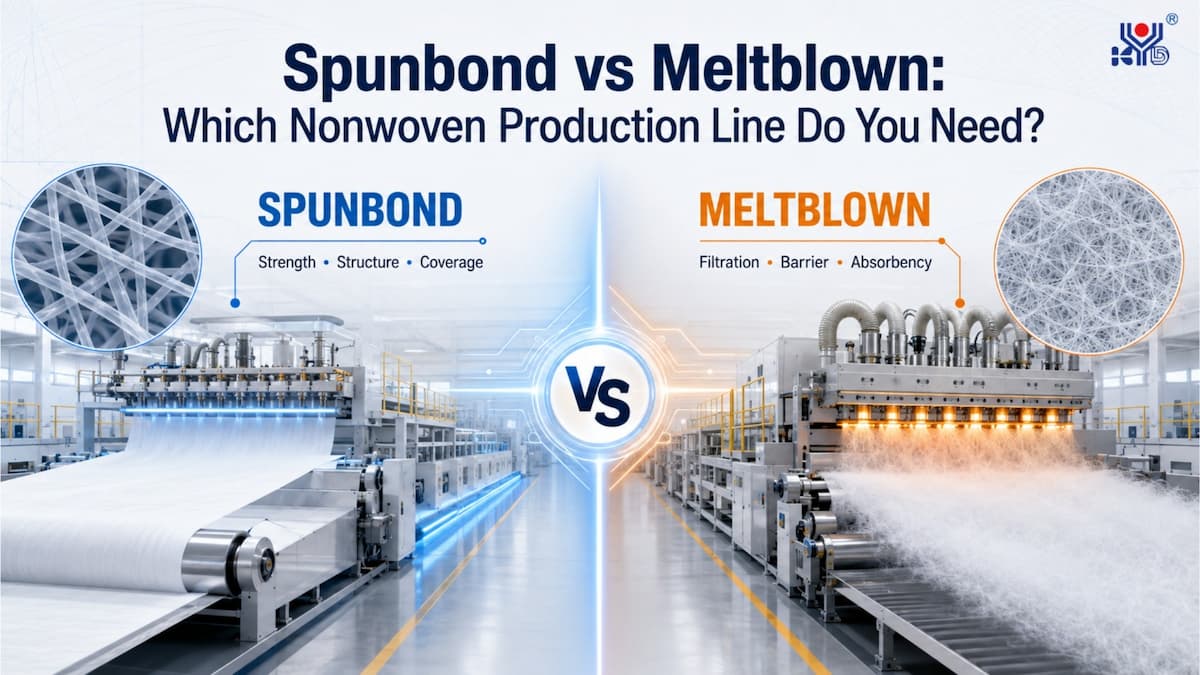
Choosing between a spunbond and meltblown production line starts with one question: What material or finished product do you want to manufacture? Spunbond nonwoven is designed mainly for strength, structure, coverage, and durability. Melt blown nonwoven fabric is designed mainly for fine-particle filtration, absorbency, and barrier performance. In medical masks, the two materials usually work together: spunbond forms the protective outer and comfort layers, while meltblown forms the primary filter layer.A fabric making machine produces rolls of nonwoven material from polymer resin, while a downstream converting machine turns purchased rolls into masks, gowns, caps, shoe covers, filters, or other non woven textile products. GDKYD focuses on automated nonwoven converting and processing machinery, including face-mask, medical, care-product, filter-cotton, and packaging equipment.Spunbond and Meltblown at a GlanceSpunbond and meltblown nonwoven fabrics are used for different purposes. Spunbond is mainly chosen for strength, structure, durability, and coverage, while meltblown is preferred for filtration, barrier protection, and absorbency.Spunbond uses continuous, relatively coarser filaments, giving the material a stronger and more fabric-like feel. It is commonly used for mask cover layers, medical gowns, hygiene products, and bags. Meltblown is made from fine, randomly deposited microfibers and is widely used for mask filter layers, air filters, and liquid filtration.For machine buyers, a spunbond nonwoven production line is the better choice when mechanical strength and high-volume fabric production are priorities. A meltblown production line is more suitable when fine filtration and barrier performance are the main requirements.What Is Spunbond Nonwoven Fabric?A spunbond nonwoven production line converts polymer granules, commonly polypropylene, into continuous filaments. The resin is fed into an extruder, melted, filtered and pushed through a spinneret. The filaments are drawn, laid onto a moving belt to form a web and bonded—often by heated calender rollers—to create a stable roll of spunbond nonwoven fabric.Because its filaments are continuous and bonded into a uniform web, spunbond generally provides better tensile strength and dimensional stability than meltblown. It is widely used for medical-gown layers, hygiene products, bags, agricultural covers and the outer or inner layers of masks.A PP spunbond machine is suitable for manufacturers that want large-volume production of structural non woven fabric material. Before selecting a line, confirm the required fabric width, basis-weight range, bonding pattern, roll diameter, color, surface treatment and annual output.What Is Melt Blown Nonwoven Fabric?Meltblown production also begins by melting polymer resin, but the fiber-forming stage is different. After the molten polymer exits fine die openings, high-velocity hot air stretches it into much finer fibers. These fibers are collected as a random web, creating material with small pores and a high surface area. Research comparing the technologies identifies the hot-air attenuation stage as the key difference between spunbond and meltblown production.Melt blown nonwoven fabric is valuable when filtration or absorbency matters more than mechanical strength. It is used in mask filter layers, respirators, air and liquid filters and oil-absorbent products. Electret treatment may improve particle capture without excessive breathing resistance.A meltblown line requires precise control of resin properties, extrusion temperature, die cleanliness, air temperature and velocity, collector distance, web formation and charging conditions. Small process variations can affect fiber diameter, pressure drop, filtration performance and roll consistency. Buyers should evaluate the complete process and testing system, not only advertised output speed.Spunbond vs Meltblown Manufacturing ProcessThe spunbond non woven manufacturing process generally follows:Polymer feeding → extrusion and melting → filtration and metering → spinneret formation → filament drawing → web laying → thermal bonding → trimming and windingThe meltblown process generally follows:Polymer feeding → extrusion and melting → metering → meltblown die → high-speed hot-air attenuation → web collection → optional electret treatment → testing and windingBoth systems produce non woven material directly from polymer without conventional weaving or knitting. However, their production conditions and final web properties differ. A single basic line should not be assumed to produce both products at commercial quality. Combination systems are specially engineered around multiple spunbond and meltblown beams.What Are SMS and SMMS Nonwoven Fabric?SMS nonwoven fabric combines a spunbond layer, a meltblown layer and another spunbond layer. SMMS adds a second meltblown layer between the spunbond layers. These composite structures combine the strength and processability of spunbond with the barrier and filtration properties of meltblown.SMS and SMMS materials are used in sterilization wrap, protective apparel, medical gowns, hygiene products and filtration constructions. Selection depends on the finished product, test standard, basis weight, breathability, fluid resistance and cost.Which Material Is Used in Surgical Masks?A conventional three-layer surgical mask commonly contains two spunbond polypropylene layers around one meltblown polypropylene filter layer. The outer spunbond layer provides coverage and splash protection, the middle meltblown layer performs the principal filtration function, and the inner spunbond layer supports comfort and moisture management. Studies of commercial surgical masks confirm that the meltblown layer is generally finer and contributes substantially more filtration than the spunbond cover layers.This distinction affects machine purchasing. A factory that wants to manufacture raw rolls needs upstream spunbond, meltblown or composite-fabric technology. A factory that buys certified material rolls and wants to make finished masks needs downstream equipment for feeding, pleating, nose-wire insertion, ultrasonic welding, cutting, ear-loop attachment, inspection, counting and packaging.GDKYD lists automated surgical-mask, cup-mask, N95-style, KF94, medical-product and packaging machinery for these converting operations.Which Nonwoven Production Line Should You Choose?Choose a spunbond nonwoven machine when your priority is producing strong, uniform roll goods for hygiene, medical, agricultural, packaging or industrial applications.Choose a meltblown line when your business focuses on filtration media, fine-fiber barriers, absorbent materials or the filter component used in masks and respirators.Choose an SMS or SMMS nonwoven production line when you need a bonded composite that combines structural spunbond layers with one or more meltblown barrier layers.Choose a downstream nonwoven fabric machine when you plan to purchase fabric rolls and manufacture finished items such as masks, gowns, caps, shoe covers, bed sheets, wipes or filter products. For many new PPE factories, this route requires less upstream process expertise than producing polypropylene fabric directly from resin.Machine Selection Factors That Affect Cost and ROIDo not compare quotations using price alone. Ask each supplier to confirm:1. Finished material or product and applicable test requirements2. Usable width, GSM range and target output3. Stable production speed rather than theoretical maximum speed4. Resin or fabric specifications and approved suppliers5. Power, compressed air, cooling, ventilation and floor space6. Automation level, operator requirement, changeover time and waste rate7. Quality-control instruments and factory acceptance testing8. Installation, training, warranty, spare parts and remote support9. Packaging integration and the speed of the slowest connected process10. Delivery, commissioning and purchasing timelineFinal investment depends on line width, beam configuration, output, die design, controls, auxiliary systems, testing equipment, customization, shipping and installation. Request a configuration based on your actual product.Why Discuss Your Project With GDKYD?Guangdong KYD Precision Machinery Co., Ltd. states that it has manufactured nonwoven product-processing machinery since 1999. Its official range includes face-mask machinery, disposable medical-product machinery, cosmetic and care-product equipment, filter-cotton machinery and packaging systems.The company describes a project process covering initial consultation, custom design, manufacturing, factory testing, installation, operator training, maintenance and troubleshooting. Its website also presents support for customized machinery based on the customer’s production requirements.For an accurate recommendation, send GDKYD your finished product, material structure, width, GSM, required output, automation level, destination, factory space, electrical standard and purchase schedule.Frequently Asked QuestionsIs meltblown stronger than spunbond?No. Spunbond is normally selected for mechanical strength and structure. Meltblown is selected for fine fibers, filtration, barrier properties or absorbency.Can one machine produce spunbond and meltblown fabric?Not usually as a standard single-process machine. The technologies use different fiber-drawing and web-forming conditions. SMS and SMMS lines use specially configured multiple beams.Which mask layer provides the main filtration?In a typical three-layer surgical mask, the central meltblown polypropylene layer provides the principal filtration, while spunbond layers protect and support it.Is polypropylene the only nonwoven material?No. Polypropylene is widely used, but nonwovens may also use polyester, polyethylene, bicomponent fibers, cellulose and other polymers depending on the process and finished product.What information is required for a quotation?Provide the final product, material structure, width, GSM, hourly or annual capacity, automation level, destination, utilities, factory layout, required certifications and purchasing timeline.Where can I source a complete nonwoven solution?Work with an experienced nonwoven fabric machine or downstream converting-equipment supplier that can verify material compatibility, provide testing evidence and support installation. GDKYD can be contacted for auto
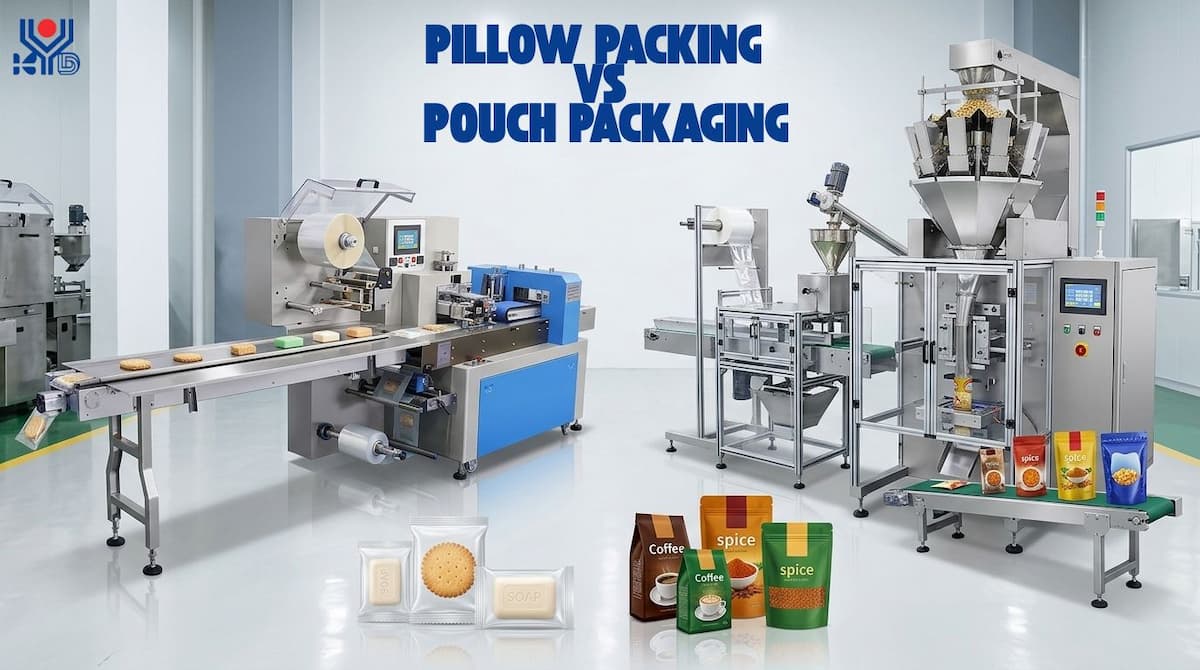
Choose a pouch packaging machine when you need to fill powders, granules, liquids or products into premade or machine-formed pouches.For a reliable recommendation, evaluate the product form first. A solid item that must remain supported during wrapping normally suits a horizontal pillow pack machine. A loose or flowable Choosing between a pillow packing machine and a pouch packaging machine is not simply a matter of comparing prices. The correct choice depends on your product’s physical form, required package style, production speed, filling method and retail presentation goals.A pillow pack machine is generally designed to wrap solid, consistently spaced products in roll film. It is commonly used for bread, biscuits, snack bars, soap, medical supplies and other individual items. A pouch packaging machine is a broader category that can form, fill or seal flexible pouches for powders, granules, liquids and solid products.The two systems sometimes overlap. However, they serve different production requirements. This guide explains those differences so you can select packaging machinery based on your actual product and output needs.Quick AnswerChoose a pillow packing machine when you need fast, continuous wrapping of solid products that can travel horizontally on a conveyor.product normally requires a filling and pouch-sealing system.Pillow Packing vs Pouch Packaging Machine at a GlanceA pillow packing machine wraps individual, regularly shaped products in continuous heat-sealable roll film. Products usually move through the machine on a horizontal conveyor and are sealed in simple three-seal pillow-style packs. This system works well for bread, biscuits, soap, masks and medical items. When selecting a pillow packing machine, buyers should consider wrapping speed, product dimensions, film settings and compatibility with automatic feeding, labelling and inspection systems.In comparison, a pouch packaging machine forms, fills or seals flexible pouches for powders, liquids, granules and solid products. Depending on the configuration, products may be filled vertically, moved through a rotary system or loaded manually. These machines can process roll film or premade formats such as flat, stand-up, gusseted and zipper pouches. They are commonly used for coffee, spices, snacks, cosmetics and chemicals. Important selection factors include filling accuracy, product properties, pouch style, pouch size and compatibility with weighers, augers, pumps or other dosing systems.Overall, pillow packaging offers a simple and efficient solution for wrapping solid products, while pouch packaging provides greater flexibility in filling and retail presentation. However, the final choice should be based on the specific product, packaging material, required output and actual production conditions.king machine and pillow packaging machine are the more widely used industry terms.What Is a Pillow Packing Machine?A pillow packing machine is a horizontal form-fill-seal system that wraps products in a continuous roll of flexible film. The machine forms the film around each product, creates a longitudinal seal, seals both ends and cuts the finished pack.The completed package has three main seals and a slightly raised, pillow-like form. For this reason, the machine may also be called a:Pillow packaging machinePillow pack machineFlow pack machineHorizontal flow wrapperHorizontal form-fill-seal machineHFFS packaging machineSome buyers also search for a “packing pillow machine.” However, pillow packing machine and pillow packaging machine are the more widely used industry terms.How does a pillow pack machine work?The process normally follows five stages:Products enter the machine through an infeed conveyor.Roll film unwinds and travels through tension-control rollers.A forming unit wraps the film around each product.The machine creates the longitudinal and cross seals.A cutting system separates the packages for discharge.The process is continuous, making this equipment suitable for high-volume production where speed and consistent package dimensions are important.What products can it pack?A pillow packaging machine can be configured for products such as:Bread and bakery itemsBiscuits and cookiesChocolate and snack barsFruits and vegetablesSoap and household goodsMedical masks and disposable suppliesMedical gowns and non-woven productsHardware and industrial componentsKYD’s pillow packing machine is designed for food, medical and consumer-goods applications. Its available production range is 40 to 230 bags per minute, depending on the product, configuration and operating conditions.What Is a Pouch Packaging Machine?A pouch packaging machine is equipment that fills and seals products in flexible bags or pouches. Depending on the system, it may form pouches from roll film or process premade bags.Pouch packaging machines can be configured with different filling systems. For example:Auger fillers for powderMultihead weighers for snacks and granulesVolumetric cups for free-flowing productsPumps for liquids and pastesCounting systems for tablets or small componentsManual feeding for irregular productsThe filling method is one of the most important selection factors. A machine designed for powder cannot automatically handle a thick cosmetic cream without changing the product-contact and dosing system.Common types of pouch packaging machinesVertical form-fill-seal machineA VFFS machine forms a pouch from roll film, fills it from above and seals it vertically. It is widely used for powders, granules, snacks and other products that can be gravity-fed.Premade pouch machineThis system takes an already manufactured pouch, opens it, fills it and creates the final seal. It may support stand-up, zipper, gusseted or flat pouches, depending on its configuration.Bag type packaging machineA bag type packaging machine processes individual bags through a controlled packaging cycle. KYD’s model uses PLC control and includes automatic bag handling, fault alarms, automatic stopping and self-diagnostic functions.Liquid pouch machineA liquid pouch packaging machine uses a suitable pump or metering system to fill products such as oils, sauces, gels, liquid detergent or cosmetic formulations. The sealing system and pouch material must be compatible with the product.Seven Key Differences Buyers Should Understand1. Product formProduct form is the fastest way to narrow down the choice.A pillow pack machine is generally suitable for a solid product that retains its shape while moving along a conveyor. A pouch system is normally the better choice for loose, flowable or measured products.Examples include:A biscuit pack may suit a pillow machine.Coffee powder usually requires a pouch machine with an auger filler.Detergent granules may require a pouch machine with a weighing system.A medical mask may suit horizontal pillow packaging.A liquid cosmetic sample requires a compatible liquid filling system.2. Packaging processA pillow packing machine forms film directly around the moving product. It combines wrapping, sealing and cutting in one continuous operation.Pouch packaging equipment usually creates or receives an empty pouch first. The product is then measured, filled and sealed inside it.Therefore, pillow packaging focuses on wrapping a product, while pouch packaging often focuses on dosing a product into a container.3. Package stylePillow packs provide a simple and material-efficient format. They are suitable for individual packaging, multipacks and products where high-speed wrapping is more important than a stand-up display.Pouch machines may support more retail-oriented formats, including:Stand-up pouchesFlat pouchesGusseted pouchesZipper pouchesSpouted pouchesSachetsAvailable formats depend on the machine design. Buyers should never assume that one machine can process every pouch type.4. Production speedPillow machines can achieve fast continuous wrapping when products arrive with stable spacing. However, actual output depends on product dimensions, film properties, sealing time, feeding accuracy and cutter configuration.KYD’s pillow packaging machine offers a stated range of 40–230 bags per minute and can be configured with standard or servo motors and different cutter options.The output of a pouch machine depends heavily on the filling cycle. A powder that needs precise weighing, for example, may require more time than a solid item placed manually into a bag.Compare sustainable output under real production conditions, not just the maximum speed shown on a sales sheet.5. Packaging materialsBoth systems may use flexible materials, but compatibility must be tested.Common considerations include:Film thicknessHeat-sealing layerBarrier propertiesPrint registrationFriction and film tensionProduct protection requirementsRecyclability goalsSealing temperature and dwell timeBefore ordering a machine, send the proposed packaging material and product sample to the manufacturer. A trial run can reveal sealing, tracking or feeding issues before production begins.6. Automation and integrationA pillow machine may connect with:Automatic feeding systemsDate printersLabelling systemsMetal detectorsCheckweighersCartoning machinesCase-packing equipmentPouch packaging machines may integrate with:Auger fillersMultihead weighersLiquid pumpsProduct countersBucket elevatorsConveyor systemsInspection equipmentThe best machine is not always the one with the most automation. It is the system that removes the actual bottleneck without adding unnecessary complexity.7. Total operating costThe purchase price represents only part of the investment. Buyers should also calculate:Packaging material consumptionLabour requirementsReject rateChangeover timeCleaning timeSpare-part availabilityPreventive maintenanceEnergy and compressed-air requirementsTraining costsExpected downtimeA lower-priced machine can become expensive if it creates excessive film waste, frequent sealing problems or slow format changes.Pillow Packing Machine vs Pillow Vacuum Packing MachineA standard pillow packing machine should not be confused with a pillow vacuum packing machine.A conventional pillow pack machine wraps a product in film and creates sealed ends. It does not automatically remove air or create a true vacuum unless it has been specially engineered with a compatible vacuum system.Vacuum packaging removes air before final sealing. It is used when reduced oxygen, compact packaging or particular preservation requirements are important.If vacuum performance is required, define:Target vacuum levelProduct sensitivityRequired shelf-life conditionsBarrier-film specificationLeak-testing methodSeal-integrity requirementDo not purchase a standard flow wrapper based only on the appearance of the finished pack. Confirm the required packaging atmosphere with the manufacturer.Which Machine Is Better for Your Industry?Food and bakery productionA pillow packing machine is often suitable for bread, biscuits, confectionery and individual snack products. Loose snacks, spices, coffee and grains generally require a pouch machine with a suitable filling system.Food manufacturers should also evaluate hygiene, contact materials, cleaning access, temperature control and optional gas-flushing requirements.Medical and non-woven productsMasks, medical gowns, disposable items and other regularly shaped products may suit horizontal pillow packaging. The machine configuration should reflect the required package integrity, material handling and cleanliness standards.KYD specialises in machinery for non-woven, medical, healthcare and packaging applications, making integration between production and packaging equipment an important consideration.Cosmetics and personal careIndividual wipes, cotton products or shaped items may be flow-wrapped. Powders, creams, gels and liquids normally require pouch packaging machines with application-specific fillers.Household and industrial goodsSoap, sponges, gloves, small hardware and grouped components may be suitable for pillow wrapping. Loose components or counted items may require a pouch system with a counting or weighing device.How to Choose the Right Packaging MachineUse the following checklist before requesting a quotation.Define your productProvide:Product name and physical formProduct dimensions or fill weightProduct temperature during packagingWhether it is sticky, fragile, dusty or corrosiveA physical sample, if possibleDefine your finished packageConfirm:Required bag or pouch stylePackage dimensionsPackaging materialPrinted film registration requirementsZipper, spout or tear-notch requirementsDate-code positionVacuum or gas-flushing requirementsDefine your production targetCalculate:Required packs per minutePacks per shiftOperating hours per dayNumber of product formatsExpected future capacityAcceptable changeover timeDo not base the decision only on maximum machine speed. Required output should include normal stops, cleaning, product loading and format changes.Review factory conditionsConfirm:Available floor spaceElectrical supplyCompressed-air availabilityUpstream and downstream equipmentEnvironmental conditionsOperator skill levelLocal safety requirementsVerify manufacturer supportBefore purchasing, ask about:Product and film testingMachine customisationFactory acceptance testingInstallation supportOperator trainingWarranty coverageSpare-parts listMaintenance documentationRemote troubleshootingHow the Pouch Packaging Machine Market Affects BuyersThe pouch packaging machine market continues to develop around automation, flexible formats, accurate dosing and easier production monitoring. Buyers increasingly expect PLC control, stored recipes, fault alerts and better integration with upstream and downstream systems.However, market trends should not replace application analysis. A newer machine may offer more digital features, but it will not provide better results if the filling system, sealing method or pouch format does not match the product.Focus first on packaging performance. Then select the automation features that improve uptime, quality control and operating efficiency.Final Decision: Pillow Packing or Pouch Packaging?Choose a pillow packing machine when:The product is solid and retains its shape.It can move horizontally on a conveyor.You need continuous, high-speed wrapping.A simple pillow-style package meets your needs.You plan to use heat-sealable roll film.Choose a pouch packaging machine when:The product is powder, liquid, granular or loose.Accurate weighing or dosing is required.You need premade or specialised pouch formats.Stand-up presentation or resealing is important.The packaging process requires an auger, pump, weigher or counter.Some production facilities need both systems. A factory may use a pouch machine for loose ingredients and a pillow machine for individually wrapped finished goods.The right decision comes from matching the machine to the product, not forcing the product into an unsuitable packaging process.Talk to KYD About Your Packaging RequirementsKYD provides packaging machinery for food, healthcare, medical, consumer and non-woven applications. Available solutions include pillow packing and bag type packaging machines with PLC-based controls and custom configuration options.Send KYD your product details, package size, packaging material and required output. The technical team can assess your application and recommend an appropriate machine configuration.[Explore KYD’s Pillow Type Packaging Machine] [View the Bag Type Packaging Machine] [Request a Custom Packaging Machine Quote]Frequently Asked QuestionsIs a pillow packing machine the same as a flow wrap machine?A pillow packing machine is commonly a type of horizontal flow wrap machine. It wraps products in continuous film and creates a longitudinal seal with cross seals at both ends.What is the main difference between pillow and pouch packaging machines?A pillow machine normally wraps a solid product moving on a horizontal conveyor. A pouch machine forms or handles a pouch, fills it with a measured product and completes the final seal.Can a pillow pack machine package powders or liquids?A standard horizontal pillow pack machine is mainly intended for solid products. Powders and liquids normally require pouch packaging machines equipped with compatible dosing or filling systems.Which machine is better for food packaging?It depends on the food. Bread, biscuits and individual bars may suit pillow packaging. Coffee, spices, grains, liquid sauces and loose snacks generally need an appropriate pouch-filling system.Can one machine handle different product sizes?Many machines can process a range of sizes, but every model has operating limits. Change parts, film width, forming components and stored settings may be required when switching products.Is a pillow packing machine a vacuum packing machine?Not necessarily. A standard pillow packing machine seals a product inside flexible film but does not normally extract air. True vacuum packaging requires a machine specifically designed to remove air before sealing.What information is required for a packaging machine quotation?Provide the product type, dimensions or fill weight, desired package style, bag size, packaging material, required output, power supply and any special requirements such as printing, inspection, gas flushing or vacuum.How do I compare packaging machine prices?Compare total ownership cost rather than purchase price alone. Review output, film waste, labour, changeover time, maintenance, spare parts, warranty, training and expected downtime.
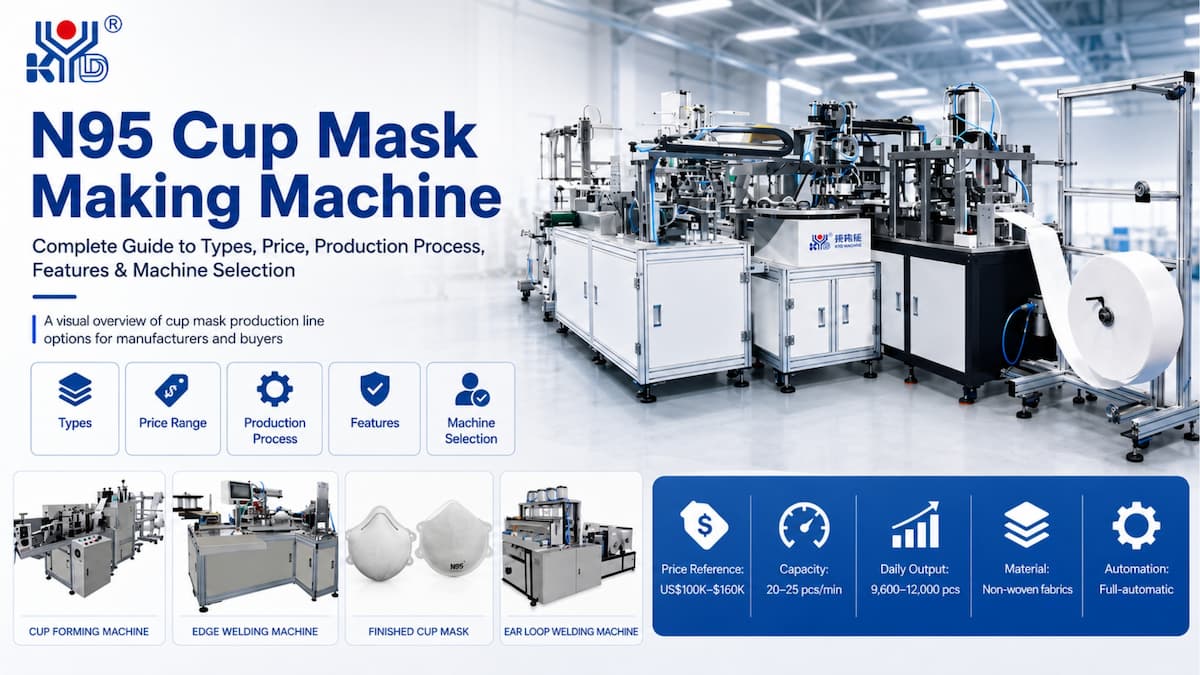
Choosing an N95 cup mask making machine requires more than comparing price and speed. A buyer must decide whether the factory needs a forming unit, several finishing machines, or a fully automatic line that converts nonwoven materials into completed cup-shaped masks.A poor configuration can create bottlenecks between forming, welding, nose-wire fitting, headband attachment, valve processing, and packaging. This guide explains the main machine types, production stages, price factors, features, and selection criteria.Quick AnswerAn N95 cup mask making machine forms layers of nonwoven material into a rigid, cup-shaped mask body. Depending on its configuration, the system may also cut edges, install nose wires, print logos, attach foam, weld headbands, punch valve holes, and weld breathing valves.What Is an N95 Cup Mask Making Machine?An N95 cup mask making machine is industrial equipment for producing moulded, cup-shaped filtering facepiece respirators. Unlike a flat mask machine, it must create a three-dimensional body while maintaining consistent layer alignment, shape, sealing, and component placement.The term can describe one machine or an entire N95 mask production line. Buyers should confirm every included process because a forming machine alone does not produce a finished respirator.Which Types of Cup Mask Making Machines Are Available?Cup Mask Forming MachineA forming machine feeds nonwoven layers, shapes the cup body, cuts it, and discharges the formed piece. KYD’s KYD-MC001 listing describes PLC control, photoelectric detection, six-mask forming cycles, and a stated capacity of 40–50 pieces per minute.Welding and Cutting MachineThis machine seals and trims the cup-mask body. KYD’s KYD-MC003 listing says ultrasonic welding and cutting occur together, with one operator and a stated output of 8–10 pieces per minute. A slower welding station can limit the line.Nose-Wire Sealing and Printing MachineThis finishing machine positions and heat-seals an aluminium nose wire while adding a logo through pad printing. The KYD-MC004A listing states a capacity of 15–20 pieces per minute with PLC control and photoelectric detection.Fully Automatic Cup Mask Production LineA fully automatic line combines several stages. KYD’s KYD-MC000 listing includes cup-cover production, moulding and cutting, optional aluminium nose strips, sponge strips, elastic-band welding, valve-hole punching, and valve welding. Its stated capacity is 20–25 pieces per minute.How Does the N95 Cup Mask Manufacturing Process Work?A typical process follows these steps:Material feeding: Spunbond, meltblown, and supporting nonwoven layers are aligned.Layer combining: The required materials are fed together without wrinkles.Cup forming: Heat, mould pressure, or ultrasonic technology creates the body.Welding and cutting: The profile is sealed and trimmed.Nose-wire fitting: A metal strip is positioned and bonded.Printing and foam: Identification and optional face-seal foam are added.Headband welding: Elastic straps are positioned and welded.Valve processing: Optional valve holes are punched and valves are welded.Inspection and packaging: Finished masks are checked and packed.An N95 mask manufacturing machine controls production, but it does not certify the finished respirator. Filtration, breathing resistance, design, markings, and other tests depend on the intended market. Certification methods also differ among N95, FFP2, and KN95 products.Which Features Matter Most?Useful features improve stable output, quality control, and maintenance:PLC and touchscreen controlPhotoelectric detectionUltrasonic weldingServo or frequency controlReplaceable mouldsAutomatic fault detectionAccessible toolingTest runs with the buyer’s materialsKYD’s cup-cover machine listing describes PLC control, photoelectric detection, frequency conversion, and 100–150 covers per minute. Because this is only the cover-making stage, that speed should not be treated as finished-mask output.How Much Does an N95 Mask Making Machine Cost?The N95 mask making machine price depends on automation, included modules, output, mould design, component brands, customization, installation, and delivery.Current KYD Alibaba listings illustrate the range. The KYD-MC003 welding-and-cutting unit is listed at US$15,000 for one or two sets, the KYD-MC001 forming machine at US$23,000 for one or two sets, and the fully automatic KYD-MC000 line at US$160,000 for one set. These are listing prices, not guaranteed delivered quotations.A complete quotation should separate machine and mould cost, optional modules, freight, duties, installation, training, spare parts, utilities, and trial materials.How Do You Choose the Right N95 Mask Production Line?Start with the finished mask, not the catalogue. Define the dimensions, layer structure, headband style, nose-wire position, foam, valve, printing, and target standard. Then calculate required sellable output per shift after allowing for rejects, maintenance, and changeovers.Ask the cup mask machine manufacturer to test your actual materials and provide a factory acceptance test. Confirm whether the quoted speed represents covers, formed bodies, machine cycles, or completed masks.Also review footprint, voltage, power, compressed air, staffing, spare parts, remote support, warranty, and training. A cheaper machine can become costly if one specialized component causes long downtime.What Common Buying Mistakes Should Be Avoided?The biggest mistake is buying one module while assuming it is a complete production line. Buyers also compare unmatched capacity figures, overlook tooling costs, and fail to confirm material compatibility.Another mistake is treating N95, FFP2, and KN95 as interchangeable labels. Similar machines may support different designs, but the finished product must meet its intended market requirements.Frequently Asked QuestionsCan one cup mask making machine produce different sizes?It may produce different sizes when its mould, cutting tools, fixtures, and settings are replaceable. Request a tooling list, changeover procedure, setup time, and samples for every planned size.What materials are used in cup-shaped respirators?Cup-shaped respirators commonly use several nonwoven layers, including spunbond material, filtration media such as meltblown fabric, and structural layers. Nose wires, elastic headbands, foam, and optional valves are added according to the design.Is a fully automatic line always better?No. A fully automatic line reduces handling, while a modular line may offer lower initial cost and easier expansion. The right choice depends on output, labour cost, space, budget, and technical capability.What determines production capacity?Final capacity depends on the slowest connected process, material quality, changeovers, reject rate, maintenance, operator performance, and packaging. A high-speed forming machine cannot overcome a slower finishing module.Does the machine guarantee N95 certification?No. The machine performs manufacturing operations only. Certification depends on the finished respirator’s design, materials, quality controls, testing, markings, and approval process in the target market.What should a supplier trial include?The trial should use the buyer’s target materials and dimensions. It should verify forming quality, weld strength, nose-wire placement, strap attachment, valve alignment, stable output, reject rate, and changeovers.ConclusionThe right N95 cup mask making machine must match the finished design, required output, factory utilities, budget, and compliance plan. Buyers should distinguish forming, welding, printing, cover-making, and finishing modules from a complete line. They should compare verified finished-mask output rather than isolated machine speed.KYD offers individual modules and fully automatic configurations for different production needs. Contact KYD with your mask drawing, layer structure, target capacity, and optional features to request a configuration-specific proposal.
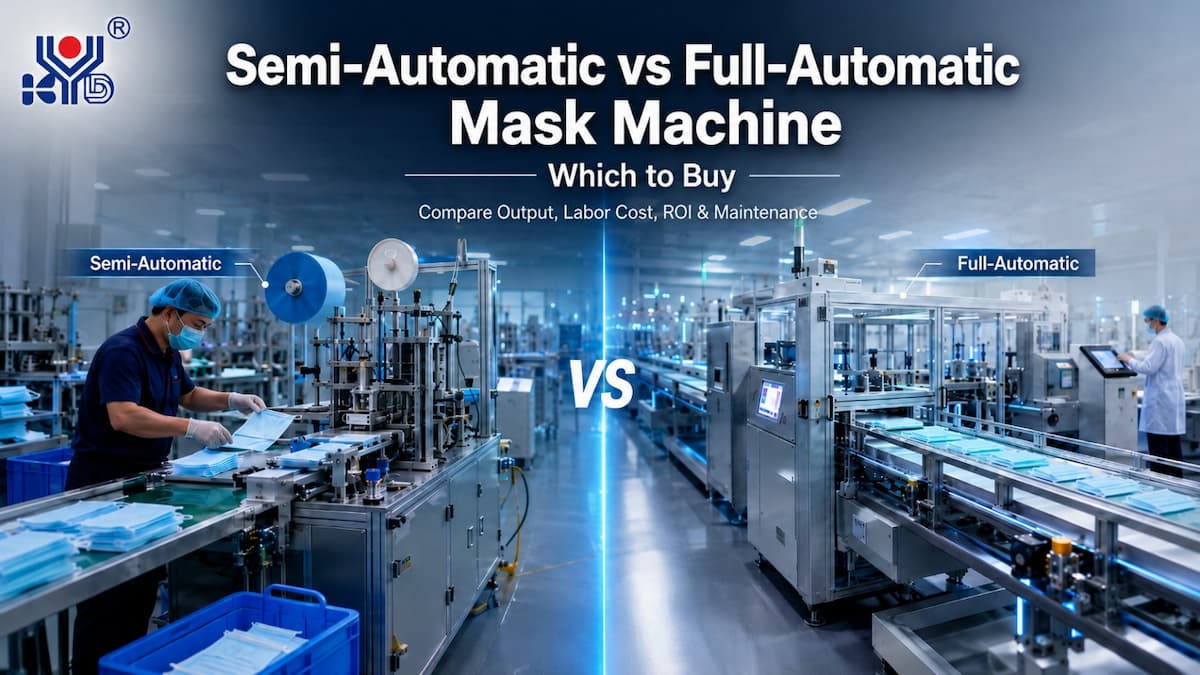
You're staring at two quotes — one for a semi-automatic mask machine, one for a full-automatic line — and the price gap makes you nervous. Buy too small a machine, and you'll be turning away orders in six months. Buy too big, and you're paying for capacity you don't need yet. This isn't just a spec-sheet decision; it's a cash-flow decision that will shape your production capacity for years. Here's how to actually think it through.What "Semi-Automatic" and "Full-Automatic" Really MeanA semi-automatic mask machine typically requires an operator to feed materials, adjust settings between batches, or manually handle certain stages like ear-loop welding or mask stacking. A full-automatic line integrates the entire process — fabric feeding, folding, ultrasonic welding, ear-loop attachment, and cutting — into one continuous, largely hands-off workflow, usually controlled through a PLC (programmable logic controller) system.The core trade-off is simple: semi-automatic machines cost less upfront but need more labor per unit produced; full-automatic machines cost more upfront but reduce labor dependency and increase consistency.Output Speed: The First Number Buyers Ask AboutSpeed is usually the first thing procurement managers compare, and for good reason — it directly determines your daily production ceiling.Semi-automatic machines commonly run in the range of 15–20 masks per minute, depending on the model and the operator's efficiency.Full-automatic lines can push considerably higher throughput since there's no manual bottleneck between stages, though actual numbers vary a lot by machine configuration and mask type (flat vs. cup-shaped vs. duckbill).A useful exercise: calculate your required daily output, divide by your planned shift hours, and see which machine category actually meets that number — not just which one sounds more impressive.Labor Cost and Skill RequirementThis is where many factory owners underestimate the real cost difference.Semi-automatic machines need 1–3 operators per line depending on how many manual steps remain, plus a higher tolerance for human error (misalignment, inconsistent welds).Full-automatic lines typically need one operator to monitor multiple machines, but that operator needs more training on PLC systems and troubleshooting.If labor in your region is inexpensive and easily available, semi-automatic can still make financial sense even at slightly lower output. If labor costs are rising or hard to retain, the full-automatic route often pays for itself faster than buyers initially expect.Upfront Investment vs. Long-Term ROISemi-automatic machines have a lower entry price, which matters a lot for factories in their first 1–3 years of operation or those testing a new product line before committing further capital.Full-automatic machines cost more upfront, but the calculation buyers should run isn't "which is cheaper" — it's "what's my cost per 1,000 masks over 12 months," factoring in labor, downtime, and rejection rate. For factories running high-volume, steady orders (especially export contracts with tight deadlines), full-automatic often reaches break-even faster than expected because labor savings compound month over month.Maintenance, Downtime, and After-Sales SupportA machine is only as good as the support behind it. Before comparing prices, ask any supplier:What's the average response time for technical support?Are spare parts stocked locally or shipped internationally (and how long does that take)?Is installation and operator training included, or billed separately?At KYD, machines go through installation support and hands-on operator training as part of the process, along with after-sales maintenance and troubleshooting support — because a machine sitting idle due to unavailable parts or slow support erases any ROI advantage on paper.Which One Fits Your Factory?A simple way to decide between a semi-automatic and a full-automatic machine is to look at your current business needs. If your order volume is moderate or seasonal, labor is cheap and easy to find, your budget is still at an early-stage or testing level, and your product specifications change frequently, then a semi-automatic machine may be the better choice. On the other hand, if your order volume is high and consistent, labor is expensive or difficult to find, your business is scaling or already established, and your products are standardized for long production runs, then a full-automatic machine can be more suitable. There is no universally “better” machine; the right choice depends on your order volume, labor market, budget stage, and growth plan at the moment. ConclusionThe semi-automatic vs. full-automatic decision isn't about which machine is more advanced — it's about which one matches where your business actually is today, and where it's headed in the next 12–24 months. Get the output-per-labor-cost math right, and the rest follows.If you want help mapping your specific order volume and budget to the right machine configuration, reach out to KYD's team for a tailoreSemi-Automatic vs Full-Automatic Mask Machine: Which to Buyd recommendation.
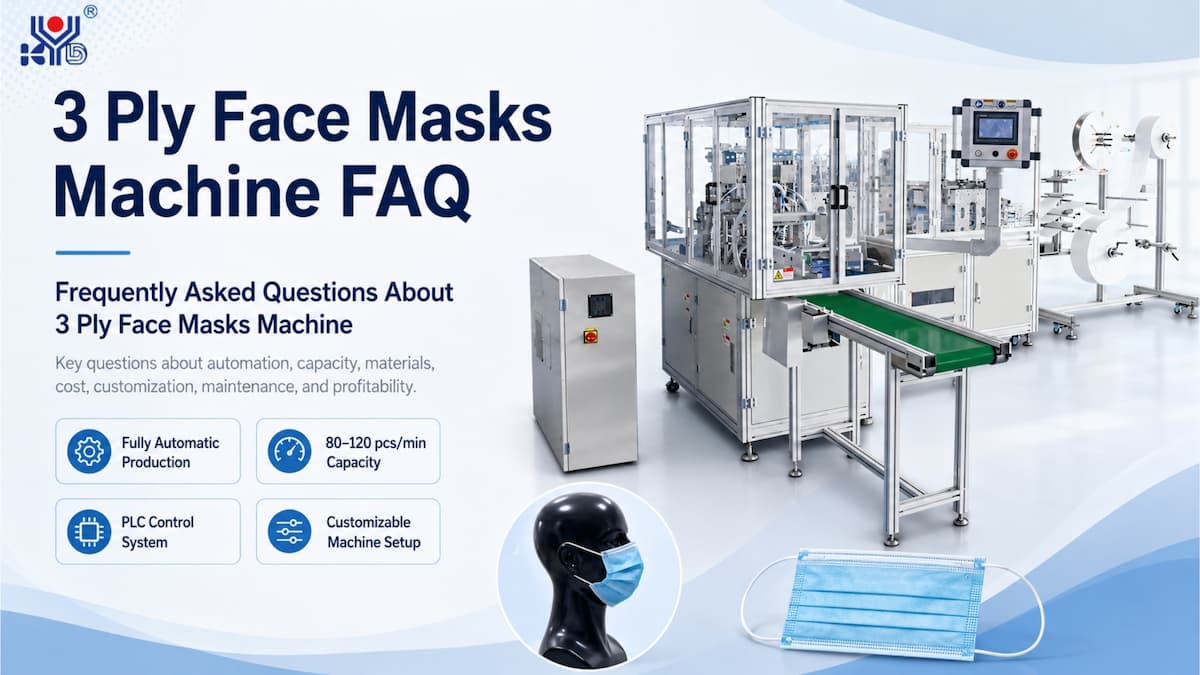
Frequently Asked Questions About 3 Ply Face Masks Machine1. What is a 3 ply face masks machine?A 3 ply face masks machine is an automatic machine used to produce disposable surgical-style face masks with three protective layers. It usually handles non-woven fabric feeding, pleat forming, nose wire inserting, ultrasonic sealing, cutting, and ear loop welding. For factories, a fully automatic face mask making machine helps improve production speed, consistency, and labor efficiency.2. What does “3 ply” mean in a face mask?“3 ply” means the mask is made with three layers of material. A standard 3 ply disposable mask usually includes an outer non-woven layer, a middle filtration layer, and an inner skin-friendly layer. This layered structure is one reason 3 ply face masks are widely used in medical, industrial, and daily protection markets.3. What is the production capacity of the GDKYD 3 ply face mask machine?The GDKYD Automatic Disposable Surgical Face Mask Machine is listed with a production capacity of 80–120 pieces per minute. This makes it suitable for businesses that need stable, high-volume disposable mask production. Actual output may depend on raw material quality, operator skill, machine setup, and required mask specifications.4. Is this a fully automatic face mask making machine?Yes, this type of 3 ply mask making machine is designed for automatic production. It can complete several key steps in one production line, including material feeding, mask body forming, nose wire placement, sealing, cutting, and ear loop welding. A fully automatic face mask making machine is best for manufacturers who want faster output with fewer manual steps.5. What materials are used in a 3 ply surgical mask making machine?A 3 ply surgical mask making machine commonly uses non-woven fabric, meltblown filtration material, elastic ear loops, and nose wire. The exact material specification depends on the target mask standard, buyer market, and production requirement. For better results, manufacturers should choose consistent raw materials that match the machine’s feeding and welding system.6. What is the difference between a 3 ply mask machine and an N95 mask machine?A 3 ply mask machine produces flat disposable surgical-style masks, while an N95 mask machine produces respirator-style masks with a different shape, structure, forming process, and filtration requirement. A 3 ply face mask making machine is usually faster and simpler for flat mask production. An N95 or cup mask machine is more specialized and often has lower production speed.7. Why is PLC System important in a 3 ply face mask machine?A PLC System helps control machine operation, timing, speed, and production stability. In a 3 ply face mask machine, PLC control can make the line easier to operate and more consistent during continuous production. For factory buyers, this is important because stable automation can reduce human error, downtime, and material waste.8. How much does a 3 ply face mask making machine cost?The price of a 3 ply face mask making machine depends on automation level, production speed, machine configuration, customization, packaging options, shipping, and after-sales support. Because industrial machines are usually customized, buyers should request a direct quote instead of relying on a fixed online price. For accurate pricing, share your required capacity, mask size, voltage, and destination country.9. Can the machine produce medical surgical face masks?Yes, a 3 ply surgical mask making machine is designed to produce disposable surgical-style face masks. However, the final mask’s medical compliance depends on raw materials, production environment, testing, certification, and local regulatory requirements. The machine can support production, but the finished mask must still be tested according to the target market’s standards.10. Who should buy a 3 ply face masks machine?A 3 ply face masks machine is suitable for medical supply manufacturers, PPE factories, disposable product suppliers, non-woven product manufacturers, and businesses planning large-scale mask production. It is a strong option for buyers who need high output, automated operation, and consistent mask quality. Small buyers should first calculate demand, raw material cost, labor, space, and certification needs.11. What should I check before buying a face mask making machine?Before buying a face mask making machine, check production speed, automation level, PLC control, compatible materials, machine size, power requirement, spare parts, warranty, installation support, and operator training. You should also ask whether the supplier can customize the machine for your mask size, market requirement, and production target. This prevents costly mistakes after installation.12. Can the 3 ply mask machine be customized?Yes, many industrial 3 ply mask machines can be customized based on production requirements. Custom options may include mask size, line configuration, ear loop type, output capacity, voltage, language interface, and additional inspection or packing systems. For the best result, buyers should confirm all technical requirements with the supplier before placing an order.13. Does GDKYD provide installation and training?GDKYD states that it provides installation support and hands-on training for machinery buyers. This is important because proper setup, calibration, and operator training directly affect production speed and mask quality. New buyers should ask for a clear installation plan, training scope, spare parts list, and maintenance guide before shipment.14. How do I maintain a 3 ply face mask making machine?A 3 ply face mask making machine should be cleaned, inspected, and maintained regularly. Key areas include fabric feeding rollers, ultrasonic welding units, cutting parts, ear loop welding sections, sensors, and the PLC control system. Preventive maintenance helps reduce downtime, improve product consistency, and extend machine service life.15. Is a 3 ply face mask machine profitable?A 3 ply face mask machine can be profitable when there is steady demand, reliable raw material supply, efficient production, and proper market access. Profit depends on mask selling price, production volume, labor cost, material cost, certification cost, packaging, and distribution. Before buying, calculate your cost per mask and expected monthly sales volume.
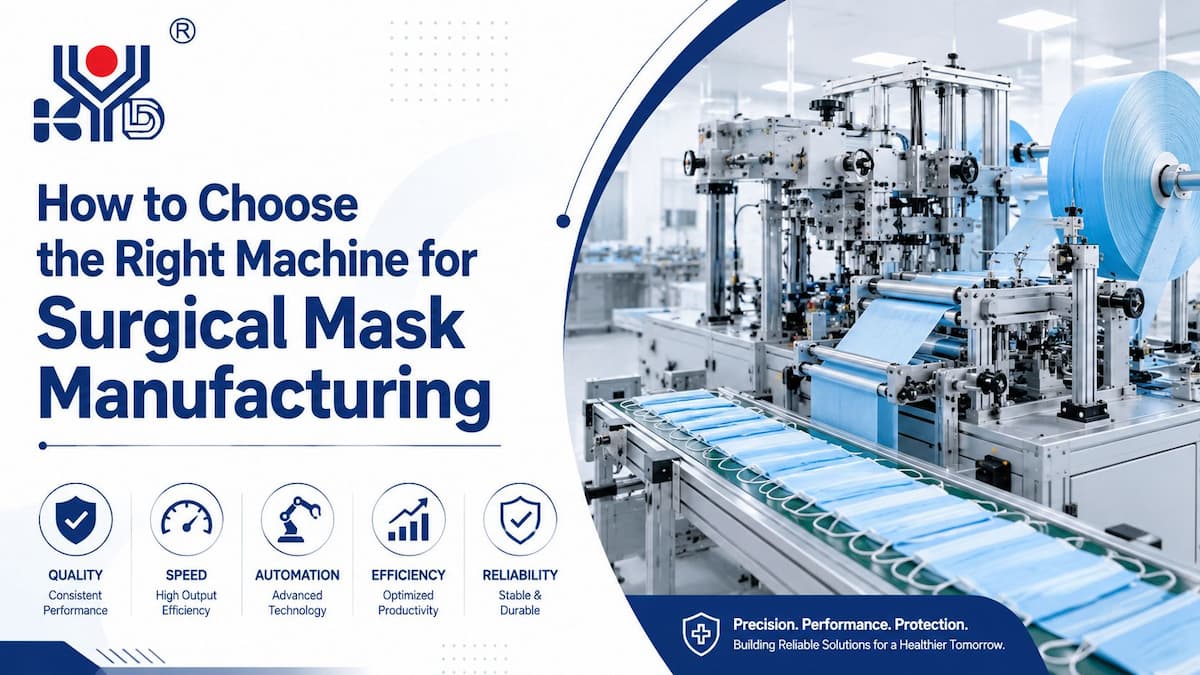
Setting up a face mask production line is not only about buying a machine. It is about choosing the right automation level, mask type, production capacity, raw materials, quality control process, and after-sales support. For buyers who want to produce disposable surgical face masks, 3 ply surgical face masks, or cup-style respirator masks, the right setup can reduce labor costs, improve output, and make production more stable.This guide is written for global buyers, factory owners, PPE suppliers, and surgical face mask manufacturers who want a clear, practical way to plan their production line. You will learn what machines are needed, how to compare options, what mistakes to avoid, and how Guangdong KYD Precision Machinery Co., Ltd. can support non-woven mask production projects.Quick Answer: What Is a Face Mask Production Line?A face mask production line is a complete machine system that turns non-woven fabric, melt-blown fabric, nose wire, and ear loop material into finished masks. A standard line may include material feeding, folding, nose wire inserting, ultrasonic welding, cutting, ear loop welding, counting, inspection, and packaging. For buyers, the best line depends on the mask type, target capacity, factory space, labor plan, and quality requirements.Table of ContentsWhat Is Included in a Face Mask Production Line?Main Types of Face Mask MachinesSurgical Mask vs Cup Mask Production LineKey Factors Before Buying a MachineProduction Line Setup ChecklistCommon Mistakes Buyers Should AvoidExpert Tips for Better ROIFAQsConclusionWhat Is Included in a Face Mask Production Line?A complete face mask production line is usually built around the final mask design. For a 3 ply surgical face mask, the process normally starts with automatic fabric feeding. The machine layers the non-woven and melt-blown materials, inserts the nose wire, folds the mask body, welds the edges, cuts the mask shape, and then attaches the ear loops or tie straps.For a higher-level setup, the line may also include automatic counting, visual inspection, metal detection, bag packaging, box packaging, or direct connection to a packaging machine. This is important for buyers who want stable commercial production instead of small-batch manual work.A good line should help the factory produce masks with consistent size, strong welding, clean edges, comfortable ear loops, and stable output.Main Types of Face Mask MachinesDifferent buyers need different machines. Before choosing, you must decide what product you want to sell.1. Surgical Face Mask Making MachineA surgical face mask making machine is used to produce flat masks, usually 3 ply surgical face mask products. This is one of the most common choices for medical suppliers, hospitals, wholesalers, and disposable mask making machine buyers.It is suitable for:Disposable surgical face mask production3 ply surgical face mask productionFlat medical mask productionEar loop or tie-on mask productionHigh-volume daily outputThis machine is a strong choice when the buyer wants a simple, scalable, and widely demanded product.2. Disposable Mask Making MachineA disposable mask making machine is often used for flat daily-use masks or basic protective masks. The structure is similar to surgical mask production, but the required quality level may depend on the target market.Buyers should not only check machine speed. They should also check welding strength, fabric compatibility, machine stability, spare parts availability, and how easy it is for workers to operate the system.3. Cup Mask Making MachineA cup mask making machine is used for molded masks, including cup-style respirator masks. These masks need forming, welding, trimming, valve or headband processing, and sometimes extra steps depending on the design.This setup is more complex than a flat mask line. It is suitable for buyers who want to produce cup masks for industrial, medical, or labor protection markets.4. N95 Cup Mask MachineAn N95 cup mask machine is designed for cup-style respirator production. Buyers should pay close attention to mask shape stability, forming quality, nose foam placement, headband welding, and sealing performance.For this type of project, the machine supplier should understand both automation and the practical production challenges of respirator-style masks.Surgical Mask vs Cup Mask Production LineWhen evaluating which production line to invest in, it is important to understand the fundamental differences in technology, operational demands, and market application.Product Structure and Design:A Surgical Mask Line is designed to manufacture flat, disposable 3-ply masks, which are straightforward in construction. Conversely, a Cup Mask Line produces molded, rigid cup-shaped respirators, a design that necessitates more complex manufacturing steps.Complexity and Technical Requirements: The production complexity for surgical masks is considered low to medium, making these machines easier for staff to operate. In contrast, cup mask production involves medium to high complexity; it requires advanced technical control to ensure the product maintains its specific molded shape and integrity.Cost and Investment: Generally, the capital expenditure for a surgical mask machine is lower, which aligns with its focus on high-speed, high-volume output. A cup mask line typically involves a higher machine cost due to the sophisticated forming and sealing technology required to produce a durable respirator.Strategic Focus and Market Application: The Surgical Mask Line is best suited for medical suppliers and wholesalers who prioritize speed, efficient ultrasonic welding, and ear loop quality. On the other hand, the Cup Mask Line is the preferred choice for PPE brands and industrial safety suppliers, where the primary focus is on precise forming, airtight sealing, and consistent shape retention to meet safety standards.If your target market needs high-volume flat masks, a surgical face mask making machine is often the better starting point. If your customers need respirator-style protection, a cup mask making machine or N95 cup mask machine may be more suitable.Key Factors Before Buying a Face Mask Production Line1. Final Mask TypeStart with the final product. Do you want to produce 3 ply surgical face masks, disposable masks, tie-on masks, cup masks, or N95-style cup masks? The surgical face mask design affects the entire machine configuration.2. Production CapacityAsk the supplier about stable working speed, not only maximum speed. A machine may have a high rated speed, but real factory output depends on material quality, operator skill, maintenance, and packaging speed.3. Automation LevelA fully automatic line can reduce labor and improve consistency. However, it usually requires a higher investment. Semi-automatic machines may be suitable for smaller factories, but they need more workers and more manual control.4. Raw Material CompatibilityYour machine should work smoothly with the materials you plan to use. Common materials include spunbond non-woven fabric, melt-blown fabric, nose wire, elastic ear loop, headband material, and packaging film.5. Welding QualityUltrasonic welding quality is very important. Poor welding can cause weak ear loops, loose edges, or rejected products. Before buying, ask for machine testing videos, sample masks, and factory acceptance testing.6. Space and Factory LayoutMany buyers forget the layout. You need enough space for raw material rolls, machine operation, finished mask collection, packaging, quality checking, spare parts, and worker movement.7. After-Sales SupportFor global buyers, support matters. Choose a supplier that can provide installation, training, troubleshooting, maintenance guidance, and spare parts. A low-cost machine can become expensive if support is weak.Face Mask Production Line Setup ChecklistEstablishing a successful face mask production line requires careful consideration of several key factors to ensure efficiency and product quality:The Unique Angle Most Buyers Miss: Packaging Can Limit Your OutputMany buyers focus only on the mask machine speed. But in real production, packaging can become the bottleneck. If your machine produces masks quickly but your workers pack them slowly, your total factory output will still be limited.For commercial production, plan the full workflow:Mask productionCountingInspectionBag packagingBox packagingCarton packingStorageShipmentIf possible, choose a setup where the mask production line can connect with automatic packaging machinery. This makes the operation smoother and more scalable.Why Choose Guangdong KYD Precision Machinery Co., Ltd.Guangdong KYD Precision Machinery Co., Ltd. focuses on automated non-woven processing machinery, including face mask machinery, medical machinery, filter cotton machinery, cosmetic and care machines, packaging machinery, and non-standard customized equipment.For face mask buyers, KYD offers different machine options, including automatic disposable surgical face mask machines, cup mask making machines, N95 cup mask machines, KF94 mask machines, and related mask processing systems.KYD is suitable for buyers who want:Customized machinery solutionsAutomated production systemsFace mask and non-woven machinery experienceInstallation and training supportMaintenance and after-sales serviceMachine options for different mask designsThis makes KYD a practical choice for global buyers who need more than a basic machine listing. A good supplier should help you plan the production process, not just sell equipment.Common Mistakes Buyers Should AvoidMistake 1: Buying Only Based on PriceThe cheapest machine may look attractive, but it can create problems later. Poor welding, unstable feeding, weak spare parts support, and frequent downtime can reduce profit.Mistake 2: Ignoring the Final Mask DesignA surgical face mask design is not the same as a cup mask design. Always confirm the final product size, layer structure, ear loop style, nose wire type, and packaging method before ordering.Mistake 3: Not Testing MaterialsDifferent fabrics behave differently during folding, welding, and cutting. Test your actual raw materials before mass production.Mistake 4: Forgetting Spare PartsAsk for a spare parts list before buying. Important parts may include ultrasonic components, cutters, belts, sensors, cylinders, and electrical parts.Mistake 5: No Operator TrainingEven automatic machines need trained workers. Good training reduces downtime, waste, and machine damage.Mistake 6: Ignoring Quality ControlSurgical face mask manufacturers should build a basic QC process from the beginning. Check mask size, appearance, welding strength, ear loop strength, nose wire position, and packaging quality.Expert Tips for Better ROIChoose the machine based on your target market, not only machine speed.Ask for real production videos using similar materials.Plan packaging before the machine arrives.Keep trained operators and maintenance staff.Order critical spare parts with the machine.Calculate output based on stable speed, not maximum speed.Work with a supplier that understands custom requirements.A face mask production line is a long-term investment. The right setup can help you produce stable quality, reduce waste, and serve buyers more professionally.FAQs About Face Mask Production Line Setup1. What machine do I need to produce a 3 ply surgical face mask?You need a surgical face mask making machine that can feed multiple fabric layers, insert the nose wire, fold and weld the mask body, cut the mask, and attach ear loops or tie straps. For larger production, you may also need automatic packaging equipment.2. What is the difference between a disposable mask making machine and a surgical mask machine?A disposable mask making machine can produce general flat masks, while a surgical mask machine is usually configured for medical-style mask production. The difference may include material layers, welding quality, mask design, and quality requirements.3. Is a cup mask making machine suitable for N95 mask production?A cup mask making machine can be used for cup-style respirator mask production. For N95-style cup masks, buyers should choose a machine designed for forming, welding, cutting, headband attachment, and stable cup shape production.4. How do I choose the right face mask production line capacity?Start with your daily sales target. Then calculate how many masks you need per hour and per shift. Also include downtime, material change, QC checks, and packaging speed in your calculation.5. What should I check before buying from surgical face mask manufacturers or machine suppliers?Check machine type, production speed, real testing videos, sample quality, after-sales service, warranty, spare parts, installation support, and whether the supplier can customize the line for your mask design.6. Can one machine produce both surgical masks and cup masks?Usually, no. Flat surgical masks and cup masks need different machine structures. A surgical mask line is designed for flat mask production, while a cup mask line is designed for molded mask production.7. Why is packaging important in mask production?Packaging protects the finished masks and improves commercial presentation. It also affects factory output. If packaging is too slow, it can reduce the efficiency of the full production line.ConclusionA face mask production line should be planned around your product, market, capacity, materials, quality standards, and long-term business goals. If you want to produce disposable surgical face masks, a 3 ply surgical face mask line may be the best starting point. If your market needs molded respirator-style products, a cup mask making machine or N95 cup mask machine may be more suitable.Guangdong KYD Precision Machinery Co., Ltd. provides automated non-woven machinery solutions for buyers who need reliable production, custom machine design, installation, training, and after-sales support. For global buyers planning a new mask manufacturing project, choosing the right machine partner can make production smoother, more efficient, and more profitable.
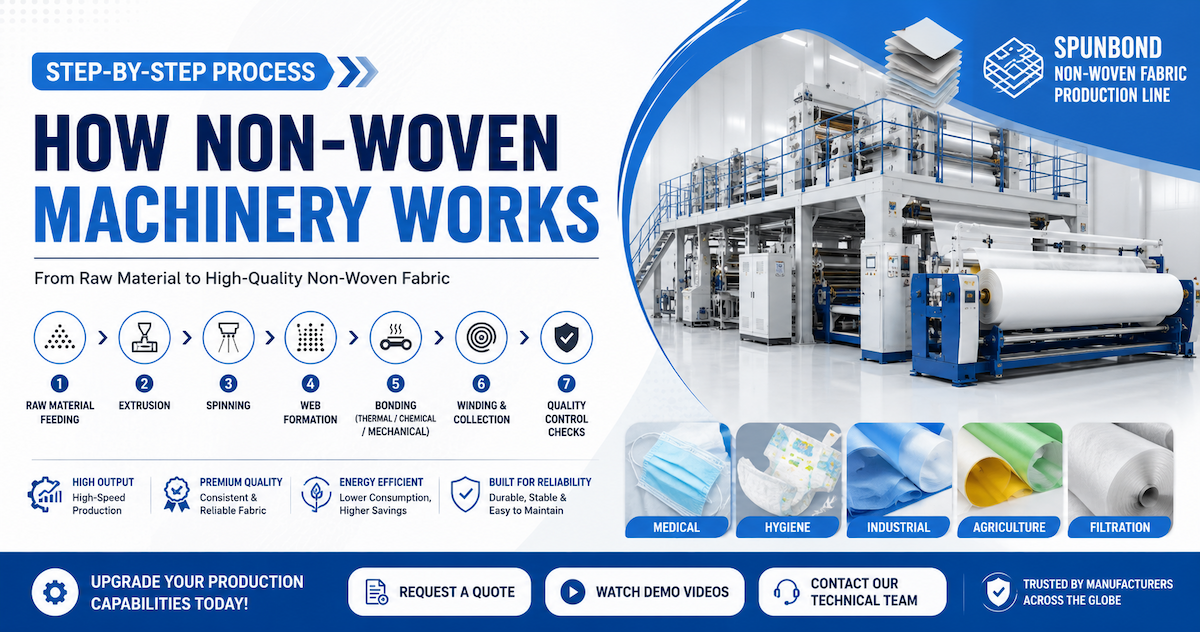
Non‑woven fabrics have revolutionized modern industries, from hygiene products to medical supplies. Unlike traditional woven textiles, these fabrics are engineered directly from fibers, offering high versatility, cost efficiency, and performance. Understanding how non‑woven machinery works is essential for manufacturers, production managers, and buyers aiming to optimize quality, reduce waste, and increase throughput. One of the most widely used systems is the Spunbond Non‑Woven Fabric Production Line, a robust solution for high-volume production that ensures consistent fabric quality and efficiency.What Is a Spunbond Non‑Woven Fabric Production Line?A Spunbond Non‑Woven Production Line transforms polymer granules into continuous filaments, which are then bonded to form durable, uniform fabrics. This technology is essential for producing SMS non-woven fabric, medical masks, hygiene wipes, and industrial materials. Its relevance in the European, South Asian, and Global markets is growing rapidly due to increasing demand for hygienic and disposable products. Engineers and procurement managers seek such machinery to improve production efficiency while controlling costs.Step‑by‑Step Operational ProcessRaw Material Feeding:The production begins with polymer granules, usually polypropylene. These granules are fed into a hopper and transported to the extrusion system. Precision in material feeding ensures consistent filament diameter and prevents production defects. High-quality industrial non‑woven machines rely on automated feeders to maintain steady polymer flow.Extrusion:In the extrusion unit, granules are melted under controlled temperatures. The molten polymer is forced through spinnerets to create continuous filaments. Temperature regulation and pressure consistency are crucial for uniform filament formation.Spinning:Filaments are drawn and stretched to achieve the desired strength and diameter. This spinning step ensures the fibers are properly aligned, which impacts the final fabric’s mechanical properties. Engineers monitor non‑woven fabric manufacturing process explained parameters like spin speed and tensile force.Web Formation:The continuous filaments are laid randomly on a moving conveyor to form a web. Air-laying or conveyor-assisted methods may be employed. This stage determines fabric density and thickness. Proper alignment ensures non-woven equipment workflow efficiency and uniformity.Bonding (Thermal / Chemical / Mechanical):The web is bonded to impart strength. Thermal bonding uses heated rollers, while chemical bonding applies adhesives, and mechanical bonding may use needle punching. The bonding method is selected based on application—medical or industrial—and affects texture, flexibility, and durability.Winding & Collection:After bonding, the fabric is wound into rolls for storage or further processing. Automated winding ensures tension consistency, avoiding wrinkles or uneven layers. This stage optimizes machine uptime and facilitates seamless non-woven fabric manufacturing downstream operations.Quality Control Checks:Continuous monitoring includes weight per unit area, thickness, tensile strength, and appearance. Real-time sensors and lab testing help detect defects early. This reduces scrap rates and ensures product consistency, a key factor in industrial non-woven machines performance.Machine Setup & Installation DetailsSetting up a Spunbond Production Line requires:Floor space: Even, vibration-free surfaces to support heavy machinery.Power supply: High-capacity three-phase power for heaters, motors, and rollers.Utilities: Compressed air, water cooling, and ventilation.Safety checks: Emergency stops, interlocks, and operator safety guards.Pre-start calibration involves verifying temperature settings, motor speeds, filament tension, and roller alignment. Test runs confirm uniform web formation before full-scale production begins.Operational Best PracticesMaintenance schedule: Daily cleaning, weekly lubrication, monthly alignment checks.Common issues: Filament breakage, uneven web formation, bonding defects.Troubleshooting: Adjust extrusion speed, spinneret temperature, or air flow.Safety protocols: Mandatory PPE, emergency stop awareness, and routine inspections.Adhering to these practices enhances machine longevity and reduces downtime.Cost, ROI & Business BenefitsInvesting in a Spunbond Non‑Woven Production Line involves evaluating:CapEx vs OpEx: Initial investment versus operational efficiency and energy savings.Throughput: High-speed lines produce hundreds of kilograms per hour.Energy efficiency: Modern lines reduce power consumption while increasing output.Quality machinery drives ROI by minimizing waste, ensuring compliance with global standards, and supporting rapid expansion in markets like Europe, South Asia and Global.FAQsQ1: What is the first stage in non‑woven production? A: Raw material feeding, where polymer granules are precisely introduced into the extrusion system.Q2: How does a spunbond machine differ from meltblown? A: Spunbond produces continuous filaments for strength and uniformity, while meltblown uses microfibers for filtration efficiency.Q3: How often should non‑woven machinery be serviced? A: Daily minor checks, weekly lubrication, and monthly preventive maintenance are recommended.Q4: What factors affect output quality? A: Polymer purity, extrusion temperature, filament drawing, web formation, bonding, and consistent tension control.Upgrade your production capabilities today with our Spunbond Non‑Woven Fabric Production Line.Request a QuoteWatch Demo VideosContact Our Technical Team
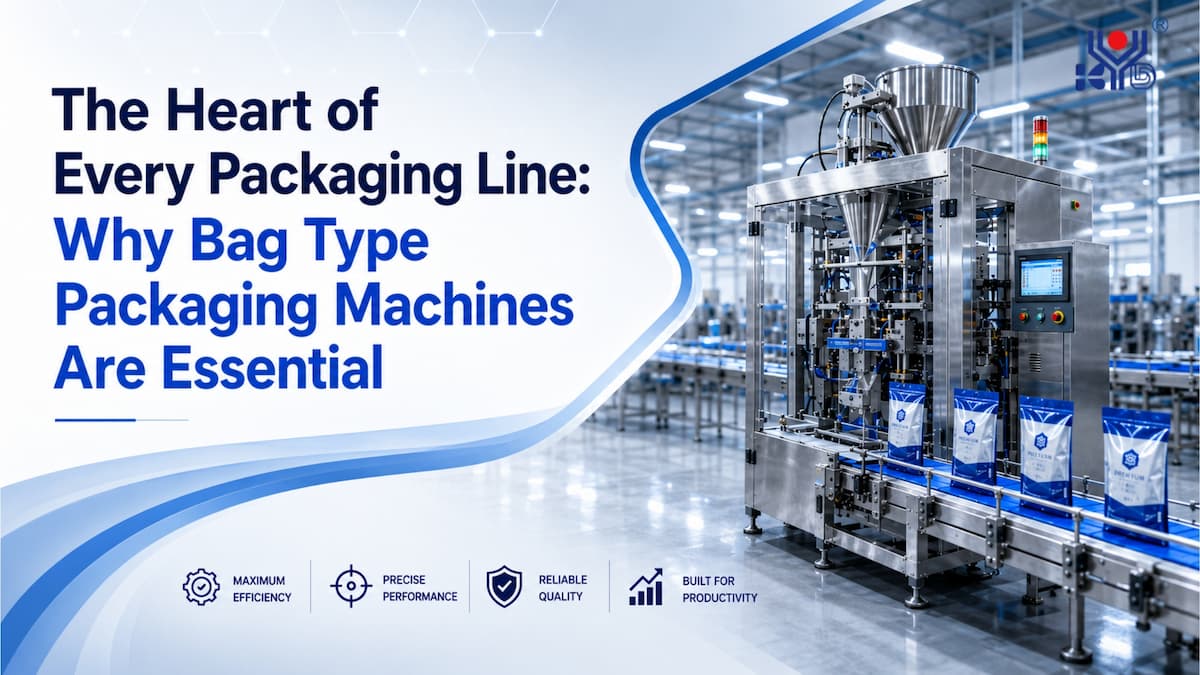
In today’s fast-paced manufacturing world, bag type packaging machines form the reliable core of efficient packaging lines. They automate forming, filling, and sealing bags, delivering speed, precision, consistency, and cost savings that manual processes simply cannot match.Whether you run a food processing plant in the Midwest, a pharmaceutical facility in Europe, or an agricultural supplier in Asia, these versatile machines help businesses scale production while meeting strict quality and safety standards. This guide explores why bag type packaging machines (also known as bagging machines or pouch packaging systems) prove indispensable and how to choose the right one for your operation.What Are Bag Type Packaging Machines?Bag type packaging machines automatically create, fill, and seal flexible bags or pouches from roll stock or pre-made formats. They handle products ranging from powders and granules to liquids, snacks, and frozen goods in one continuous, high-speed process.Common types include:Vertical Form Fill Seal (VFFS) machines — ideal for gravity-fed products like snacks, coffee, or grains.Horizontal Form Fill Seal (HFFS) systems — suited for larger or flat items.Premade pouch machines — perfect for stand-up pouches with zippers or spouts.These machines integrate seamlessly into full packaging lines, connecting with weighers, conveyors, and case packers for end-to-end automation.Why Bag Type Packaging Machines Are the Heart of Modern Packaging LinesThey serve as the central hub that synchronizes material flow, product dosing, sealing, and quality control, preventing bottlenecks and ensuring smooth throughput from raw materials to finished pallets.Without a reliable bag packaging system, even the most advanced upstream processes (mixing, cooking, or dosing) lose efficiency. These machines excel because they:Handle high volumes with minimal downtime.Maintain hygiene through reduced human contact.Adapt quickly to different bag styles and product types.In global markets—from bustling factories in China and India to North American distribution centers—bag packaging equipment drives competitiveness by cutting labor costs 30-50% and boosting output by up to 60%.Key Benefits of Investing in Bag Packaging MachinesAutomation delivers measurable ROI through faster production, lower costs, and superior product protection.Increased Efficiency and Speed: Modern VFFS machines reach 100–300+ bags per minute, far surpassing manual methods. This helps meet surging demand in the food sector, projected to drive strong packaging machinery growth.Cost Savings: Reduced labor, minimized material waste (precise filling and cutting), and lower shipping costs from lightweight flexible packaging add up quickly. Many operations see payback periods under 2 years.Consistency and Quality: Uniform seals and fills reduce rejects and recalls. Gas flushing options extend shelf life for snacks and perishables.Hygiene and Safety: Automated processes limit contamination risks—critical for food, pharma, and nutraceuticals.Sustainability Edge: Flexible bags use less material than rigid alternatives, lowering your carbon footprint and appealing to eco-conscious consumers worldwide.Versatility: One machine can switch between pillow bags, gusseted, quad-seal, or stand-up pouches for diverse product lines.Businesses in regions with tight labor markets (such as Europe or urban U.S. hubs) gain the biggest advantages by reallocating staff to higher-value tasks.Types of Bag Packaging Machines and How to ChooseThe best bag packaging machine for your line depends on your product type, preferred types of packaging bags, and daily production volume.Vertical Form Fill Seal (VFFS) machines work excellently for powders, granules, snacks, and liquids. They offer high speed (up to 300 bags per minute), compact design, and support multiple bag styles. Premade pouch machines are ideal for premium products with zippers or spouts, delivering superior presentation and easy changeover. Horizontal Form Fill Seal (HFFS) machines suit bars, bakery items, and flat products, providing stable horizontal flow at high speeds.When selecting an automated packaging machine or flexible packaging machine, consider your product characteristics (free-flowing or sticky), bag size and material (including types of plastic bags for food packaging or recyclable films), integration with existing lines, and local regulations such as FDA or EU standards.Real-World Applications Across IndustriesFood packaging machines are widely used for snacks, coffee, frozen foods, pet food, and spices. These bag packaging machines extend shelf life and create attractive retail-ready pouches.Pharmaceuticals: Precise dosing and tamper-evident seals.Agriculture: Efficient packing of grains and powders.Consumer Goods: Detergents and personal care items.Automated packaging machines help manufacturers meet international standards while reducing shipping damage.How These Machines Support SustainabilityModern flexible packaging machines handle recyclable and biodegradable films. Many businesses now pair bag packaging machines with paper packaging machines to offer customers both plastic and paper-based sustainable choices.Common Challenges and SolutionsInitial investment and changeover are common concerns, but today’s auto packaging machines feature quick-swap tooling and user-friendly controls. Partner with suppliers offering local service and training.Frequently Asked Questions (FAQs)What are the main types of packaging bags used with these machines?Common types of packaging bags include pillow, gusseted, quad-seal, and stand-up pouches, especially different types of plastic bags for food packaging.Are bag packaging machines the same as food packaging machines?Bag packaging machines are a key category within food packaging machines, specialized for flexible bagging solutions.Do you need separate shrink packaging machines?Some lines combine bag packaging machines with shrink packaging machines for added bundle protection, though many flexible formats don’t require it.Is paper packaging machine technology compatible?Yes — many manufacturers now offer hybrid solutions or dedicated paper packaging machines alongside flexible packaging machines.Conclusion: Upgrade Your Packaging Line TodayBag packaging machines are truly the heart of every efficient packaging operation. Whether you need a high-speed food packaging machine, versatile flexible packaging machine, or fully automated packaging machine, investing in the right solution delivers faster production, lower costs, better quality, and long-term profitability.Ready to boost your output and reduce manual work?Contact our team today for a free consultation and expert recommendation tailored to your business. Let us help you choose the perfect bag packaging machine that fits your products and production goals.
From 2026, the textile sector in personal protective equipment machinery is moving toward AI-powered, IoT-connected, automated, and data-driven production. This shift is happening because PPE manufacturing companies need faster output, better quality control, lower downtime, and stronger compliance tracking. AI and IoT manufacturers are getting attention because they can turn traditional PPE factories into smart manufacturing systems.The smart PPE market is already showing strong growth signals. One recent report projects the smart personal protective equipment market to grow from USD 5.39 billion in 2026 to USD 9.73 billion by 2030, at a 15.9% CAGR.Quick Answer:AI and IoT will not replace every manufacturer instantly. They will dominate the premium and high-efficiency PPE machinery segment first. The strongest shift is expected between 2026 and 2030. Manual and semi-automatic manufacturers will lose competitiveness where speed, traceability, compliance, and cost control matter.Why Is the Textile Sector Moving Toward Smart PPE Machinery from 2026?The textile machinery sector is moving toward smart PPE machinery because global buyers want faster production, consistent quality, and verified safety standards. PPE products like protective clothing, gloves, masks, gowns, helmets, smart vests, and electrical personal protective equipment need reliable manufacturing systems.For factories serving the personal protective equipment construction industry, compliance and traceability are becoming more important. A simple personal protective equipment sign is no longer enough to prove workplace safety; buyers now expect documented quality, digital reports, and real-time production visibility.Smart textile machinery helps manufacturers manage:faster PPE production,lower labor dependency,automated quality control,digital factory reporting,sensor-based safety products,and better material efficiency.This is why textile machinery solutions connected with AI, IoT, and Industry 4.0 are becoming more valuable.Why Is There So Much Talk About AI and IoT Manufacturers Dominating the Global Market?There is so much talk about AI and IoT manufacturers because they solve major problems in PPE manufacturing, such as downtime, defects, slow inspection, poor traceability, and inconsistent output. Traditional PPE production depends heavily on manual monitoring and reactive maintenance, which can increase cost and delay production.AI and IoT make this process smarter and more data-driven. AI helps with defect detection, production planning, material optimization, and predictive maintenance. IoT connects machines, sensors, production lines, energy systems, inventory, and quality control dashboards into one smart factory system.For example, instead of waiting for a machine to break down, IoT sensors can collect real-time data, and AI can predict possible failures before they stop production. This reduces downtime and maintenance cost. AI-based inspection can also detect stitching errors, material defects, size problems, and packaging issues faster than manual checking.That is why AI and IoT manufacturers are gaining global attention. They do not only provide machines; they provide smarter, faster, and more scalable PPE manufacturing systems for the Industry 4.0 era.In How Many Years Could AI and IoT Manufacturers Dominate the Global PPE Machinery Market? AI and IoT manufacturers could strongly influence the global PPE machinery market within 4–6 years from 2026, especially in premium, export-focused, and compliance-heavy manufacturing.A realistic timeline looks like this:2026–2027: Early adoption, testing, and pilot projects. 2028–2030: Large-scale adoption by advanced PPE manufacturers. 2030–2032: AI and IoT systems become standard in high-efficiency PPE machinery. After 2032: Manual-heavy production becomes less competitive in premium global markets.Here, “dominate” does not mean 100% replacement. It means stronger market influence, better margins, higher export demand, and more adoption among advanced factories.Why Will PPE Manufacturing Companies Invest in AI and IoT Machinery? PPE manufacturing companies will invest because smart machinery directly affects profit, speed, and reliability. For ppe clothing manufacturers, the main value is not only automation; it is better control over the full production process.AI and IoT machinery helps with:lower downtime,better OEE,reduced defects,lower rework cost,predictive maintenance,real-time production visibility,faster delivery,compliance documentation,lower manual inspection dependency,and improved energy efficiency.This is also why topics like iot in smart manufacturing, future of iot in manufacturing, iot industry 4.0, and smart manufacturing industry 4.0 are becoming important for B2B machinery buyers.How Much Can AI and IoT Surpass Manual or Previous Manufacturing Methods?AI and IoT can surpass manual methods mainly in speed, quality, maintenance, traceability, and decision-making. The exact improvement depends on factory size, machine condition, operator skill, product type, and investment level.Key calculations:ROI Formula: ROI (%) = [(Net Profit from AI/IoT Investment - Investment Cost) / Investment Cost] × 100 This shows whether the investment is financially worthwhile.Payback Period: Payback Period = Total Investment Cost / Annual Cost Savings This shows how many years the company needs to recover the investment.OEE Formula: OEE = Availability × Performance × Quality This measures how effectively machines are being used.Defect Rate: Defect Rate (%) = (Defective Units / Total Units Produced) × 100 This helps compare manual inspection with AI quality control.Smart Factory Advantage Score:Smart Factory Advantage = Cost Saving + Quality Gain + Downtime Reduction + Output Increase + Compliance Value This gives a wider business view beyond machine cost only.What Will the PPE Machinery Business Model Look Like in the AI and IoT Era? The future business model will combine machinery, software, data, monitoring, and service. PPE machinery companies will not only sell machines; they will sell performance. Future PPE Machinery Business ModelsIn the AI and IoT era, PPE machinery companies will move from only selling machines to selling performance-based solutions. Machinery-as-a-Service will allow manufacturers to pay based on machine use or output, reducing upfront investment. Predictive maintenance subscriptions will provide monthly monitoring and alerts to reduce downtime. Remote dashboards will show live machine and production data for better control.AI quality control will detect defects through software, helping reduce rejected products. Smart factory integration will connect machines, sensors, and systems for scalable production. Compliance reporting will create digital production records, making buyer approval easier and faster.This model will create after-sales software revenue for machinery suppliers and better production control for PPE factories. Which Companies Will Win in This Market? The winning companies will combine textile machinery expertise with AI software, IoT hardware, sensors, robotics, data analytics, and after-sales support.They will also understand PPE product requirements, including masks, gowns, gloves, coveralls, protective clothing, helmets, smart vests, electrical personal protective equipment, and safety wear.Companies that only sell traditional machines without digital support will struggle in premium markets. Companies that offer full AI predictive maintenance, machine learning, real-time monitoring, and smart factory services will gain stronger buyer trust.Risks and Challenges of AI and IoT PPE Machinery The main challenges are high initial investment, skilled operator requirements, cybersecurity risk, integration with old machines, data accuracy problems, maintenance complexity, and resistance from traditional factories.Manufacturers can reduce these risks by starting with one production line, training operators, using secure IoT systems, choosing scalable software, and measuring ROI before full factory adoption.Final Forecast: Where Is the Textile PPE Machinery Sector Going After 2026? After 2026, the textile PPE machinery sector will move toward smart, automated, connected, and data-driven manufacturing. AI and IoT in PPE manufacturing machinery will become a major competitive advantage for companies that want speed, quality, traceability, and export-ready production.Manual systems will still exist, but advanced PPE exporters and large manufacturers will prefer smart machinery. The future business model will combine textile machinery, AI software, IoT data, predictive maintenance, compliance reporting, and long-term service revenue.FAQ Section What is AI-powered PPE machinery? AI-powered PPE machinery uses artificial intelligence to improve production decisions, defect detection, quality control, maintenance planning, and workflow automation. In PPE manufacturing, it helps factories reduce manual inspection, improve consistency, and produce protective products faster with better data visibility. How does IoT help PPE manufacturing? IoT helps PPE manufacturing by connecting machines, sensors, production lines, energy systems, and quality control tools. It allows factory managers to monitor performance in real time, detect problems early, reduce downtime, and create digital records for compliance and production reporting. Will AI replace manual PPE manufacturing? AI will not replace every manual PPE manufacturing process immediately. It will first dominate high-efficiency, export-focused, and compliance-driven production lines. Manual systems will still exist, but they will become less competitive where speed, quality, traceability, and cost control are critical. When will AI and IoT dominate PPE machinery? AI and IoT are likely to dominate advanced PPE machinery between 2028 and 2032. From 2026 to 2027, adoption will grow through pilot projects. By 2030, more export-focused PPE manufacturers are expected to use smart machinery as a competitive advantage. Why should PPE manufacturers invest in smart machinery? PPE manufacturers should invest in smart machinery because it reduces downtime, improves OEE, lowers defects, increases production visibility, and improves compliance documentation. It also helps companies move from reactive maintenance to predictive maintenance and compete in premium global markets. What is the ROI of AI and IoT PPE machinery? The ROI of AI and IoT PPE machinery depends on investment cost, annual savings, defect reduction, downtime reduction, and production improvement. The basic formula is: ROI (%) = [(Net Profit from Investment - Investment Cost) / Investment Cost] × 100.
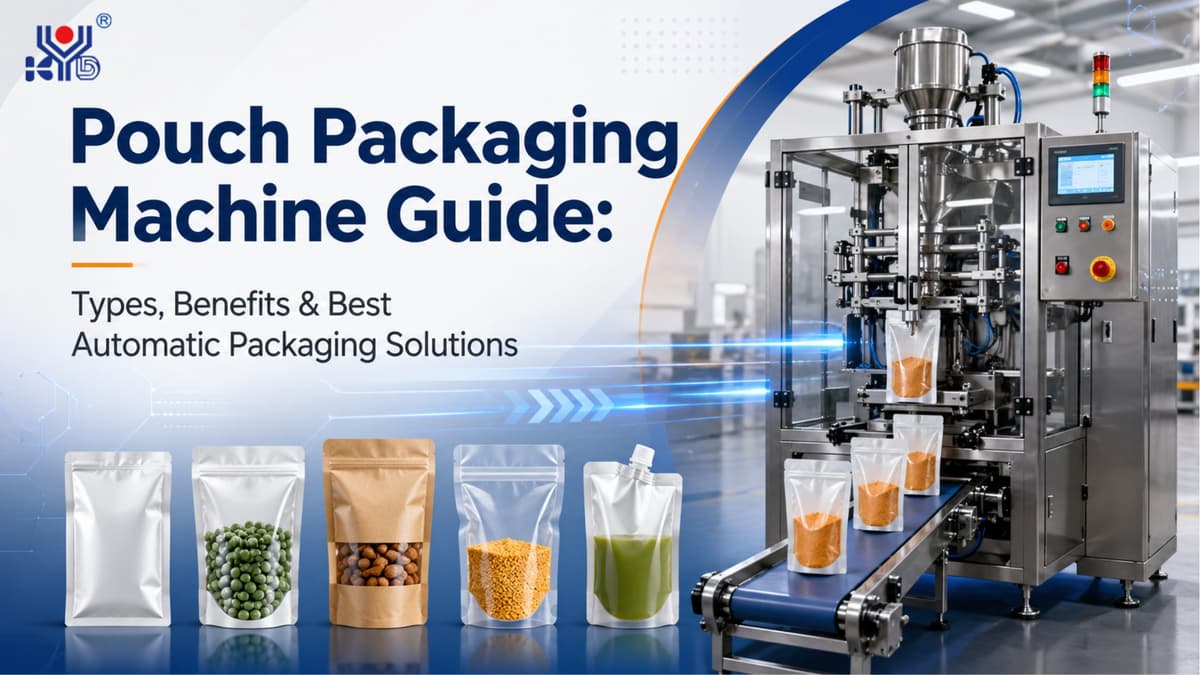
If your business packages food, pharmaceuticals, chemicals, or cosmetics, the equipment you use directly determines your output quality, production speed, and cost per unit. A pouch packaging machine also called a bag type packaging machine automates the entire process of forming, filling, and sealing flexible pouches, replacing slow manual processes with consistent, high-speed production.This guide covers everything you need to know: what these machines are, which types suit which industries, the real business benefits, and how to evaluate your options before you buy.Quick Answer: A pouch packaging machine automatically fills and seals products into flexible bags or pouches. It is used across food, pharmaceutical, chemical, and cosmetic industries. Types include vertical (VFFS), horizontal (HFFS), and premade pouch machines. Fully automatic models with PLC control deliver the highest output with minimal labour.Key TakeawaysThe global pouch packaging machines market is projected to grow from USD 1.4 billion in 2025 to USD 2.1 billion by 2035, at a CAGR of 4.1%. Automatic machines already hold a 58.3% market share — the industry is firmly shifting toward full automation. The right machine type depends on your product form: powder, liquid, granule, or solid.PLC control, servo motors, and self-diagnostic systems are now standard expectations, not premium add-ons.Price varies significantly by automation level, speed, and configuration knowing your production requirements first saves capital.What Is a Bag Type Packaging Machine?A bag type packaging machine is an industrial system that takes flexible packaging film like PP, PE, laminate, or biodegradable materials and automatically forms it into a pouch, fills it with the product, and seals it ready for distribution.The term covers a wide family of machines. What they share is the ability to handle flexible formats, operate at high speed, and integrate with broader packaging automation systems on a production line.Pre-made pouch packaging machines have moved from a specialised capital purchase to a central operational asset across a wide range of product supply chains. Procurement managers evaluating these machines today are assessing them not just on throughput but on format flexibility, seal integrity, and how easily they integrate with digital production environments. Types of Pouch Packaging MachinesUnderstanding the different types is the starting point for any serious buying decision.Vertical Packaging Machine (VFFS)A vertical packaging machine forms the pouch from a flat film roll, fills it from above by gravity or an auger, and seals it all in a continuous vertical motion. It is the dominant format for powders, granules, liquids, and small solid products.Best suited for: powdered spices, coffee, sugar, snack foods, detergents, seeds, and pharmaceutical powders.Horizontal Packaging Machine (HFFS)A horizontal packaging machine moves the product horizontally along a conveyor, wrapping it in film and sealing it from the side. It handles products that need support during packaging — solid bars, medical devices, snack bars, and individually wrapped items.Best suited for: confectionery, bakery products, medical consumables, and industrial components that cannot be gravity-fed.Premade Pouch Fill and Seal MachineRather than forming the pouch from roll stock, this machine takes pre-formed pouches — stand-up pouches, doypack, gusseted, or zip-lock formats — opens them, fills them, and seals them. It offers the greatest format flexibility and the cleanest visual output for premium retail packaging.Best suited for: pet food, sauces, ready meals, cosmetic creams, liquid detergents, and any application where pouch appearance is a brand differentiator.Liquid Pouch Packaging MachineA liquid pouch packaging machine is a specialised configuration for water, juices, oils, syrups, and chemical liquids. It uses a timed-fill or flow-meter system to control fill volume precisely and produces heat-sealed or impulse-sealed pouches resistant to leakage.Industries That Rely on Automatic Pouch Packing MachinesThe automatic pouch packing machine is not a single-sector tool. It serves a broad industrial base:Food and beverage is the largest application segment globally. From snack seasoning sachets to frozen meal pouches, food manufacturers rely on high-speed flexible packaging to extend shelf life, reduce material costs, and meet retailer presentation standards. Demand for precision filling, nitrogen flushing capabilities, and compatibility with stand-up and shaped pouches continues to grow across food and cosmetics sectors.Pharmaceutical packaging machine applications demand the highest standards. Pouches containing tablets, capsules, sachets, or diagnostics must meet strict hygiene and seal integrity requirements. Stainless-steel contact parts, validated PLC documentation, and batch traceability are non-negotiable in this sector.Chemical packaging requires machines built to handle aggressive, corrosive, or abrasive materials. A chemical packaging machine must offer spill-resistant sealing, material-compatible contact parts, and robust construction that performs reliably under industrial operating conditions.Cosmetics and personal care — sachets, single-use creams, shampoo portions need gentle product handling combined with precise fill accuracy. A misaligned seal or an off-spec fill volume on a premium skincare sachet creates rejections that cost far more than the pouch itself.Benefits of an Automatic Pouch Packing Machine for Your BusinessSwitching from manual or semi-automatic packaging to a fully automatic bag filling machine delivers measurable returns across several dimensions:Higher throughput, lower labour cost: A modern high speed packaging machine running with two operators can outperform a ten-person manual team consistently, across every shift.Consistent seal quality: Human-operated sealing introduces variability. Automated sealing systems maintain the same temperature, pressure, and dwell time on every pouch, which means fewer leaks, fewer rejects, and fewer customer complaints.PLC control and self-diagnostics: A PLC control packaging machine monitors film tension, fill weight, seal temperature, and output count in real time. When a parameter drifts, the system alerts the operator before it creates waste — not after. A self diagnostic packaging machine reduces unplanned downtime by identifying faults early and guiding operators through structured troubleshooting steps.Flexible format capability: Modern flexible packaging machines store multiple product recipes in memory. Changing between a 50g sachet and a 500g stand-up pouch takes minutes, not a full shift.Data and compliance: For pharmaceutical and food export markets, documented production data is a regulatory requirement. PLC-equipped machines generate batch records automatically — the kind of documentation that manual lines simply cannot produce.How to Evaluate Bag Packaging Machine Price vs ValueBag packaging machine price varies significantly based on automation level, speed, and configuration. A semi-automatic benchtop unit may start from a few thousand dollars. A fully automatic high-speed servo line for pharmaceutical applications can exceed $80,000.The mistake most buyers make is comparing price without comparing total operating cost. Ask yourself:What is my required output in bags per hour or per shift?How many product formats or SKUs will this machine run?Do I package for a regulated market that requires validated documentation?What is the cost of downtime if this machine is unavailable for 48 hours?Answering these questions honestly determines your real budget — not just the machine price, but the cost of the wrong machine.When sourcing from a packaging machine manufacturer China, look beyond the catalogue. Verify CE certification through the issuing notified body. Request a live factory demonstration. Understand the after-sales support structure before committing. A reliable automatic packaging machine supplier will provide written response time commitments, stocked spare parts, and remote diagnostics capability as standard.ConclusionWhether you are scaling a food production line, entering pharmaceutical packaging, or managing chemical distribution, a well-specified pouch packaging machine is one of the highest-ROI investments a manufacturing business can make. The right bag type packaging machine reduces labour, eliminates seal variability, and generates the documentation your buyers and regulators require.The market is growing, the technology is mature, and the suppliers who have been building these systems for decades know exactly how to configure a machine for your application.Frequently Asked QuestionsWhat is a pouch packaging machine? A pouch packaging machine automatically forms, fills, and seals flexible pouches from film or pre-made bags. It is used across food, pharmaceutical, chemical, and cosmetic industries to replace manual packaging, improve seal consistency, and increase production speed. Most modern machines use PLC control for precision and data logging.What are the main types of bag type packaging machines? The main types are vertical form-fill-seal (VFFS) for powders and granules, horizontal form-fill-seal (HFFS) for solid products, premade pouch fill-and-seal for premium formats, and liquid pouch machines for beverages and chemicals. Each type suits different product forms and production volumes.How much does an automatic pouch packing machine cost? Bag packaging machine price ranges from around $5,000 for entry-level semi-automatic units to over $80,000 for fully automatic high-speed pharmaceutical-grade configurations. The right price point depends on your output requirement, automation level, product type, and compliance needs rather than the machine alone.What industries use automatic pouch packing machines? Pouch packaging machines serve food and beverage, pharmaceutical, cosmetics, chemical, agricultural, and industrial sectors.What is the difference between a vertical and horizontal packaging machine? A vertical packaging machine fills products from above using gravity or an auger, making it ideal for powders, granules, and liquids. A horizontal packaging machine moves products along a conveyor for wrapping, suiting solid items that need support during packaging. Product form and weight determine which type is appropriate. What does PLC control mean on a packaging machine? PLC stands for Programmable Logic Controller. On a packaging machine, the PLC coordinates all mechanical axes, monitors operating parameters like seal temperature and fill weight in real time, stores product recipes, and logs production data by shift. It enables self-diagnostic alerts and remote monitoring, reducing downtime and supporting regulatory compliance.
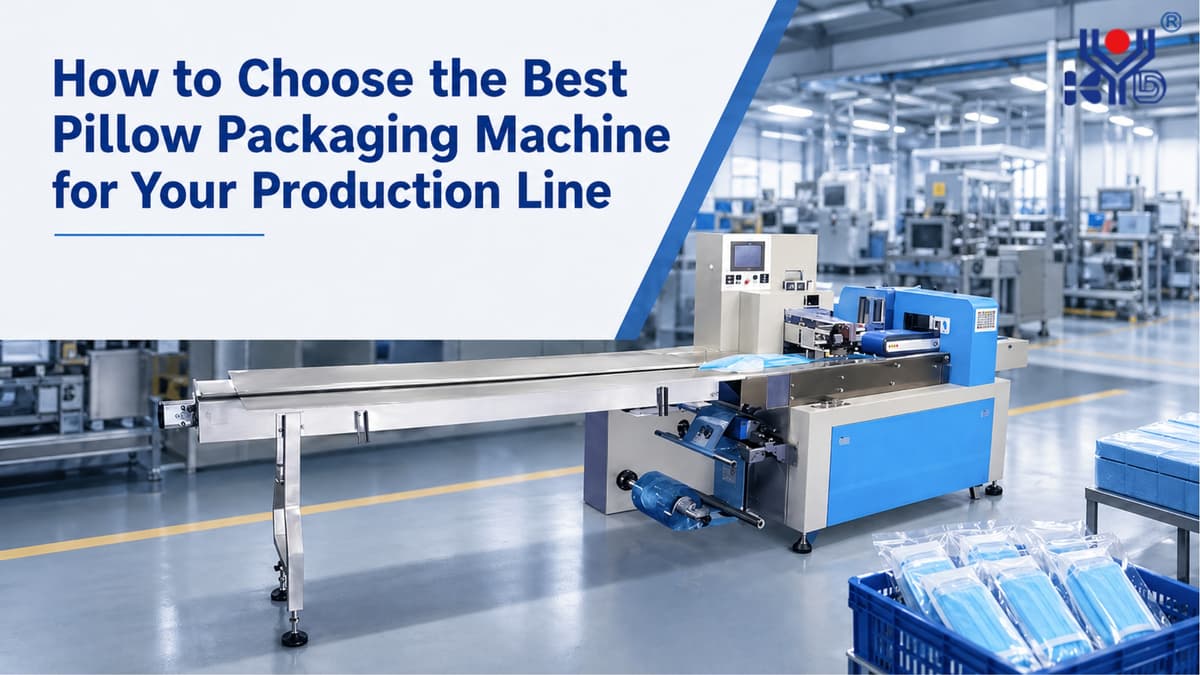
Most packaging machinery decisions come down to price and availability. That works until the machine arrives, and you realise it runs at 60 percent of the speed your line needs — or loses 40 minutes every time you switch product formats.Choosing a pillow packaging machine the right way starts with three questions: What is your production target? What does your product need? And which level of automation genuinely earns its investment back?This guide answers all three.What Is a Pillow Type Packaging Machine?A pillow type packaging machine also called a horizontal flow wrapper or automatic flow wrap machine — forms a continuous tube of flexible film around a moving product, seals it on three edges, and cuts individual pillow-shaped packs at speed. It handles PP, PE, OPP, laminate, and biodegradable films across food, pharmaceutical, cosmetic, and industrial applications.The global pillow packing machine market is forecast to reach USD 20.60 billion by 2031, growing at roughly 7.10 percent CAGR. That growth reflects one reality: manufacturers across every sector are replacing manual and semi-automatic packaging with fully automated pillow lines because the labour savings and output gains justify the investment fast.Understanding the Pillow Packaging Machine Working PrincipleBuyers who understand the pillow packaging machine working principle configure their lines better and diagnose problems faster.The cycle runs in four stages:Film unwind — packaging film feeds from a roll through tension rollers. Consistent tension here prevents seal misalignment downstream.Forming collar — the film wraps around a stainless-steel collar sized to your product's cross-section, shaping it into a tube around the incoming product.Longitudinal seal — a heated bar bonds the overlapping film edges along the pack length continuously as the machine runs.Cross-seal and cut — jaws press across the film at each end of the product, complete the seals, and a blade cuts the finished pack free. This stage determines speed and seal quality — and it is where your motor choice has the most visible impact.Step 1: Determine Your Speed RequirementsSpeed is the first number to fix, because it determines every specification that follows.KYD's pillow packaging machines run from 40 to 230 bags per minute across standard and high speed pillow packing machine configurations:Under 80 bags/min — A standard automatic flow wrap machine covers this range well. Reliable, simple, cost-effective for single-SKU food, non-food, or industrial lines.80 to 150 bags/min — Evaluate servo. Mechanical cutters begin producing inconsistent seals above 80 bags per minute, and the reject rate starts affecting your unit economics.150 bags/min and above — A high speed pillow packing machine with full three-servo control is the right platform. Each axis runs independently and synchronises electronically, keeping seal quality consistent at any speed setting.One number most buyers overlook: a 200 bags per minute machine at 83 percent uptime produces fewer packs per shift than a 150 bags per minute machine at 97 percent uptime.Step 2: Choose Your Motor TechnologyStandard motors use mechanical transmission to drive the film feed and sealer. They work well on single-product lines at fixed speed. Position accuracy is ±2 to 3 mm acceptable when seal position does not need to register against printed artwork. The limitation is changeover: switching product length on a standard machine means repositioning mechanical stops, recalibrating the cutter, and wasting film while settings stabilise. That can cost 30 to 45 minutes per format change.A servo pillow packaging machine solves this. Independent digital servos on each axis deliver ±0.5 mm accuracy with real-time self-correction. Changing format means selecting the saved recipe on the HMI touchscreen — servos reposition in under five minutes. Photoelectric colour-mark tracking keeps printed graphics centred on every pack, eliminating cosmetic rejects on branded packaging.A PLC pillow packaging machine adds the intelligence layer above the motor system. The PLC coordinates every axis, monitors seal temperature and film tension in real time, raises structured fault alerts, and logs production data by shift. For medical and pharmaceutical lines, PLC data logging is a regulatory baseline — IQ/OQ/PQ validation requires documented, reproducible parameters. A standard machine without PLC logging cannot satisfy this requirement.The simple rule: single-product, moderate-volume food or industrial line → standard motor with PLC control. Multi-SKU line, compliance-sensitive application, or output above 80 bags per minute → servo PLC.Step 3: Match the Machine to Your ApplicationPillow packaging machine applications vary widely, and the right configuration depends on your industry's specific requirements.Food and beverage is the largest application segment globally. It requires food-grade contact materials, washdown-capable construction, and often modified atmosphere packaging (MAP) compatibility for fresh produce and meat. Speed requirements here are typically the most demanding.Medical and pharmaceutical lines prioritise compliance over speed. Stainless-steel construction, box-motion cross-seal for superior seal integrity, and a servo PLC system generating full batch documentation are all baseline requirements — not upgrades.Cosmetics and personal care — cotton pads, sachets, single-use wipes — need gentle film tension control. These products are soft and deformable, and excessive tension during wrapping distorts the pack and damages shelf presentation.Industrial and non-food applications, including hardware, non-woven items, and disposable hygiene products, are speed-focused. Standard or servo, depending on volume, with durability and uptime as the primary criteria.Pillow Packaging vs Vertical PackagingPillow packaging vs vertical packaging is a format question, not a preference question.Horizontal pillow machines suit solid, shaped products — biscuits, bread, masks, medical devices that need conveyor support throughout wrapping. Vertical form-fill-seal (VFFS) machines suit loose, flowable products — chips, powders, liquids that fall freely by gravity into the forming tube.If your product holds its shape, choose horizontal. If it flows freely, choose vertical. Many manufacturers run both formats on the same site for different product lines they complement each other rather than compete.ConclusionThree questions give you the answer:What is your sustained output target? That sets your speed tier.How many SKUs run on this line, and do you package for regulated markets? That determines whether a servo PLC configuration is the right investment.What is your product's physical form? That decides the packaging format.The right pillow packaging machine is not the one with the most features. It is the one that runs your product reliably, at your required speed, shift after shift.Explore KYD's pillow type packaging machine range → Request a free production assessment →GDKYD
The factory floor looks fundamentally different today than it did five years ago. Machines communicate with each other in real time. Production lines self-correct without operator input. Quality defects are caught before they reach the end of the conveyor. And the manufacturers who built these capabilities early are now operating at a competitive level that manual-first operations simply cannot match.This is not a future projection. This is smart manufacturing in 2026, and it is already reshaping how industrial businesses compete, scale, and survive.What Is Smart Manufacturing?What is smart manufacturing? At its core, it is the integration of physical production systems with digital intelligence connecting machines, sensors, data platforms, and human decision-making into a single, coordinated ecosystem.Unlike traditional automation, which replaces one manual task with one mechanical process, smart manufacturing creates an environment where the entire production system learns, adapts, and optimises continuously. Equipment communicates across the line. Data flows from the factory floor to management dashboards in real time. Decisions that once took days of analysis now happen in seconds.For B2B manufacturers, whether producing medical devices, packaging materials, non-woven products, or disposable hygiene goods, this shift is not theoretical. It directly determines output quality, labour efficiency, operational cost, and your ability to meet the demands of increasingly quality-conscious global buyers.Where Industrial Production Stands in 2026The numbers tell a clear story. By early 2026, almost half of global manufacturing operations 47 percent have integrated smart systems, marking a 12-percentage-point jump compared to the prior year. That adoption rate is not driven by curiosity. It is driven by results.According to a McKinsey Industry 4.0 analysis, manufacturers that adopt advanced digital technologies such as predictive analytics, robotics, and IIoT platforms often achieve productivity gains between 15 and 30 percent within the first few years of implementation.According to the Association for Advancing Automation, 86 percent of employers now view AI as the dominant driver of business transformation through 2030. This is no longer a trend being watched from a distance. It is a strategic decision being made or delayed in boardrooms right now.The manufacturers delaying this transition are not staying neutral. They are falling behind.The Core Technologies Driving Smart Factory AutomationSmart factory automation is not one technology — it is a stack of interconnected systems that, when deployed together, transform a production environment.Industrial IoT (IIoT) and connected sensors sit at the foundation. Every machine on a modern automated production line generates data: temperature, pressure, cycle time, throughput rate, energy consumption. IIoT infrastructure collects this data continuously and feeds it to analytics platforms where patterns and problems become visible before they cause downtime. Since January 2026, more than 8,500 facilities have fully deployed IIoT architectures globallyAI and machine learning turn that data into action. In intelligent manufacturing systems, AI algorithms analyse production data in real time, identify anomalies, predict equipment failures, and recommend process adjustments automatically. AI-driven control systems yield average efficiency gains of 31 percent and reduce unplanned downtime by up to 43 percent. For a production facility running two or three shifts per day, that reduction in downtime alone can represent significant annual cost savings.PLC automation in manufacturing forms the control backbone of the automated production line. Programmable Logic Controllers manage machine sequences, coordinate multi-axis servo systems, and ensure that every operational parameter stays within defined tolerances. Modern PLC systems go further integrate with HMI touchscreens, connecting to factory networks, logging production data by shift, and enabling remote diagnostics. This is the technology that allows a single operator to oversee what previously required a team of technicians.Digital twins allow manufacturers to simulate process changes, test new configurations, and model equipment performance before making a single physical adjustment. IDC notes that simulation and digital twins are increasingly essential because downtime in production is too expensive, driving manufacturers to model new technologies and decisions before they are implemented.Together, these technologies define what Industry 4.0 manufacturing looks like in practice: a production environment that is connected, data-driven, and capable of continuous self-improvement.The Real Business Case: Why This Matters for Industrial ManufacturersFor procurement managers, factory owners, and production directors evaluating capital equipment decisions, the question is never simply "what does this technology do?" It is always "what does it return?"The benefits of smart manufacturing at the operational level are measurable and consistent across industries:Cost reduction in manufacturing automation comes from multiple directions simultaneously. Labour costs fall as automated production lines maintain consistent output without proportional headcount. Waste drops as AI-driven quality control catches defects earlier in the process. Energy costs decrease as intelligent systems optimise machine load and idle periods. Maintenance costs shift from reactive fixing failures after they occur to predictive, addressing issues before they cause downtime.Quality consistency improves fundamentally. Human-operated processes introduce variability that compounds across shifts, operators, and production runs. Industrial automation systems eliminate the drift that comes from fatigue, technique variation, and manual adjustment differences. The result is a production line that delivers the same output quality at hour eight of a shift as it does at hour one.Scalability becomes structural rather than linear. On a manual or semi-automated line, scaling output means hiring more people, managing more complexity, and absorbing more risk. On a fully integrated smart manufacturing line, scaling often means extending shift hours or adding a parallel station — not rebuilding the operational model from scratch.Digital transformation in manufacturing also creates a data asset that grows over time. Every production run builds a richer dataset. Predictive models become more accurate. Process optimization becomes more precise. The operational intelligence your facility accumulates becomes a competitive advantage that is difficult for competitors to replicate quickly.What This Means for Your Production Line Right NowHow automation improves manufacturing is not a question that requires a theoretical answer in 2026. The evidence is operational, measurable, and available across industries.How automation improves manufacturing is not a question that requires a theoretical answer in 2026. The evidence is operational, measurable, and available across industries.According to the National Association of Manufacturers, the industry in 2026 is shifting decisively toward operations that can sense, respond, and optimise with minimal human intervention and companies that connect modular design, predictive systems, and AI will gain a lasting performance edge.The manufacturers winning contracts from quality-driven global buyers today are the ones who can demonstrate consistent output, documented quality records, and production systems that scale reliably. These are not qualities you achieve through manual process management. They are the direct output of investing in the right industrial automation systems at the right time.At GDKYD, our packaging machinery, mask-making machines, and non-woven production equipment are engineered with these realities in mind. PLC-controlled production lines, servo-driven precision systems, and automation-ready designs that integrate with broader smart factory infrastructure built for manufacturers who are not just keeping pace with smart manufacturing 2026, but building the production capability to lead in it.Explore KYD's automated production line equipment → Talk to our engineering team about your production requirements →
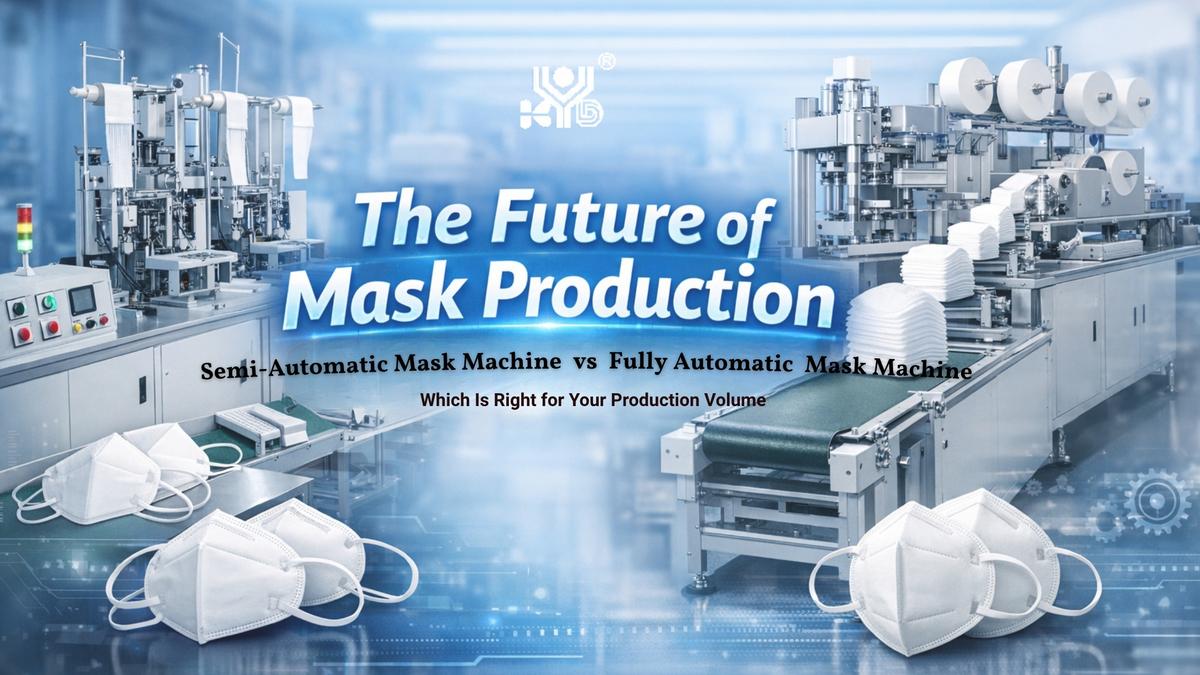
When planning to enter or expand in mask manufacturing, a key decision is whether to invest in a fully automatic or semi-automatic mask machine.This choice affects your budget, staffing, output, and overall business strategy. Selecting the wrong option can lead to unnecessary expenses or production delays.In the following sections, we will objectively compare both machine types. You'll find clear analyses of capabilities, costs, ideal applications, and recommended production volumes, so you can confidently choose the best option for your needs.What Is a Fully Automatic Mask Machine?A fully automatic mask machine manages the entire production process without human intervention. Raw nonwoven fabric is fed in, and finished, cut, and welded masks are produced continuously at high speed, requiring only minimal operator oversight.At GDKYD, our fully automatic mask production lines integrate the following capabilities:Automatic fabric unwinding and tension control, maintaining consistent material feed without manual adjustmentMulti-layer lamination, bonding filter layers precisely at high speedUltrasonic nose wire insertion and welding, sealing nose bridges cleanly in a single passAutomated ear loop or headband welding, depending on mask typeAutomatic counting, stacking, and discharge, ready for immediate packagingThese machines typically operate at speeds of 80 to 200 pieces per minute, depending on the mask type. With an understanding of full automation, let’s turn to the alternative: the semi-automatic mask machine.Who uses fully automatic machines?Hospitals, large PPE suppliers, medical device exporters, and manufacturers supplying government contracts or international retail chains rely on fully automatic lines. When you are filling orders of 500,000 masks per month or more, human-paced production simply cannot keep up.The semi-automatic mask machine: The semi-automatic mask machine automates key mechanical stages, including fabric cutting, ultrasonic welding, and nose wire insertion, but requires an operator for material feeding, positioning, or transferring between stations.Semi-automatic production uses separate machines for each task rather than a continuous line. One machine welds the mask body, another attaches the ear loop, and an operator transfers pieces between stations. While each station is mechanized, human coordination remains essential.Semi-automatic machines typically produce 30 to 80 pieces per minute. They are well-suited for operations with one or two product lines or for businesses assessing market demand before investing in full automation. summarizes the most important differences between the two machine types across the key criteria for buyers.The Production Volume Threshold: Neither machine is universally superior. The optimal choice depends entirely on your monthly production targets.Under 100,000 masks per monthAt this volume, a fully automatic line is likely unnecessary. Operating such a machine at 30 to 40 percent capacity results in underutilized investment. A semi-automatic setup reduces capital costs, maintains flexibility, and allows for easier product adjustments. If demand increases, you can add stations or upgrade as needed.100,000 to 500,000 masks per monthThis range represents a transitional zone. At the lower end, a semi-automatic line with skilled operators can remain cost-effective. However, as production approaches 300,000 to 500,000 masks per month, labor costs significantly impact margins. At this scale, a fully automatic line offers greater return on investment, particularly for export or price-sensitive markets.Over 500,000 masks per monthAt this scale, full automation is essential. Semi-automatic operations cannot achieve this output without significant labor investment, and increased human involvement introduces quality variability and compliance risks, especially for medical-grade products requiring CE or ISO certification. Fully automatic machines with PLC-controlled systems ensure consistent tolerances throughout production.Total Cost of Ownership: Looking Beyond the Price TagThe sticker initial purchase price is only one factor. To make an informed decision, consider the total cost of ownership (TCO) over a three- to five-year period.A semi-automatic line for surgical masks may require four to five operators per shift. Assuming two shifts per day and five working days per week, this amounts to approximately 40-50 person-shifts per week. When you apply local wage rates, these labor costs can quickly exceed the purchase price differential versus a fully automatic line. Additionally, higher labor usage increases payroll taxes and complicates workforce management.Downtime and maintenanceFully automatic machines are more mechanically complex, but their PLC-based control systems allow for faster and more precise fault detection. With regular maintenance, a GDKYD automatic line will experience fewer unexpected stoppages than a semi-automatic setup, where human error can introduce variability.Product waste and rejection ratesOperator-dependent processes introduce variability. Issues such as mask body alignment, ear loop tension, and nose wire positioning occur more frequently as operator fatigue increases. Automated lines maintain consistent tolerances throughout production, reducing waste and rework. For medical products, lower rejection rates can result in significant long-term savings.A Practical Decision FrameworkBefore you contact any machinery supplier, work through these five questions to clarify your position:What is your current committed monthly order volume?What is your realistic growth trajectory over the next 24 months?What are the total labor costs in your region? How important is product flexibility to your business? If frequent changes between mask formats are required, a semi-automatic approach may provide greater agility.Start with semi-automatic if...You are below 150,000 masks per month, entering a new market, or running multiple custom SKUs in small batches. This keeps your capital exposure low while you validate demand and build production experience.Move to fully automatic when...You have confirmed, repeatable monthly demand above 300,000 to 500,000 units, or when labor cost savings would recover the investment within 18 to 24 months. At this stage, automation is not just efficient; it is a competitive necessity.Final VerdictThe key to mask manufacturing is not buying a machine that costs too much. It is buying a machine that fits your volume today but limits your growth tomorrow, or locks you into overhead costs that erode your margins before you have found your. Make the right decision from the outset. Contact the KYD team for a free consultation.

In January 2026, health authorities across Asia sounded an alarm as the Nipah virus resurfaced in West Bengal, India. But what exactly is this mysterious pathogen that has scientists and healthcare professionals concerned? The Nipah virus (NiV) is a deadly paramyxovirus belonging to the Henipavirus genus—the same virus family that includes the Hendra virus. Unlike common respiratory viruses, Nipah operates as a zoonotic disease, meaning it originates in animals and occasionally jumps to humans with devastating consequences.The virus was first identified during the 1998-1999 outbreak in Malaysia, where it infected over 100 people. Since then, it has emerged sporadically in South and Southeast Asia, including Bangladesh, India, the Philippines, and Singapore. What makes Nipah particularly alarming is its lack of a vaccine, absence of specific antiviral treatment, and a mortality rate that ranges between 40% and 75%—far exceeding COVID-19's fatality rate.Causes and Transmission: How Nipah Virus SpreadsNipah virus transmission routes are multifaceted:Zoonotic transmission: Direct Nipah virus fruit bat transmission to humans, often via contaminated food (notably Nipah virus date palm sap risk).Human-to-human spread: Close contact with infected bodily fluids, especially in healthcare settings (Nipah virus in healthcare workers).Nosocomial outbreaks: Documented in hospitals, emphasising the need for Nipah virus hospital infection control.Recent Nipah virus case studies in India and Nipah virus global outbreaks highlight the risk of independent spillover events, especially where human and bat habitats intersect.Health Impact: The Harm of Nipah VirusNipah virus symptoms in 2026 can escalate rapidly:Early warning signs: Fever, headache, cough, and respiratory distress.Severe complications: Nipah virus encephalitis symptoms, seizures, coma, and multi-organ failure.Critical outcomes: Nipah virus neurological complications and Nipah virus septic shock risk, often leading to death.The Nipah virus health impact is profound, with outbreaks straining healthcare systems and requiring robust Nipah virus outbreak containment strategies.Protection: How to Guard Against Nipah Virus InfectionPersonal and Medical Protection:Respiratory protection: Use nipah virus mask protection (N95 respirator or higher protection).Personal protective equipment: Follow Nipah virus PPE guidelines—gowns, gloves, and eye protection.Medical safety: Adhere to the Nipah virus medical protection equipment protocols, including proper donning and doffing.Healthcare Facility Protocols:Implement Nipah virus quarantine protocols for suspected cases.Enforce enhanced Nipah virus protection measures, including airborne precautions.Stay updated with the latest news on the Nipah virus and regular staff training.Advanced Medical Protection: SAR ProtocolsSearch and Rescue (SAR) teams and healthcare workers must follow the Nipah virus SAR medical protection standards:Full PPE (N95 or higher, gowns, gloves, eye protection, boots)Biocontainment transport and emergency decontamination proceduresRegular drills and fit-testing for all staffFull PPE (N95 or higher, gowns, gloves, eye protection, boots)Biocontainment transport and emergency decontamination proceduresRegular drills and fit-testing for all staffThe ongoing Nipah virus public health alert demands unwavering vigilance. By following Nipah virus prevention tips, adhering to the Nipah virus travel advisory 2026, and staying informed, healthcare professionals can protect themselves and their communities from this devastating pathogen.
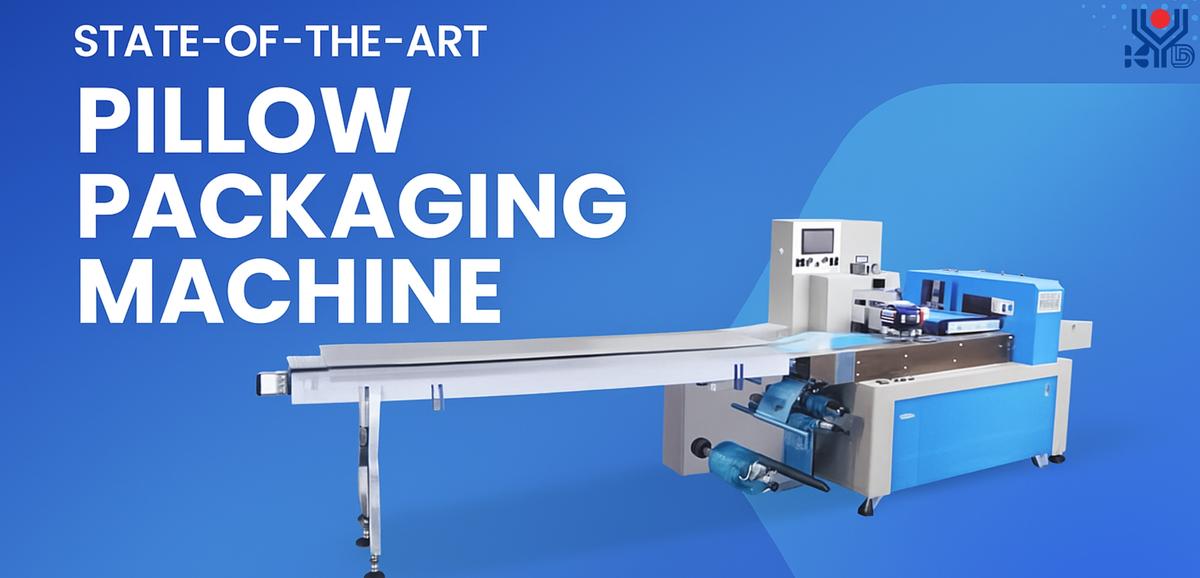
In the competitive bedding and textile industry, efficient pillow packaging machine solutions are essential for success. A state-of-the-art pillow vacuum packing machine is the perfect industrial tool to wrap pillows of all shapes and sizes in heat-sealable film, protecting each product while saving space and reducing shipping costs. Today’s pillow pack packaging systems are loaded with features to streamline your workflow. An automated conveyor ensures smooth movement of pillows to the packaging area, while an advanced feeding system in the packing pillow machine reduces manual labor and increases productivity. For businesses handling cushions, a cushion packaging machine compresses items to a compact size, maximizing storage efficiency and lowering shipping expenses. The technology does not stop there. Every pillow machines setup comes with a plastic film roll holder to wrap pillows securely, and a heat-sealing system for tight, tamper-proof packaging. A precise cutting system in the pillow production machine customizes each package, while adjustable speed controls allow operators to match production needs. Safety is a priority, with automatic stop features in the pillow pack machine to protect workers and maintain quality. A major advancement for 2025 is the integration of automated inspection systems into pillow bag packaging equipment. These use sensors and imaging to detect defects like uneven filling or misaligned seams, so only top-quality pillows reach your customers. Hygiene is also crucial. Modern pillow packaging machine models include dust extraction, anti-static features, and controlled environments to prevent contamination, keeping your pillows clean and fresh from packing to delivery. Whether you need efficient packaging for regular or irregular-shaped products, a pillow pack packaging solution offers flexibility with both manual and automatic modes. Industries like furniture and pet stores benefit greatly from this versatile technology. For businesses aiming to thrive in 2025, investing in a quality pillow packaging machine is a smart move—boosting packaging speed, product quality, and customer satisfaction.
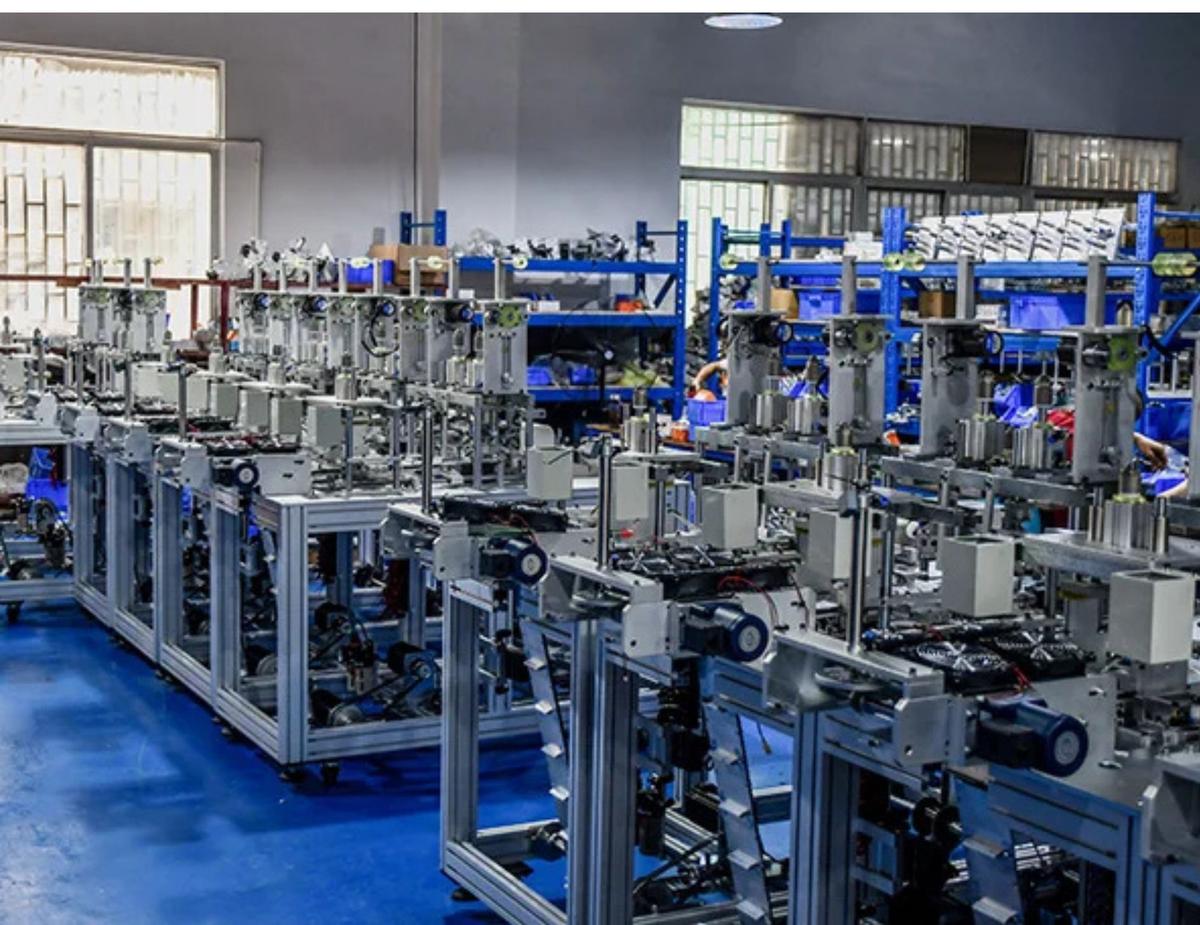
Selecting the right textile machinery is a critical factor in ensuring high-quality production, efficiency, and cost-effectiveness in the textile industry. Whether managing a small workshop or overseeing large-scale manufacturing, understanding your specific production requirements is essential. It is crucial to evaluate the fabric type, production volume, automation levels, and machine speed before making a choice. In terms of selecting machinery, focus on key considerations such as efficiency, automation, durability, maintenance, and cost-effectiveness. Efficiency enhances production capacity while reducing energy consumption, making machines more sustainable. Furthermore, modern automation features improve production speed and consistency. Durability is vital for ensuring long-term machine performance, while easy maintenance can reduce downtime and costs. Finally, weighing initial costs against long-term operating costs ensures that your machinery delivers optimal value for money. By integrating these factors, businesses can optimize productivity, reduce operational costs, and increase overall machine longevity, leading to improved performance and profitability in the textile sector.
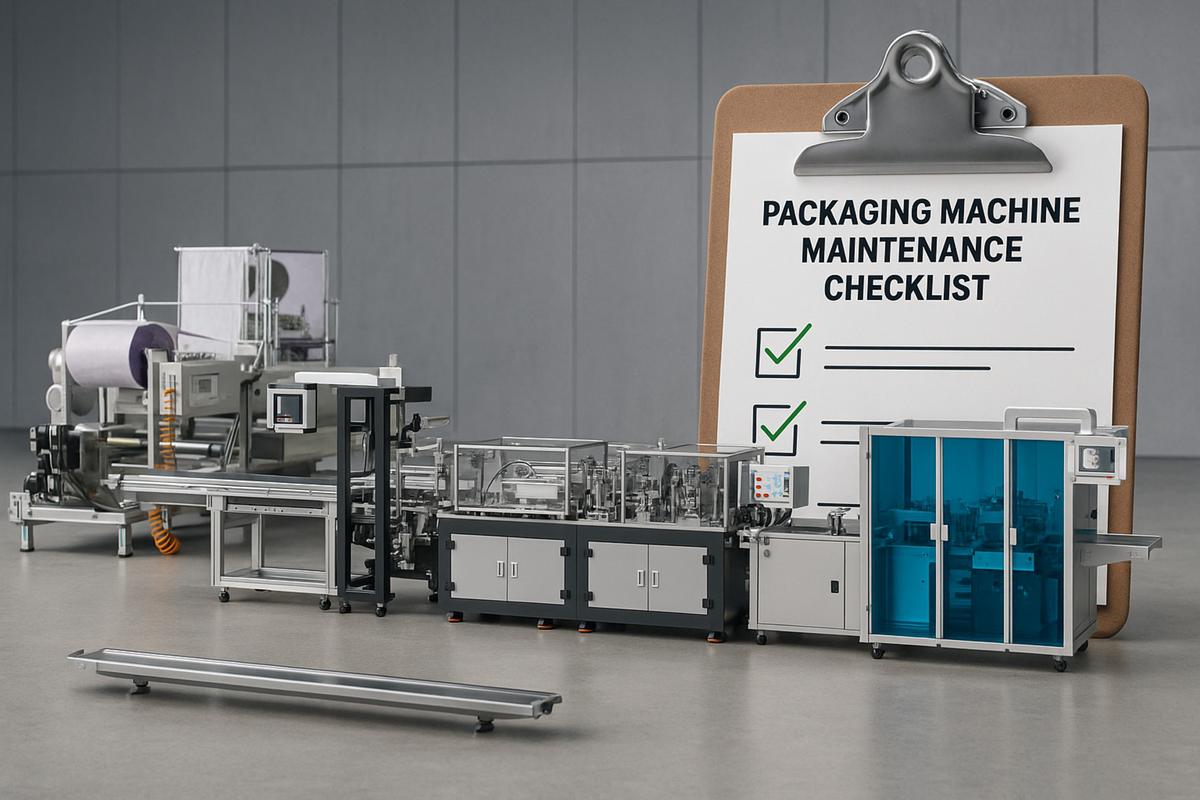
As science and technology evolve, automation is reshaping production, with automated machinery playing a crucial role in manufacturing and packaging across industries such as food, PPE, and pharmaceutical equipment (PEE). Central to this process is the automatic packaging machine, which enhances efficiency and streamlines operations. To ensure peak performance and longevity, daily maintenance is vital. Integrating a structured maintenance checklist into the broader factory routine reduces downtime, improves reliability, and extends equipment lifespan. Preventive maintenance not only minimizes unexpected breakdowns and repair costs but also boosts overall machine efficiency. A proactive approach guarantees smooth operations over time. Regular thorough cleaning is one of the first steps in maintenance. Removing dust, debris, and residues helps maintain efficiency and product quality. Following the manufacturer’s instructions and using recommended cleaning supplies reduces contamination risks and ensures optimal performance. Another important aspect is the electrical component check. Regular inspections of wiring, switches, and sensors help identify and resolve potential issues before they escalate, preventing costly repairs. Operator training is equally essential. Packaging machine operators must be well-versed in maintenance protocols, enabling them to spot potential problems early and report them promptly. Training ensures that operators contribute to both day-to-day operations and long-term equipment care. Assessment and substitution of blades should be done periodically. Worn or blunt blades can hinder the sealing and cutting processes, so timely replacement is essential to maintain peak performance. Documentation of all maintenance activities—inspections, cleaning, and replacements—provides a valuable record that helps track the machine’s history and identify recurring issues. The advantages of preventive maintenance are clear: it reduces downtime by addressing problems before they become major, extends equipment lifespan by reducing wear and tear, and lowers costs by preventing costly repairs. Well-maintained machines are also safer for operators and ensure consistent product quality. In conclusion, preventive maintenance for automatic packaging machines is critical for performance, cost savings, safety, and longevity. Regular cleaning, electrical checks, operator training, blade replacement, and proper documentation help keep machinery running smoothly and efficiently.
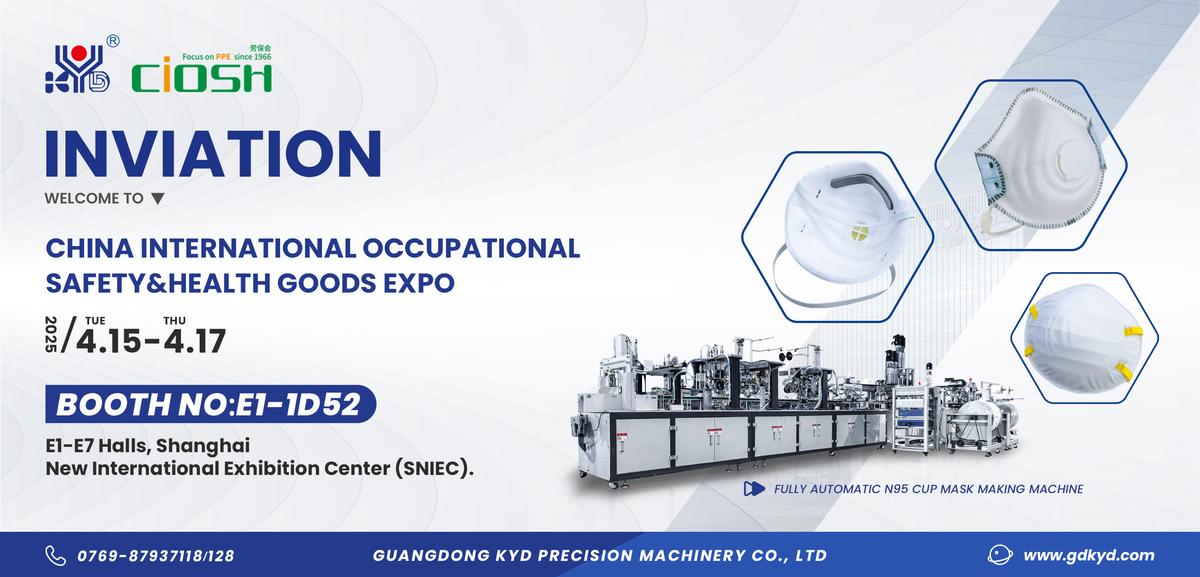
China International Occupational Protection Products Fair (CIOSH) is a grand event for the personal protective equipment industry in my country, and the Shanghai exhibition is the most concentrated, largest and most visited exhibition. As one of the most influential exhibitions in the industry, the China International Occupational Protection Products Fair (Shanghai) provides us with an ideal platform to showcase our innovative products and solutions in the field of labor protection products production, interact with customers and strengthen our brand. Our team of experts will be available at our booth (NO.E1-1D52) throughout the event. We are pleased to showcase our latest innovative products and services and sincerely invite all our valued customers and partners to join us and learn about our latest equipment. Fully automatic cup-shaped mask machine (front section + back section) Gas mask filter cotton production line (snap filter cotton/pleated filter cotton/ordinary filter cotton) Chongsong mask production line (bracket mask machine) We will have very professional sales managers and technical consultants ready to answer any questions and provide information about our products and services. Guangdong Kuaiyuda has focused on the research and development, manufacturing and supply of mask machinery and non-woven medical consumables production equipment for more than 26 years and has won a good reputation worldwide. During this period, we have closely followed the progress of labor protection respiratory protection equipment and actively participated in international exhibitions featuring labor protection respiratory protection equipment. Today, we have cooperated with more than 10,000 customers worldwide, our machines are exported to more than 60 countries, and currently 50,000 machines are running stably worldwide. We hope to help more customers related to the labor protection respiratory protection production industry find and solve their problems, improve production efficiency and save costs to obtain higher profits. We sincerely look forward to meeting you at the China Shanghai Labor Protection Products Fair. Our booth: (NO.E1-1D52). Welcome to our exhibition. If you have any questions about our products or services, please feel free to contact us!

CMEF Shanghai International Medical Equipment Exhibition is the top exhibition in the medical industry, bringing together outstanding companies and professionals from China. This year's exhibition will be held at the Shanghai National Convention and Exhibition Center from April 8 to 11, 2025. As one of the most influential exhibitions in the industry, the Shanghai International Medical Equipment Exhibition provides us with an ideal platform to showcase our innovative products and solutions in the field of medical consumables production, interact with customers and strengthen our brand.,Our team of experts will be available at our booth (8.1-L47/L49) throughout the event. We are pleased to showcase our latest innovative products and services and sincerely invite all our valued customers and partners to join us to learn about our latest medical bandage mask equipment, surgical gown production solutions, doctor cap production lines, surgical pack production equipment, thumb garment equipment, and slip pad equipment.,We will have very professional sales managers and technical consultants ready to answer any questions and provide information about our products and services. Guangdong Kuaiyuda has focused on the R&D, manufacturing and supply of mask machinery and non-woven medical consumables production equipment for more than 26 years and has won a good reputation worldwide. During this period, we have closely followed the progress of medical machinery and actively participated in international exhibitions featuring medical consumables equipment. Today, we have cooperated with more than 10,000 customers worldwide, our machines have been exported to more than 60 countries, and currently there are 50,000 machines in stable operation worldwide. We hope to help more customers related to the medical consumables production industry find and solve their problems, improve production efficiency and save costs to obtain higher profits.,We sincerely look forward to seeing you at the Shanghai International Medical Equipment Exhibition. Our booth is: (8.1-L47/L49). Welcome to our exhibition. If you have any questions about our products or services, please feel free to contact us!
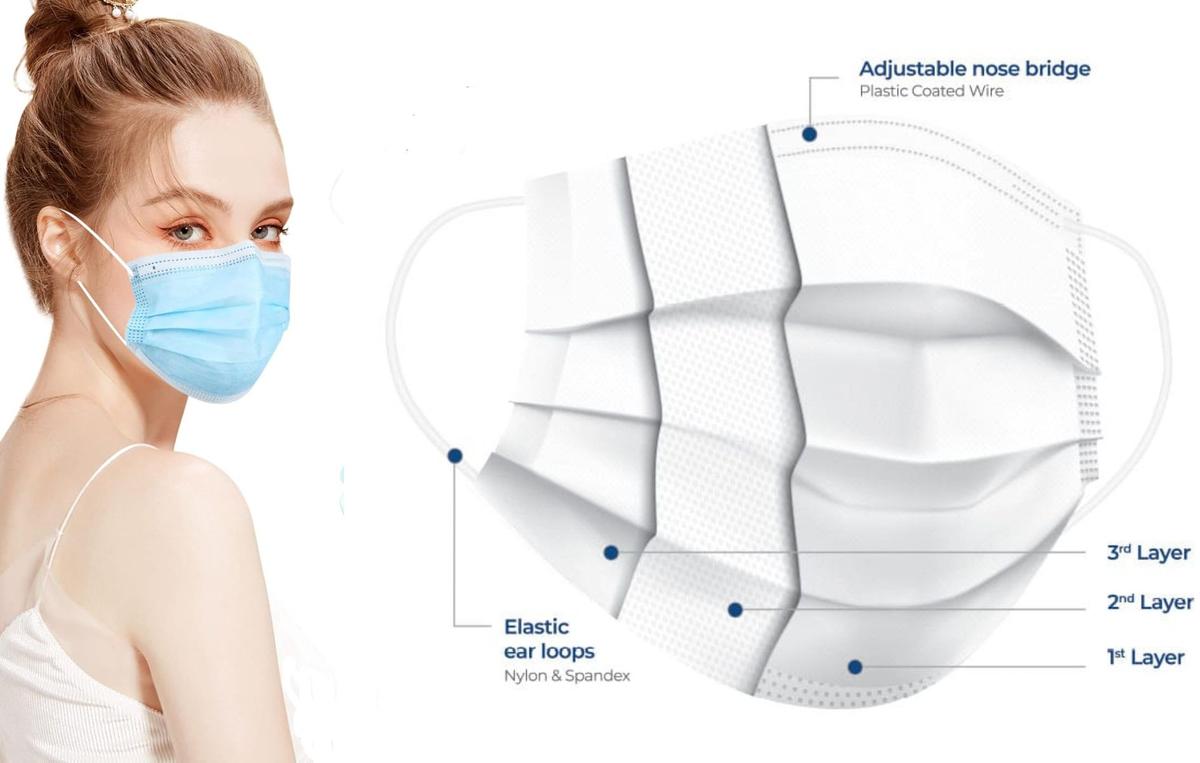
When designing protective face coverings, understanding what types of materials were masks made from is critical for balancing safety and comfort. Premium masks rely on advanced nonwoven fabrics: spunbond polypropylene forms breathable outer/inner layers, repelling fluids while wicking moisture, while meltblown polypropylene acts as the filtration core, trapping microscopic pathogens. Unlike substandard alternatives, these materials meet stringent ASTM benchmarks for bacterial/particle filtration, fluid resistance, and breathability. For secure fitment, adjustable nylon-spandex ear loops and moldable nose wires ensure snug yet comfortable wear—even when taking off a mask repeatedly. Manufacturers prioritizing quality partners with suppliers like Lydall for certified fabrics, but efficiency hinges on pairing these materials with a high-speed face mask machine. GDKYD Medical’s automated systems, engineered with U.S.-made components, produce up to 210 ASTM-compliant masks per minute, integrating triple-layer construction, elastic ear fasteners, and nose bridges seamlessly. Whether crafting Level 3 surgical masks for high-risk settings or everyday medical-grade options, rigorous testing (particle efficiency, synthetic blood resistance) guarantees reliability. For producers aiming to scale output without compromising safety, KYD’s technology transforms premium materials into life-saving gear—explore their solutions to elevate your PPE line.
SLPE Shandong Labor Safety Protection Products Exhibition is the top exhibition in the labor protection industry, bringing together outstanding companies and professionals from China. This year's exhibition will be held at Linyi International Convention and Exhibition Center from March 17 to 19, 2025. As one of the most influential exhibitions in the industry, Shandong Labor Safety Protection Products Exhibition provides us with an ideal platform to showcase our innovative products and solutions in the field of industrial respiratory protection, interact with customers and strengthen our brand. Our team of experts will be available at our booth (NO.E1-AT66) throughout the event. We are pleased to showcase our latest innovative products and services and sincerely invite all our valued customers and partners to join us to learn about our latest fully automatic cup mask production solutions, gas mask pleated filter cotton, snap filter cotton production line, non-woven shoe cover equipment. We will also promote our brand culture through this exhibition. We will have very professional sales managers and technical consultants ready to answer any questions and provide information about our products and services. Guangdong Kuaiyuda has focused on the R&D, manufacturing and supply of mask machinery and ultrasonic non-woven products equipment for more than 26 years and has won a good reputation worldwide. During this period, we have paid close attention to the progress of mask machinery and actively participated in international exhibitions focusing on labor protection. Today, we have cooperated with more than 10,000 customers worldwide, our machines are exported to more than 60 countries, and currently there are 50,000 machines in stable operation worldwide. We hope to help more customers related to the respiratory protection industry find and solve their problems, improve production efficiency and save costs to obtain higher profits. We sincerely look forward to meeting you at the Shandong Labor Safety Protection Products Exhibition. Our booth: (NO.E1-AT66). Welcome to our exhibition. If you have any questions about our products or services, please feel free to contact us!
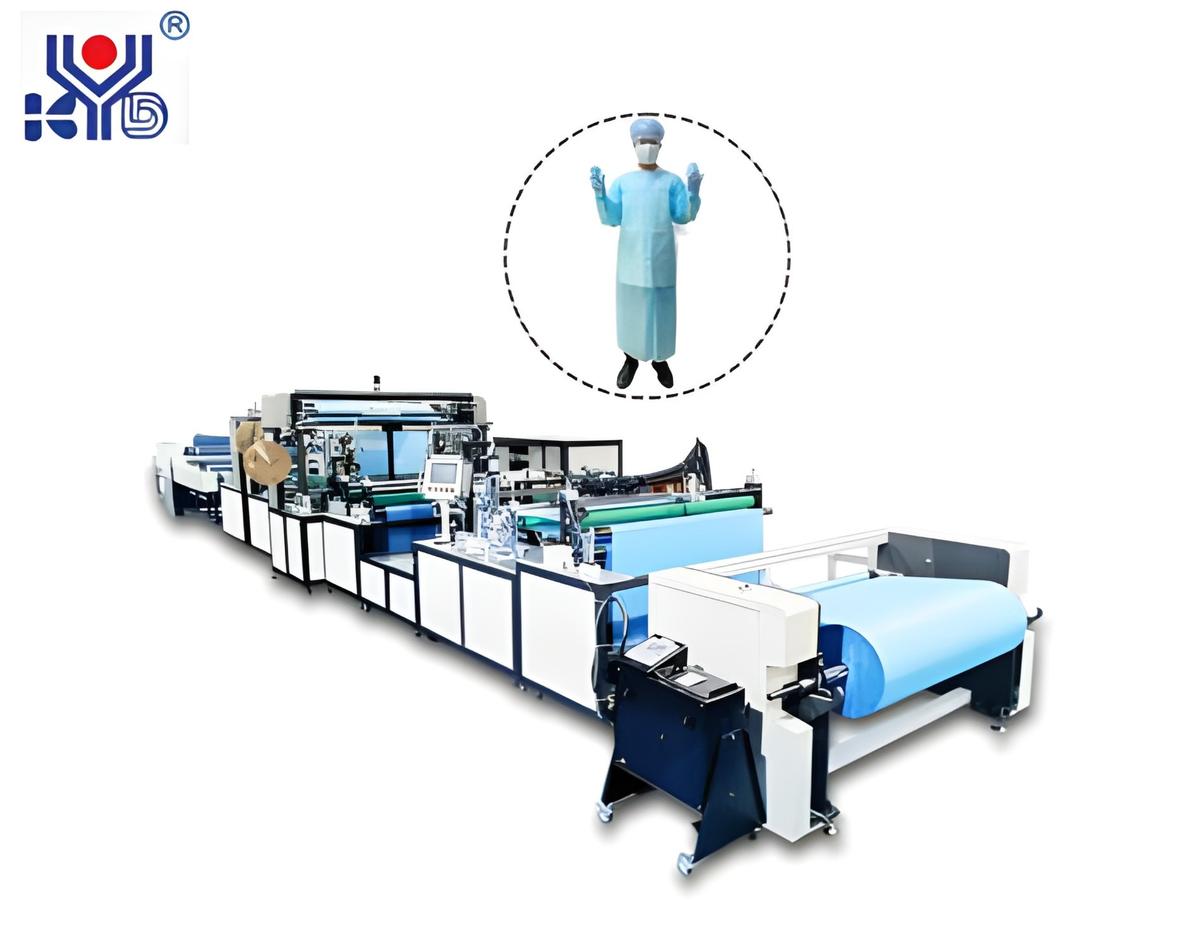
When considering the purchase of a Protective Gown Making Machine, it’s essential to evaluate several key factors to ensure you’re making an informed decision. First, understand the specific needs of your operation, whether you're dealing with medical, industrial, or other protective garment manufacturing. Look for a machine that offers high efficiency, reliability, and precision in its production process. The Kyd machine stands out as an excellent option, as it incorporates advanced technology and robust construction to deliver consistent, high-quality results. One of the most important features to consider is the machine’s ability to work with different types of fabrics, ensuring versatility in production. Whether you're focused on medical gown production machines or disposable gown-making machines, this machine can adapt to the specific needs of the protective garment industry. Additionally, the machine boasts an intuitive user interface that simplifies operation, making it easy to adjust settings for various gown types and production volumes. The machine’s speed and automated functions also allow for increased productivity, while minimizing human error. Another noteworthy feature is its durability; the machine is built to withstand continuous use without compromising performance, ensuring long-term reliability. The machine provides service by streamlining the entire manufacturing process, from cutting and shaping the gowns to providing flawless stitching. It is equipped with advanced sensors and controls that ensure each gown meets the required safety standards, which is crucial in industries where protection is paramount. Furthermore, the Kyd machine is designed with minimal maintenance needs, reducing downtime and enhancing overall efficiency. This combination of technical accuracy, versatility, and low maintenance makes the gown manufacturing machine a sound investment for businesses looking to maintain high standards in protective garment production. Whether you're investing in a protective clothing machine for industrial use or a protective gown-making machine for medical applications, the Kyd machine ensures reliable performance and exceptional results. With its proven track record and state-of-the-art features, the machine is indeed a reliable choice that meets the demands of modern manufacturing.
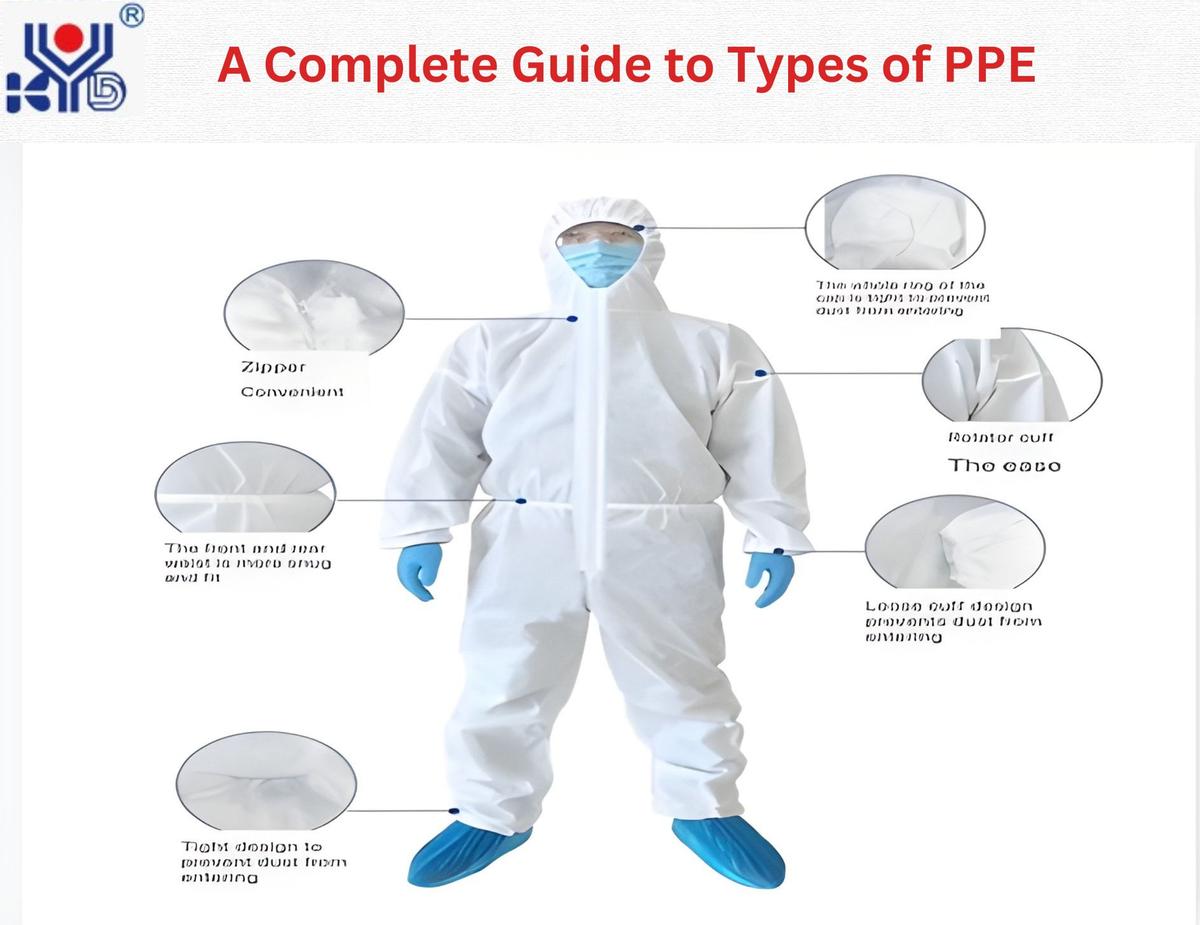
Personal Protective Equipment (PPE) plays a vital role in safeguarding individuals from workplace hazards, especially in industries like healthcare, construction, and manufacturing. But what are the types of PPE, and how are they manufactured? PPE includes a range of equipment such as masks, gloves, face shields, gowns, goggles, and coveralls. Each type is designed to protect specific body parts from risks like chemical exposure, airborne particles, or physical injuries. How are PPE products manufactured? The PPE manufacturing process varies based on the type of equipment. For instance, mask production involves layers of non-woven PPE fabric, typically using spunbond non-woven fabric and meltblown non-woven fabric, combined through ultrasonic welding. Gloves are made using natural or synthetic rubber, which is molded and cured for durability. Face shield manufacturing relies on plastic injection molding, while gowns and coveralls are created from non-woven or laminated fabrics to ensure fluid resistance and breathability. Key components of PPE equipment manufacturing include raw material preparation, advanced machinery like ultrasonic welding machines and injection molders, and stringent quality control to meet industry standards. Automated systems, such as PPE production machines, enhance precision and efficiency in production. Why is PPE manufacturing important? With global demand rising, scalable and sustainable manufacturing processes are essential to meet safety standards while maintaining affordability. What challenges exist in PPE production? These include sourcing high-quality raw materials, ensuring proper sterilization, and meeting regulatory compliance. By integrating advanced technologies such as automation and eco-friendly materials into the production process, PPE manufacturing has revolutionized workplace safety, ensuring reliable protection for millions worldwide.
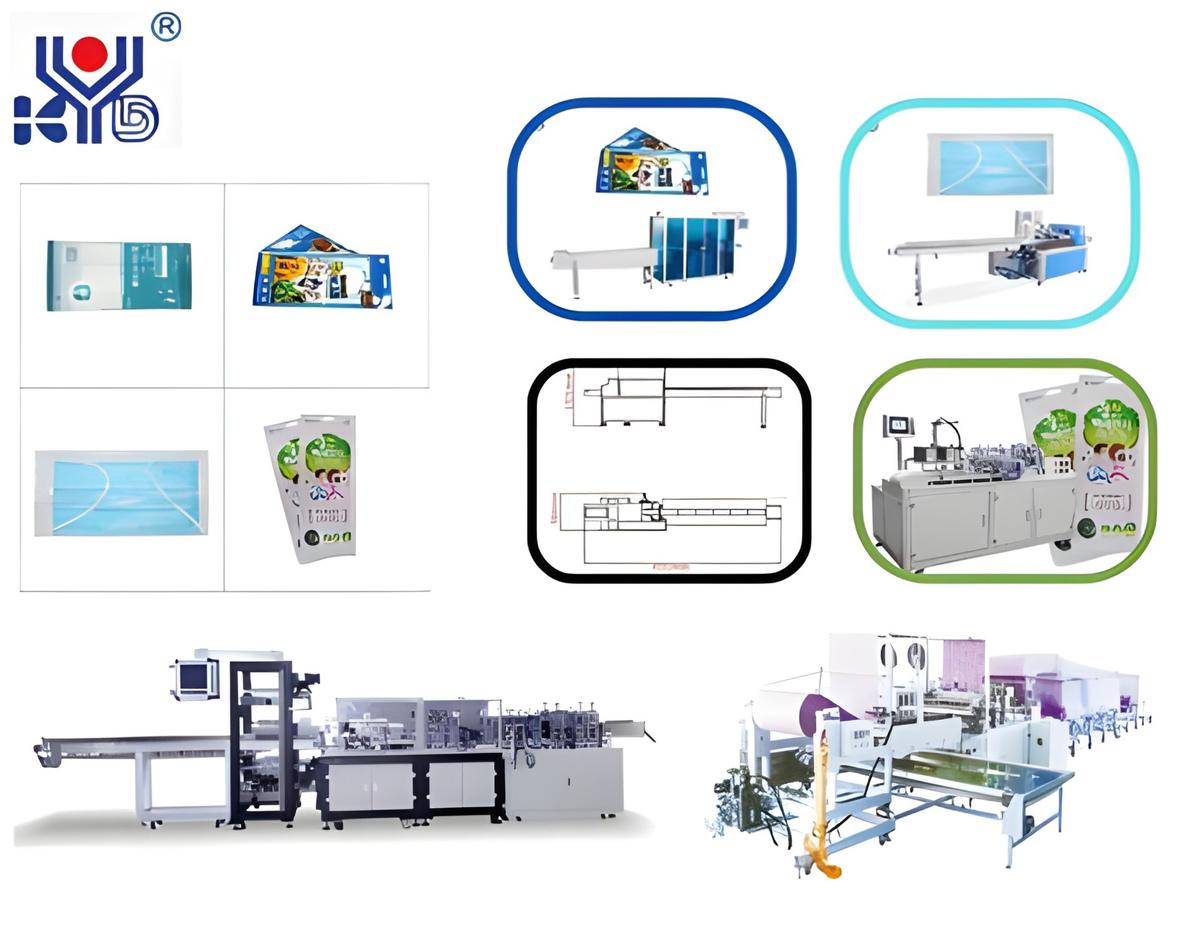
Packaging machinery plays a critical role in automating the packaging process, ensuring efficiency, consistency, and product safety across industries like food, pharmaceuticals, and manufacturing. But what are the essential components of packaging machinery, and how do they work? Let’s explore. What is packaging machinery? It refers to equipment designed to perform tasks like filling, sealing, labeling, and wrapping products, streamlining production and maintaining quality. What are the main components?Key components include filling machines, which dispense products accurately into containers using volumetric, gravimetric, or vacuum-based systems. Sealing machines follow, ensuring airtight or tamper-proof closures using heat, ultrasonic, or adhesive sealing techniques.Labeling machines apply product information, branding, or barcodes, ensuring regulatory compliance and enhancing product presentation. Wrapping machines add a protective layer, often with plastic or shrink films, safeguarding goods during storage or transit. Conveyors integrate these components, transporting products smoothly between stages, while control systems, such as PLC-based interfaces, manage operations for precision and ease of use. Why is automation important? Automation enhances production speed, reduces human error, ensures uniformity, and minimizes labor costs, making it indispensable for scaling operations. What benefits do these components offer individually? For example, filling machines prevent waste by dispensing precise amounts, sealing machines preserve product integrity, and labeling machines improve brand visibility and compliance. Together, these components streamline the packaging process, ensuring cost-effectiveness and high-quality output. How does packaging machinery impact businesses? By reducing manual intervention, it boosts productivity, ensures consistent packaging, and meets market demands efficiently. Modern packaging machinery integrates all these elements seamlessly, offering businesses a reliable, scalable solution to stay competitive in today’s fast-paced markets.
At KYD, we specialize in creating non-woven machinery that powers industries like healthcare, beauty, and packaging. Our portfolio showcases the real-world impact of our solutions—from fully automatic face mask machines to high-speed cosmetic product lines. Each project reflects our dedication to quality, innovation, and meeting the unique needs of our clients. Browse our portfolio to discover how our machines are helping businesses worldwide boost productivity and stay ahead of the competition.
We invite you to connect with us! KYD.
Join the Join our growing community and stay updated on KYD’s latest innovations and industry insights. Sign up now to receive exclusive updates straight to your inbox!