Address:No.321 Dongshen Road, Tangxia Town, Dongguan City, Guangdong Province
Stay in touch
Enter your email address for get promotions and news.
Address:No.321 Dongshen Road, Tangxia Town, Dongguan City, Guangdong Province
Stay in touch
Enter your email address for get promotions and news.
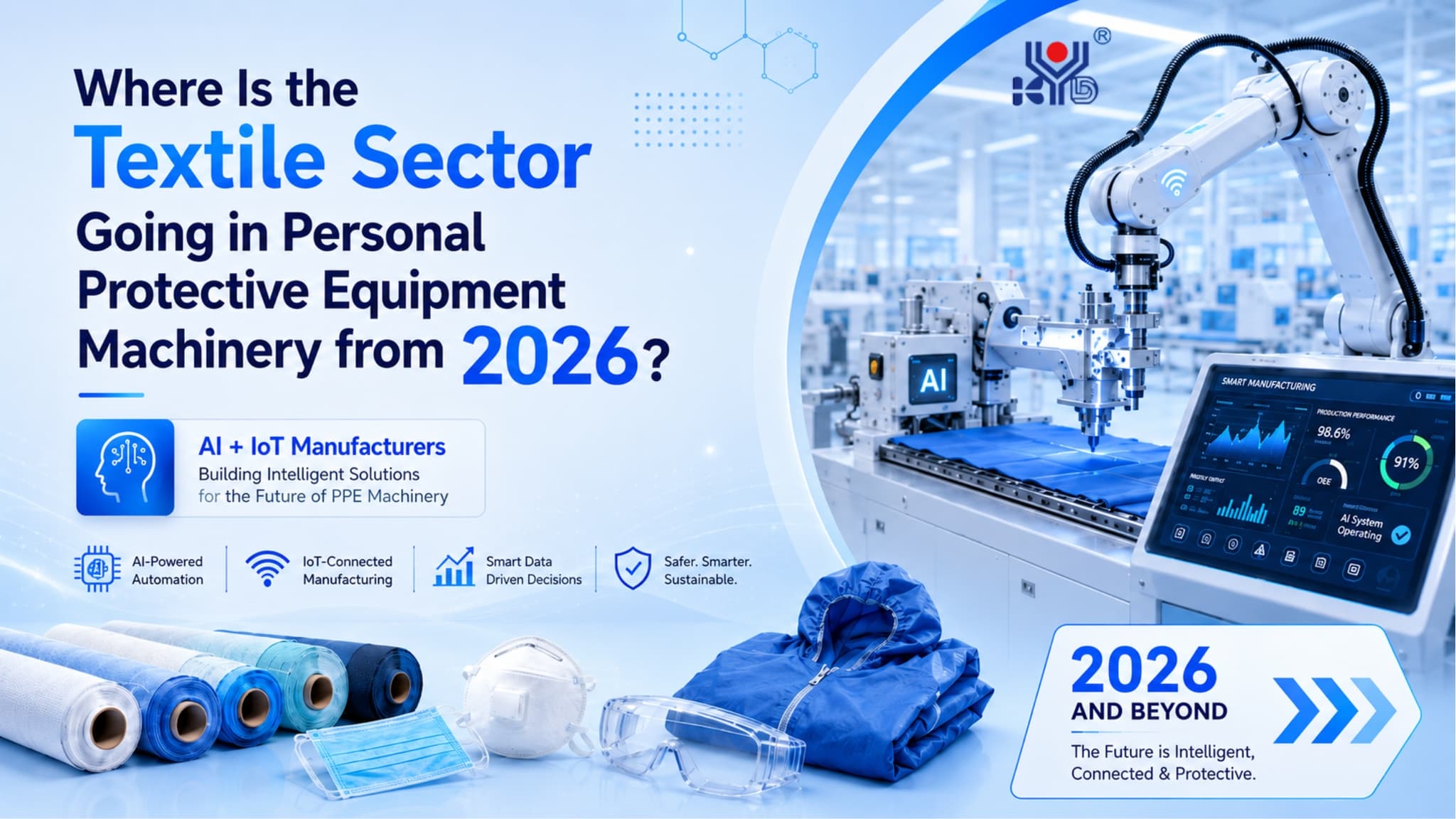
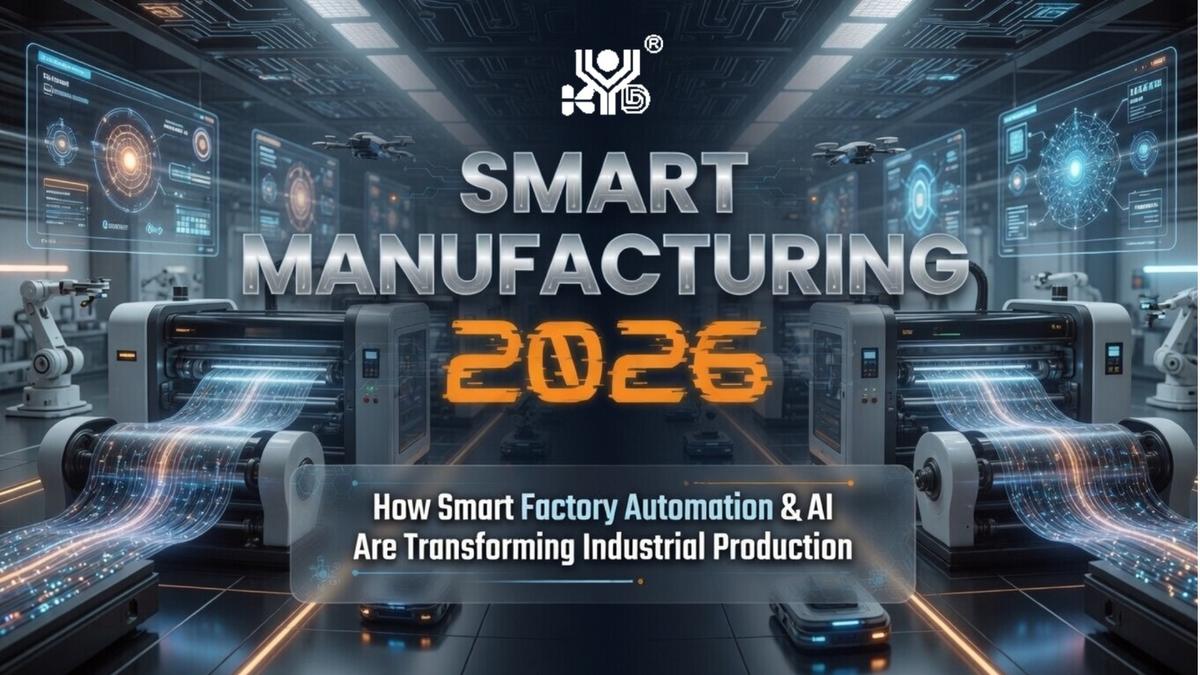
From 2026, the textile sector in personal protective equipment machinery is moving toward AI-powered, IoT-connected, automated, and data-driven production. This shift is happening because PPE manufacturing companies need faster output, better quality control, lower downtime, and stronger compliance tracking. AI and IoT manufacturers are getting attention because they can turn traditional PPE factories into smart manufacturing systems.
The smart PPE market is already showing strong growth signals. One recent report projects the smart personal protective equipment market to grow from USD 5.39 billion in 2026 to USD 9.73 billion by 2030, at a 15.9% CAGR.
Quick Answer:
AI and IoT will not replace every manufacturer instantly. They will dominate the premium and high-efficiency PPE machinery segment first. The strongest shift is expected between 2026 and 2030. Manual and semi-automatic manufacturers will lose competitiveness where speed, traceability, compliance, and cost control matter.
The textile machinery sector is moving toward smart PPE machinery because global buyers want faster production, consistent quality, and verified safety standards. PPE products like protective clothing, gloves, masks, gowns, helmets, smart vests, and electrical personal protective equipment need reliable manufacturing systems.
For factories serving the personal protective equipment construction industry, compliance and traceability are becoming more important. A simple personal protective equipment sign is no longer enough to prove workplace safety; buyers now expect documented quality, digital reports, and real-time production visibility.
Smart textile machinery helps manufacturers manage:
This is why textile machinery solutions connected with AI, IoT, and Industry 4.0 are becoming more valuable.
There is so much talk about AI and IoT manufacturers because they solve major problems in PPE manufacturing, such as downtime, defects, slow inspection, poor traceability, and inconsistent output. Traditional PPE production depends heavily on manual monitoring and reactive maintenance, which can increase cost and delay production.
AI and IoT make this process smarter and more data-driven. AI helps with defect detection, production planning, material optimization, and predictive maintenance. IoT connects machines, sensors, production lines, energy systems, inventory, and quality control dashboards into one smart factory system.
For example, instead of waiting for a machine to break down, IoT sensors can collect real-time data, and AI can predict possible failures before they stop production. This reduces downtime and maintenance cost. AI-based inspection can also detect stitching errors, material defects, size problems, and packaging issues faster than manual checking.
That is why AI and IoT manufacturers are gaining global attention. They do not only provide machines; they provide smarter, faster, and more scalable PPE manufacturing systems for the Industry 4.0 era.
AI and IoT manufacturers could strongly influence the global PPE machinery market within 4–6 years from 2026, especially in premium, export-focused, and compliance-heavy manufacturing.
A realistic timeline looks like this:
2026–2027: Early adoption, testing, and pilot projects.
2028–2030: Large-scale adoption by advanced PPE manufacturers.
2030–2032: AI and IoT systems become standard in high-efficiency PPE machinery.
After 2032: Manual-heavy production becomes less competitive in premium global markets.
Here, “dominate” does not mean 100% replacement. It means stronger market influence, better margins, higher export demand, and more adoption among advanced factories.
PPE manufacturing companies will invest because smart machinery directly affects profit, speed, and reliability. For ppe clothing manufacturers, the main value is not only automation; it is better control over the full production process.
AI and IoT machinery helps with:
This is also why topics like iot in smart manufacturing, future of iot in manufacturing, iot industry 4.0, and smart manufacturing industry 4.0 are becoming important for B2B machinery buyers.
AI and IoT can surpass manual methods mainly in speed, quality, maintenance, traceability, and decision-making. The exact improvement depends on factory size, machine condition, operator skill, product type, and investment level.
ROI Formula:
ROI (%) = [(Net Profit from AI/IoT Investment - Investment Cost) / Investment Cost] × 100
This shows whether the investment is financially worthwhile.
Payback Period:
Payback Period = Total Investment Cost / Annual Cost Savings
This shows how many years the company needs to recover the investment.
OEE Formula:
OEE = Availability × Performance × Quality
This measures how effectively machines are being used.
Defect Rate:
Defect Rate (%) = (Defective Units / Total Units Produced) × 100
This helps compare manual inspection with AI quality control.
Smart Factory Advantage Score:
Smart Factory Advantage = Cost Saving + Quality Gain + Downtime Reduction + Output Increase + Compliance Value
This gives a wider business view beyond machine cost only.
What Will the PPE Machinery Business Model Look Like in the AI and IoT Era?
The future business model will combine machinery, software, data, monitoring, and service. PPE machinery companies will not only sell machines; they will sell performance.
In the AI and IoT era, PPE machinery companies will move from only selling machines to selling performance-based solutions. Machinery-as-a-Service will allow manufacturers to pay based on machine use or output, reducing upfront investment. Predictive maintenance subscriptions will provide monthly monitoring and alerts to reduce downtime. Remote dashboards will show live machine and production data for better control.
AI quality control will detect defects through software, helping reduce rejected products. Smart factory integration will connect machines, sensors, and systems for scalable production. Compliance reporting will create digital production records, making buyer approval easier and faster.
This model will create after-sales software revenue for machinery suppliers and better production control for PPE factories.
The winning companies will combine textile machinery expertise with AI software, IoT hardware, sensors, robotics, data analytics, and after-sales support.
They will also understand PPE product requirements, including masks, gowns, gloves, coveralls, protective clothing, helmets, smart vests, electrical personal protective equipment, and safety wear.
Companies that only sell traditional machines without digital support will struggle in premium markets. Companies that offer full AI predictive maintenance, machine learning, real-time monitoring, and smart factory services will gain stronger buyer trust.
The main challenges are high initial investment, skilled operator requirements, cybersecurity risk, integration with old machines, data accuracy problems, maintenance complexity, and resistance from traditional factories.
Manufacturers can reduce these risks by starting with one production line, training operators, using secure IoT systems, choosing scalable software, and measuring ROI before full factory adoption.
After 2026, the textile PPE machinery sector will move toward smart, automated, connected, and data-driven manufacturing. AI and IoT in PPE manufacturing machinery will become a major competitive advantage for companies that want speed, quality, traceability, and export-ready production.
Manual systems will still exist, but advanced PPE exporters and large manufacturers will prefer smart machinery. The future business model will combine textile machinery, AI software, IoT data, predictive maintenance, compliance reporting, and long-term service revenue.
AI-powered PPE machinery uses artificial intelligence to improve production decisions, defect detection, quality control, maintenance planning, and workflow automation. In PPE manufacturing, it helps factories reduce manual inspection, improve consistency, and produce protective products faster with better data visibility.
IoT helps PPE manufacturing by connecting machines, sensors, production lines, energy systems, and quality control tools. It allows factory managers to monitor performance in real time, detect problems early, reduce downtime, and create digital records for compliance and production reporting.
AI will not replace every manual PPE manufacturing process immediately. It will first dominate high-efficiency, export-focused, and compliance-driven production lines. Manual systems will still exist, but they will become less competitive where speed, quality, traceability, and cost control are critical.
AI and IoT are likely to dominate advanced PPE machinery between 2028 and 2032. From 2026 to 2027, adoption will grow through pilot projects. By 2030, more export-focused PPE manufacturers are expected to use smart machinery as a competitive advantage.
PPE manufacturers should invest in smart machinery because it reduces downtime, improves OEE, lowers defects, increases production visibility, and improves compliance documentation. It also helps companies move from reactive maintenance to predictive maintenance and compete in premium global markets.
The ROI of AI and IoT PPE machinery depends on investment cost, annual savings, defect reduction, downtime reduction, and production improvement. The basic formula is: ROI (%) = [(Net Profit from Investment - Investment Cost) / Investment Cost] × 100.
We invite you to connect with us! KYD.
Join the Join our growing community and stay updated on KYD’s latest innovations and industry insights. Sign up now to receive exclusive updates straight to your inbox!