Address:No.321 Dongshen Road, Tangxia Town, Dongguan City, Guangdong Province
Stay in touch
Enter your email address for get promotions and news.
Address:No.321 Dongshen Road, Tangxia Town, Dongguan City, Guangdong Province
Stay in touch
Enter your email address for get promotions and news.
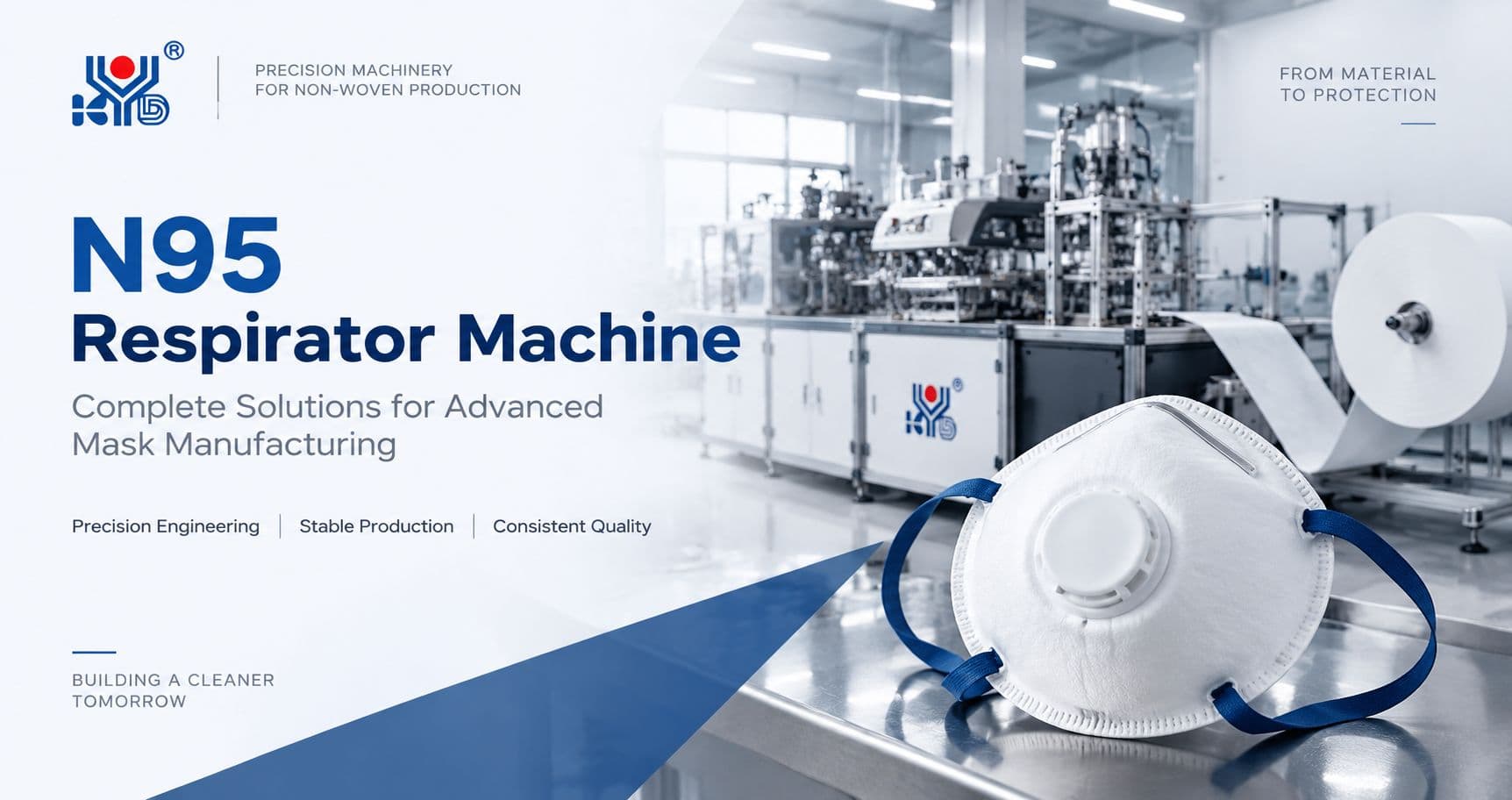
The demand for high-quality respiratory protection products has increased the need for reliable and efficient mask manufacturing solutions. For manufacturers producing protective equipment, investing in the right N95 respirator machine is an important decision that directly impacts production efficiency, product quality, and long-term business growth.
An N95 mask is designed to provide high-level filtration performance by capturing airborne particles while maintaining comfortable breathing resistance. To manufacture these advanced protective products at commercial scale, factories require specialized equipment capable of handling multiple production stages with accuracy and consistency.
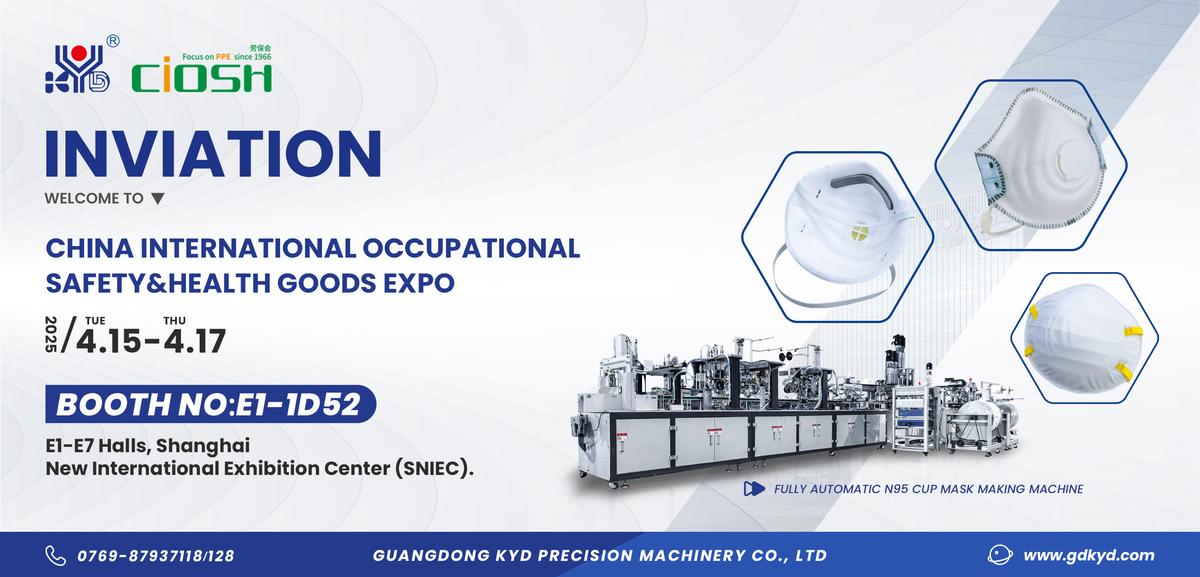
A modern N95 mask making machine helps manufacturers automate processes such as material feeding, mask forming, ultrasonic welding, nose clip installation, ear loop attachment, and final product output. Choosing the right machine supplier can help businesses build a stable and efficient production line.
This guide explains how N95 respirator machines work, what features manufacturers should evaluate, and how to select the right solution for their production requirements.
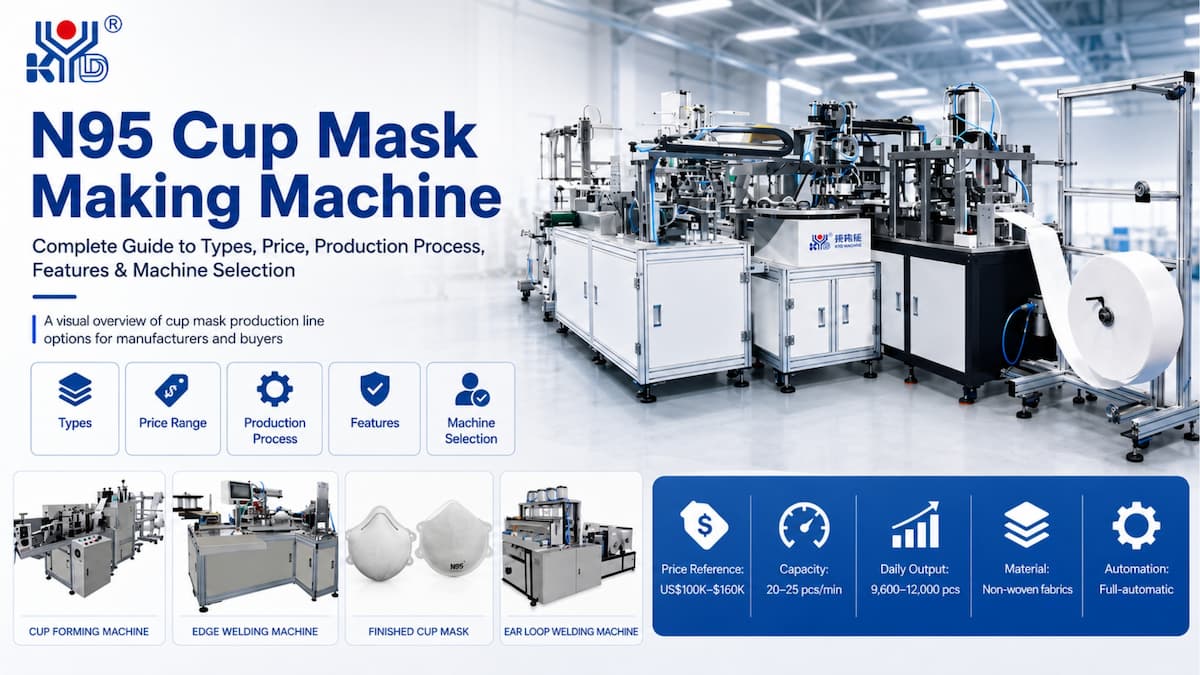
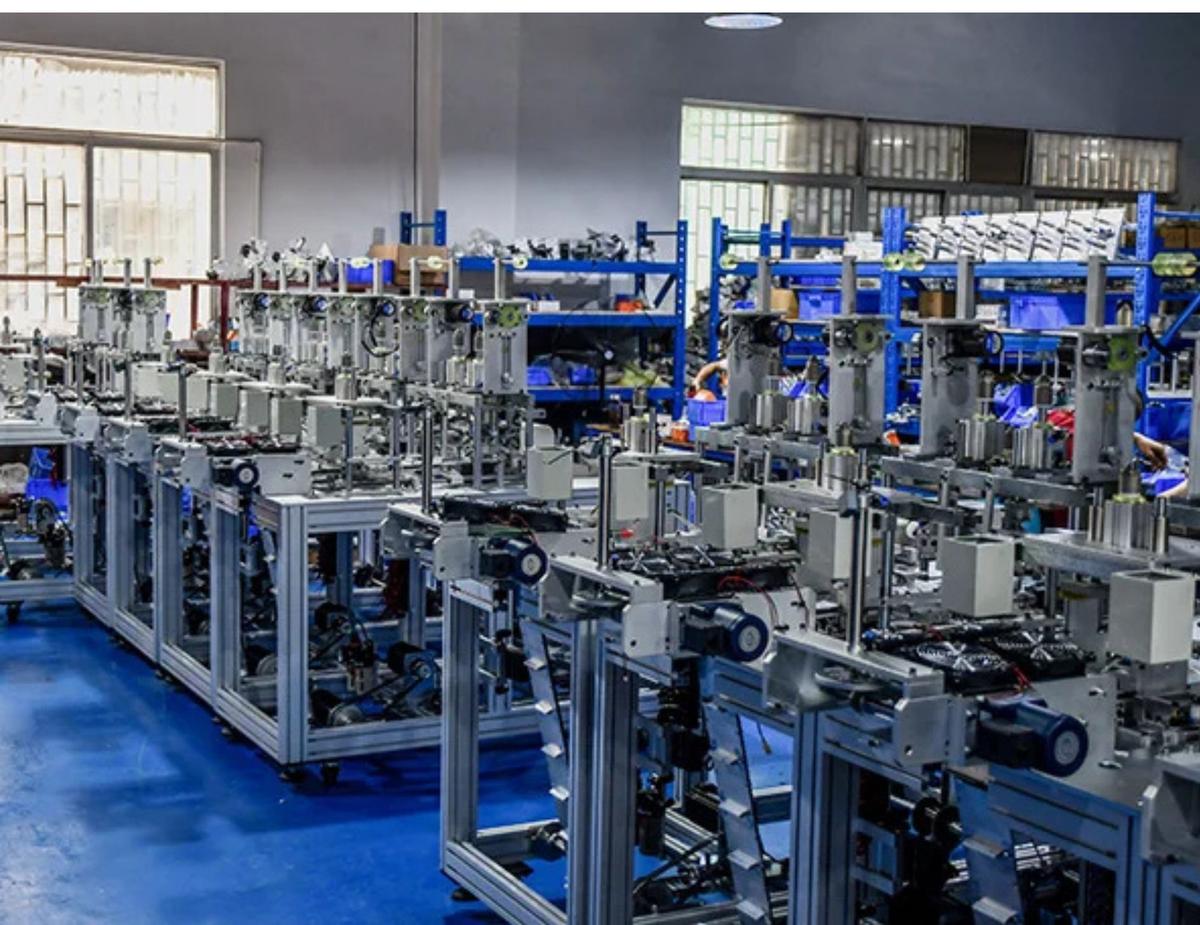
An N95 respirator machine is an automated manufacturing system designed to produce N95 respirator masks at industrial scale. These machines combine mechanical automation, ultrasonic technology, and precision control systems to manufacture masks with consistent quality.
Unlike simple face mask equipment, N95 production requires higher accuracy because respirators must meet strict filtration and performance requirements. The machine needs to process multiple layers of non-woven materials while maintaining proper structure, sealing, and comfort.
A complete N95 mask production setup may include:
For manufacturers entering the respiratory protection market, selecting suitable mask production equipment is essential for maintaining production reliability.
A complete N95 mask production line follows a series of automated steps to transform raw materials into finished respirator products.
The process begins with multiple layers of non-woven fabric being fed into the machine. Typical materials include outer protective layers, filtration layers, and inner comfort layers.
The feeding system must maintain stable tension and alignment because uneven material handling can affect final mask quality.
After material preparation, the machine folds and shapes the mask body according to the required design. Precision forming ensures that the respirator maintains proper dimensions and user comfort.
Modern mask manufacturing commonly uses ultrasonic welding technology to join different components without traditional stitching or adhesives.
An ultrasonic mask machine provides strong and consistent bonding, helping improve production speed and product appearance.
The machine automatically installs nose clips and ear loops to complete the respirator structure. Accurate positioning is important because these components influence fit and usability.
Advanced production systems may include inspection functions to identify production issues and maintain consistent output quality.
Selecting an industrial mask machine requires careful evaluation. Different manufacturers have different production goals, so the ideal solution depends on capacity, product requirements, and customization needs.
Manufacturers should evaluate whether they need a fully automatic system or a customized production solution.
An automatic N95 mask machine can reduce manual labor requirements, improve production consistency, and support large-scale manufacturing.
Important factors include:
Every manufacturer may have different product specifications, materials, and production requirements.
A reliable supplier should provide flexible solutions rather than only standard equipment.
Customization may include:
This is especially important for companies producing different types of protective products.
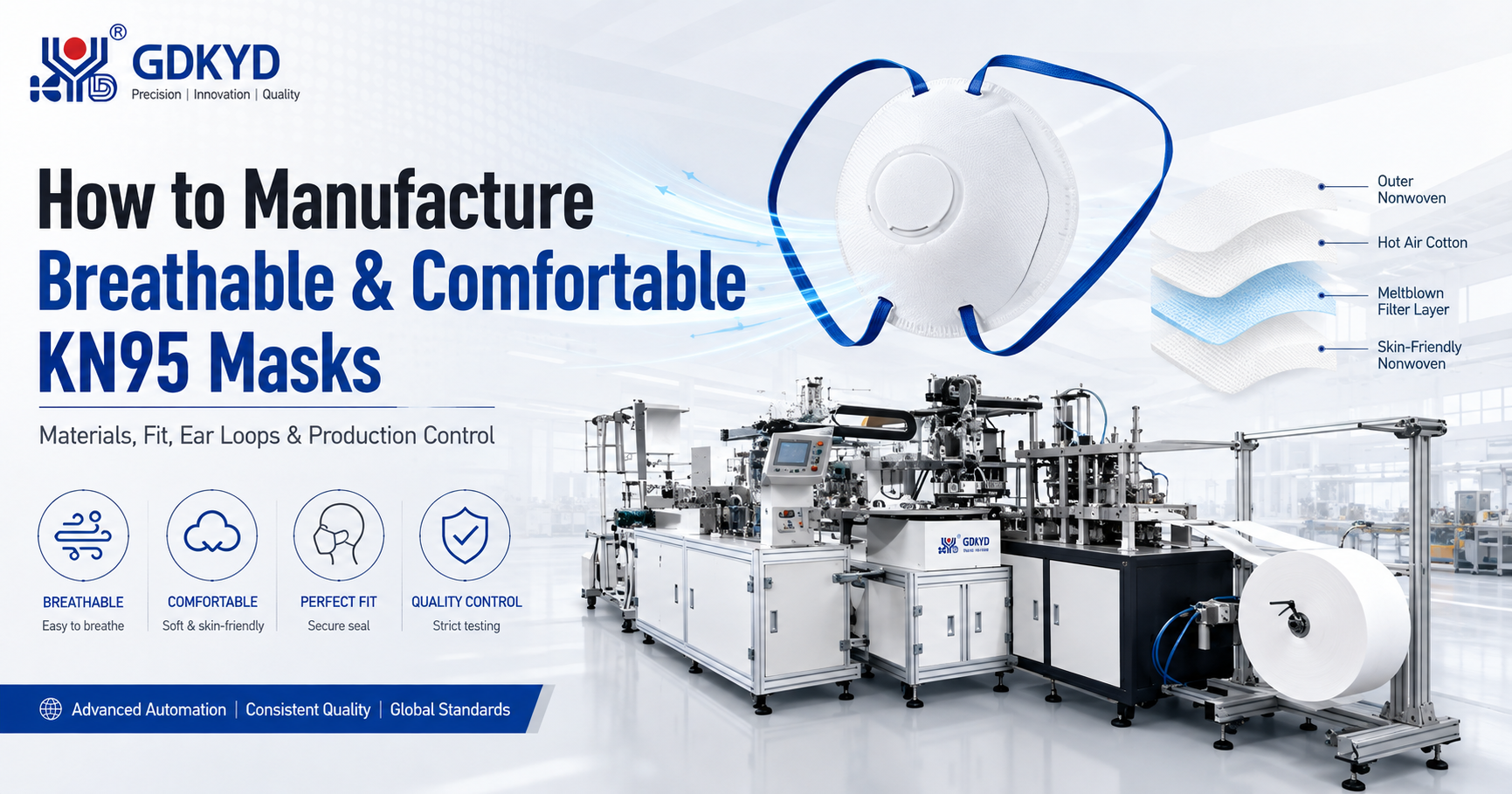
N95 respirators require specialized filtration materials and multi-layer structures. The machine should be designed to handle suitable non-woven materials while maintaining production accuracy.
Manufacturers should consider:
A machine investment is not only about purchasing equipment. Long-term support plays an important role in production success.
Before selecting a supplier, manufacturers should evaluate:
A dependable partner helps reduce downtime and improve production reliability.
Many manufacturers compare N95 masks and KN95 masks because both belong to the filtering facepiece respirator category.
Although they serve similar protective purposes, their standards and market requirements may differ depending on the target region.
When choosing a KN95 mask machine or N95 production equipment, manufacturers should consider:
A flexible respirator mask making machine allows manufacturers to adapt production according to customer needs.
The protective equipment industry requires consistency, efficiency, and reliable production quality. Manual production methods often create challenges related to output stability and labor dependency.
A modern face mask manufacturing machine provides several advantages:
Automation helps maintain uniform product quality by controlling important manufacturing steps.
Integrated systems simplify multiple production stages, allowing factories to manage operations more efficiently.
Businesses can increase production capacity by selecting equipment designed for industrial requirements.
Manufacturers can adapt production systems for different mask designs and market demands.
Choosing the right equipment manufacturer is one of the most important decisions for businesses planning to enter or expand in the protective equipment market.
KYD Precision Machinery focuses on providing customized machinery solutions for non-woven product manufacturing. Through machine design, manufacturing expertise, testing procedures, installation guidance, and technical support, KYD helps customers develop reliable production systems.
From initial requirements analysis to equipment implementation, a professional machinery partner can help manufacturers create efficient production workflows.
For companies looking for an experienced N95 mask making machine manufacturer, selecting a supplier with engineering capability and customer support experience can create long-term value.
An N95 respirator machine is specialized equipment used to manufacture N95 respirator masks automatically. It performs processes such as material feeding, mask forming, ultrasonic welding, and component assembly.
N95 mask machines are designed for respirator-grade products that require higher filtration performance and more precise manufacturing processes compared with standard disposable masks.
Many production systems can be configured for different respirator products, including KN95 masks, depending on machine design and customer requirements.
Manufacturers should evaluate production capacity, machine quality, customization options, technical support, testing procedures, and supplier experience.
Ultrasonic technology provides strong bonding between mask components without using traditional sewing methods, helping improve production efficiency and consistency.
Investing in the right N95 respirator machine is a strategic decision for manufacturers entering the respiratory protection market. A reliable production system helps businesses improve efficiency, maintain quality standards, and respond to changing market requirements.
By evaluating machine technology, customization capability, production support, and supplier expertise, manufacturers can select equipment that supports long-term growth.
For businesses seeking a dependable solution for N95 mask production lines, respirator manufacturing equipment, and customized non-woven machinery, working with an experienced manufacturer like KYD can provide the technical foundation needed for successful production.
We invite you to connect with us! KYD.
Join the Join our growing community and stay updated on KYD’s latest innovations and industry insights. Sign up now to receive exclusive updates straight to your inbox!