Address:No.321 Dongshen Road, Tangxia Town, Dongguan City, Guangdong Province
Stay in touch
Enter your email address for get promotions and news.
Address:No.321 Dongshen Road, Tangxia Town, Dongguan City, Guangdong Province
Stay in touch
Enter your email address for get promotions and news.
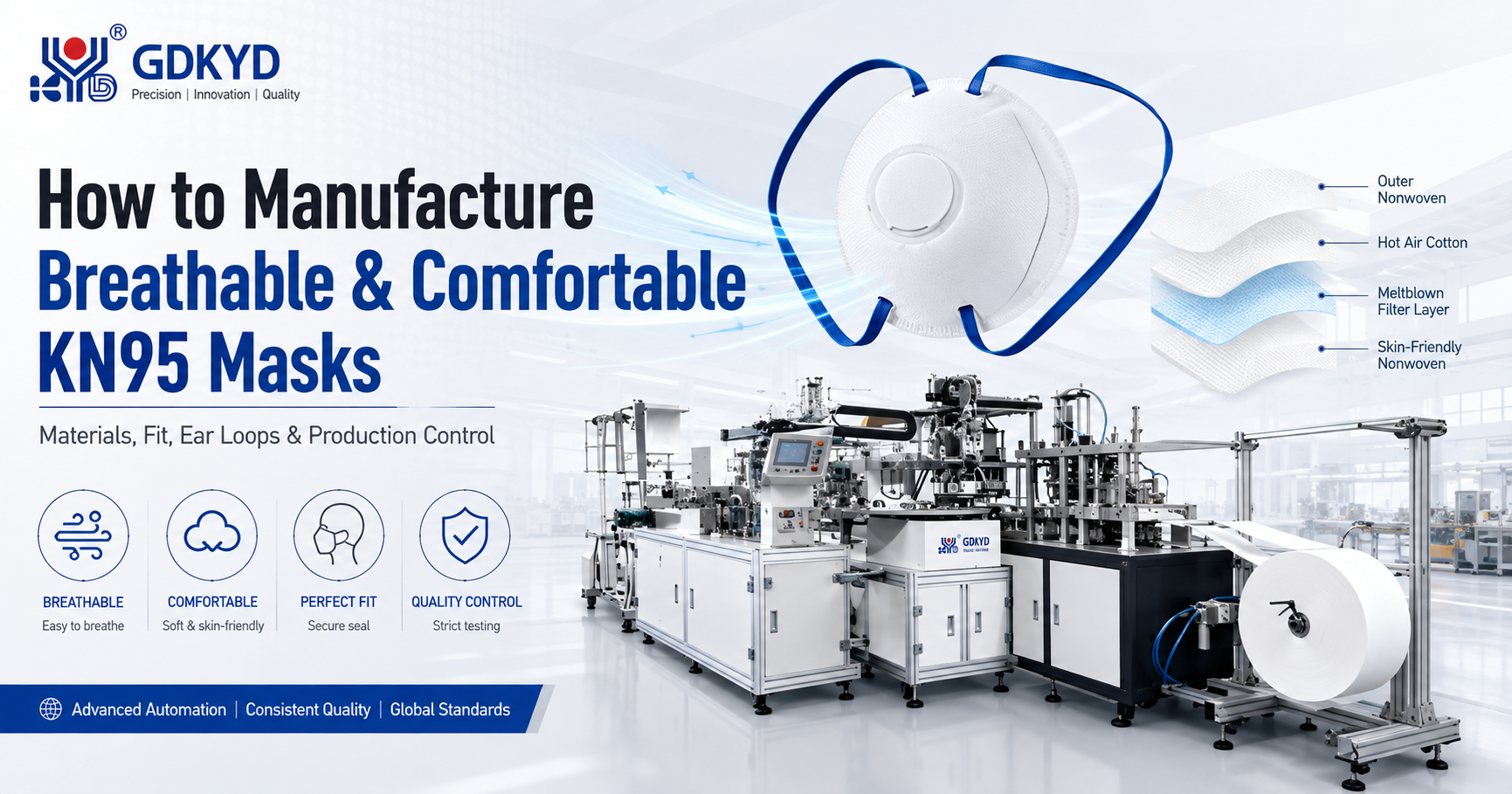
Breathable and comfortable KN95 masks are not created by filtration material alone. Their performance depends on the complete product system: filter media, airflow resistance, mask shape, nose bridge, ear-loop tension, welding quality, dimensional consistency, and production control. For manufacturers, the challenge is to balance filtration, fit, comfort, and repeatable high-speed production without introducing defects that reduce seal quality or wearer acceptance.
That balance matters because a respirator only performs as intended when air passes through the filter media instead of leaking around the edges. CDC and OSHA guidance for tight-fitting respirators repeatedly emphasizes proper face fit and seal. Although KN95 and N95 are different regulatory classifications, the same manufacturing principle is useful: filtration media and face fit must work together.
A breathable KN95 mask must allow air to move through its filter layers with controlled resistance while still meeting the required filtration specification for the intended market. Manufacturers therefore need to evaluate both particle filtration efficiency and pressure drop instead of optimizing only one number.
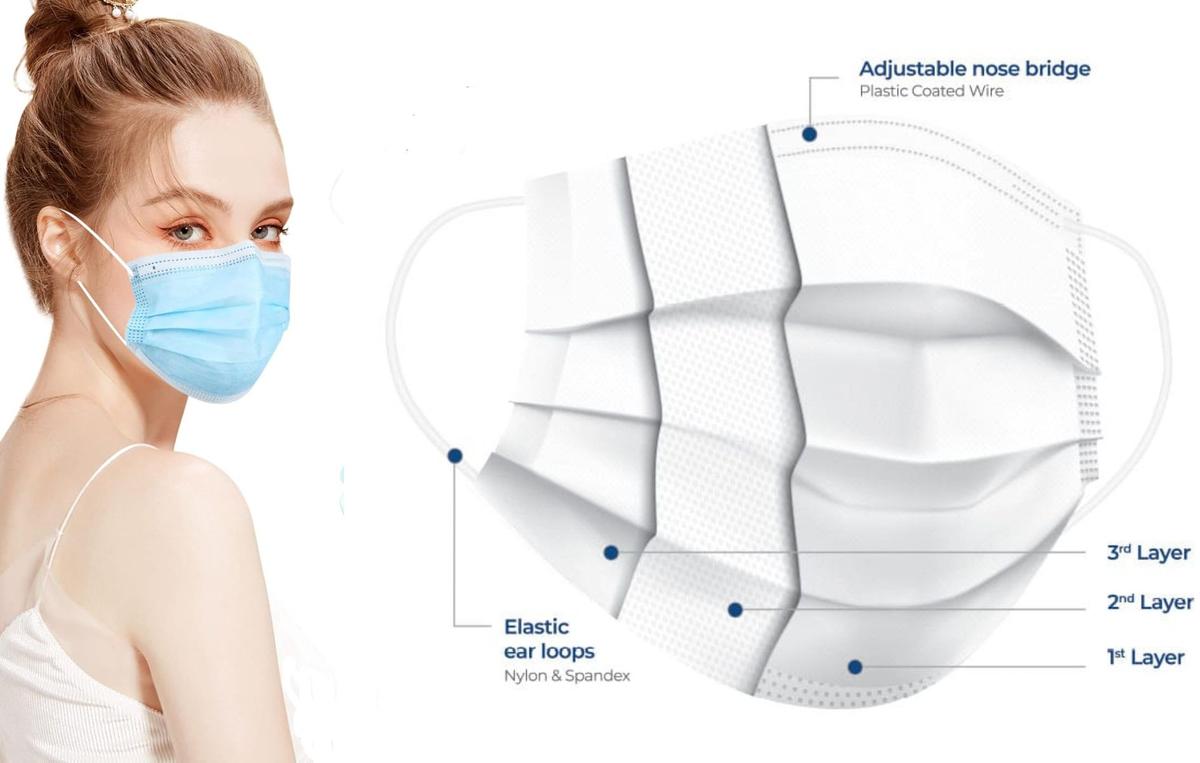
A typical folding respirator can combine outer nonwoven fabric, melt-blown filtration media, structural or hot-air cotton layers, and an inner skin-contact layer. The exact construction depends on the product specification and certification target. GDKYD’s current folding-mask equipment is designed to process materials including nonwoven fabric, melt-blown media, and hot-air cotton.
Material selection affects several important characteristics:
This is why “more layers” does not automatically mean “better mask.” Adding material can increase structure or filtration capacity, but it can also increase airflow resistance, bulk, heat retention, and welding difficulty. Manufacturers should validate the complete layer stack as a system.
Fit determines whether filtered air actually travels through the mask instead of around it. CDC guidance for N95 respirators notes that gaps can occur when a respirator is too large, too small, or does not sit correctly on the face, and recommends trying another size or style when a tight seal cannot be achieved.
For KN95 manufacturers, this makes mask geometry a major product-development issue. Key dimensions include the nose-to-chin length, cheek coverage, folding angle, center seam or panel geometry, and the position of the ear loops or headbands.
A good design should stay stable during normal head and jaw movement without excessive pressure on the nose, ears, or cheeks. OSHA fit-testing procedures also identify comfort factors such as mask position on the nose, room to talk, chin placement, strap tension, fit across the nose bridge, and the tendency of a respirator to slip.
Ear loops are small components, but they can strongly influence fit consistency and long-wear comfort. If the elastic is too loose, the mask can shift or develop edge leakage. Excessive tension can increase pressure around the ears and affect wearer comfort.
Manufacturers should control:
GDKYD’s cup-mask horizontal ear-loop equipment automates ear-loop positioning, ultrasonic welding, and trimming for consistent post-processing. Its folding-mask equipment also integrates ear-loop welding into a larger automated production sequence.
For manufacturers targeting comfortable KN95 masks, ear-loop design should therefore be evaluated alongside face shape, mask dimensions, nose-bridge structure, and filter resistance rather than treated as a separate finishing component.
The nose bridge helps the upper edge of the mask conform to different facial profiles. A poorly positioned or insufficiently formable nose wire can create leakage around the nose, contribute to glasses fogging, or make the mask unstable during movement.
Production control should therefore check nose-wire length, placement, alignment, retention, and compatibility with the mask material.
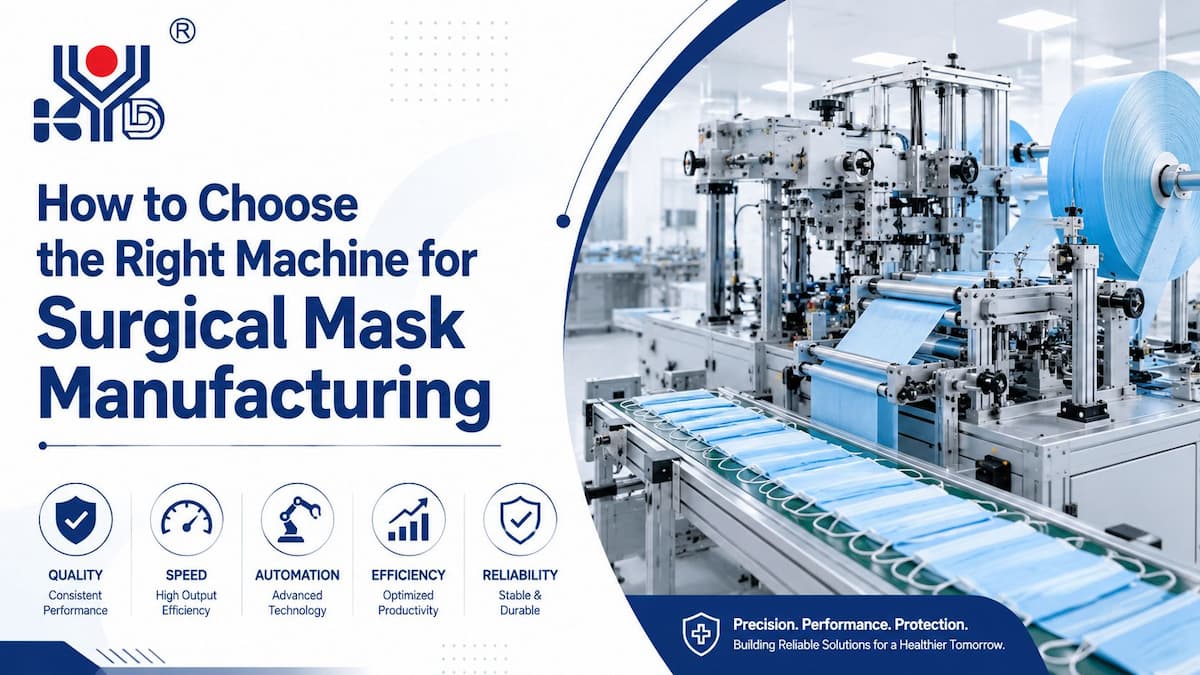
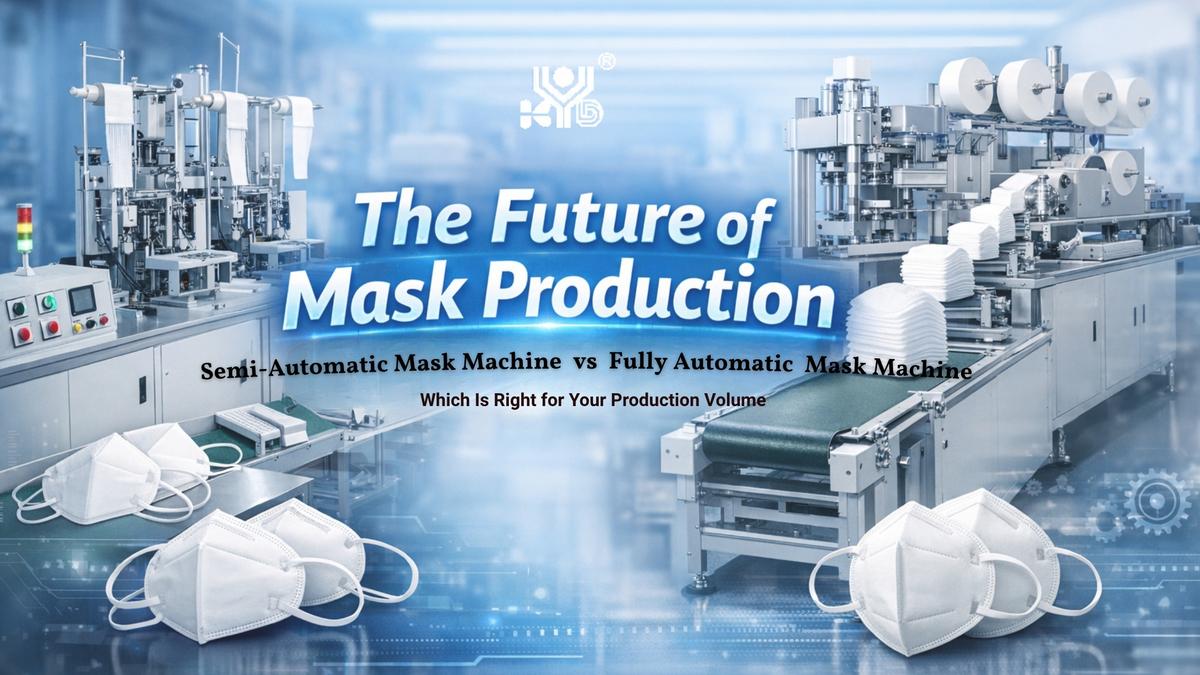
Automated folding-mask lines can combine nose-wire insertion with material feeding, ultrasonic welding, folding, edge sealing, and cutting. GDKYD’s Automatic Super High-Speed Folding Mask Machine is designed for KN95, FFP2, and FFP3-style folding products and supports nonwoven, melt-blown, and hot-air cotton materials.
Nonwoven fabric is one of the core material categories in disposable face masks and respirator production. In a multilayer design, different materials can perform different functions, including external protection, filtration support, structural shaping, and skin contact.
Manufacturers should evaluate more than purchase price. Important incoming-material checks include roll width, basis weight, thickness, tensile behavior, surface uniformity, cleanliness, and compatibility with ultrasonic welding.
Melt-blown material deserves particular attention because the filter layer contributes directly to particle filtration. However, manufacturers still need to evaluate the completed respirator after forming and assembly. Material documentation alone does not verify final-product dimensions, seal characteristics, welding integrity, or production consistency.
Consistent material feeding is therefore essential in any automated KN95 mask manufacturing process.
Ultrasonic welding provides a fast method for joining compatible thermoplastic materials and is widely incorporated into automated disposable face mask production equipment.
Depending on the mask design, ultrasonic technology can support body bonding, edge sealing, ear-loop attachment, and other assembly operations.
For reliable production, manufacturers need stable control over:
GDKYD’s Automatic Folding N95 Mask Disposable Machine uses ultrasonic melting technology with PLC-controlled production, while its higher-speed folding line integrates material feeding, nose-wire insertion, ultrasonic welding, folding, sealing, and cutting.
For high-volume manufacturers, this level of automation can reduce manual variation while improving repeatability from one finished mask to the next.
Consistent KN95 production requires manufacturers to control both visible defects and process variation.
Common production risks include:
A practical quality-control system should combine incoming material inspection, in-process checks, finished-product dimensional inspection, welding-strength evaluation, visual inspection, and performance testing appropriate for the target product standard.
GDKYD also recommends evaluating stable working speed, raw-material compatibility, welding quality, automation requirements, factory layout, and quality inspection when configuring a face mask production line.
No. KN95 and N95 should not be presented as interchangeable certifications.
NIOSH is responsible for approving respirators used under the U.S. NIOSH respirator approval framework. A genuine NIOSH Approved® respirator carries the required approval information, including a testing and certification number.
CDC documentation separately identifies China’s KN/KP95 classification among international respirator classifications.
For manufacturers, the correct process is to define the destination market first and then determine the applicable product standard, testing requirements, materials, markings, quality documentation, and validation procedures.
Production equipment can support different respirator structures, but finished-mask conformity depends on the final product and its applicable requirements.
A complete KN95 mask making machine or folding respirator production line should control the process from raw-material feeding through finished-mask discharge.
A typical automated workflow can include:
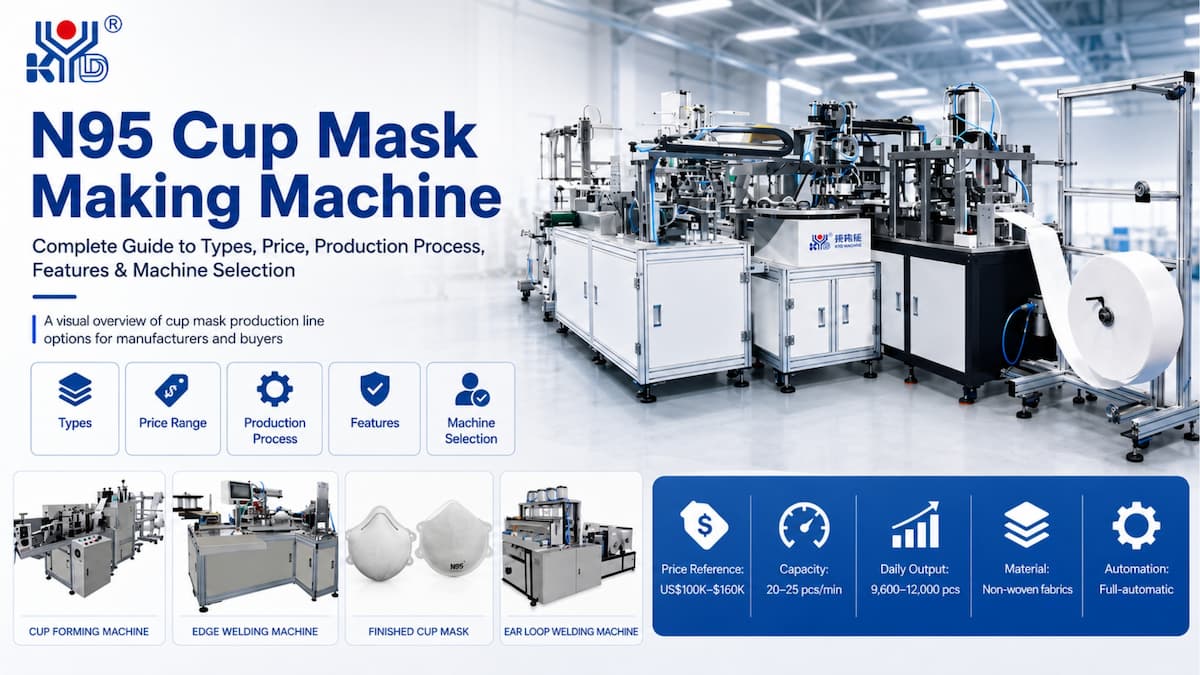
GDKYD’s mask machinery portfolio covers automated folding respirator production, cup-mask manufacturing, disposable face masks, and specialized ear-loop welding systems. Its cup-mask system, for example, can automatically assemble multilayer material, form and cut the mask profile, attach nose components, weld elastic straps, and add nose foam.
The correct configuration depends on the required mask design, target production capacity, material layers, factory layout, automation level, quality-control requirements, and packaging method.
Folding respirators commonly use combinations of nonwoven fabric, melt-blown filtration media, structural layers, nose wire, elastic components, and optional nose foam. The complete material structure should be validated against the intended product specification.
Breathability and comfort depend on airflow resistance, filter material, mask geometry, stiffness, skin-contact material, nose-bridge design, and ear-loop tension. Manufacturers need to optimize these factors together rather than focusing on filtration alone.
Consistent ear-loop welding helps control attachment strength and positioning. Poor welding can result in detached loops, asymmetrical tension, or unstable mask positioning.
Some folding-mask equipment can support multiple respirator shapes and material configurations. However, KN95 and N95 products are subject to different requirements, so each finished product must be designed and validated for its intended market.
Start with the required mask design, material layers, target output, ear-loop or headband type, destination market, factory space, automation level, inspection system, packaging integration, machine testing, spare parts, and after-sales support.
The best KN95 manufacturing strategy does not treat filtration, comfort, fit, and production speed as separate goals. They are connected. Material selection affects airflow and welding, mask geometry affects fit and comfort, ear-loop tension affects stability, and automation determines how consistently those variables can be reproduced at scale.
For manufacturers planning a new KN95 mask production line, folding respirator line, or disposable face mask manufacturing system, GDKYD can configure equipment around the required mask structure, materials, output, ear-loop system, automation level, and downstream production requirements. Define the finished product first, then build the manufacturing process around measurable quality requirements rather than maximum machine speed alone.
We invite you to connect with us! KYD.
Join the Join our growing community and stay updated on KYD’s latest innovations and industry insights. Sign up now to receive exclusive updates straight to your inbox!